
Blue-green stains in the sink, a metallic taste in the morning glass, and a pinhole leak in a copper line that is barely a decade old. Those three symptoms point to the same cause: the well water in your house is acidic, and it is dissolving your plumbing from the inside.
An acid neutralizer tank is the standard fix. It raises the pH of incoming water before that water ever reaches a copper joint. For homes around Poolesville that draw from a private well, it is one of the few pieces of equipment that protects the copper inside your walls.
Why Well Water Turns Acidic in the First Place
Rain falls slightly acidic and picks up more carbon dioxide as it filters through soil and decaying leaf litter. That dissolved carbon dioxide becomes carbonic acid in the groundwater.
Where an aquifer sits in limestone, the rock neutralizes that acid and the water comes up hard and alkaline. Where the bedrock is granite, gneiss, or sandstone with little carbonate to donate, nothing buffers the acid and the well delivers low-pH water to the house.
Low-pH water is hungry. It pulls copper out of the pipe wall, which is why the stains are blue-green and the leaks appear as pinholes rather than splits. The USGS water science school explains how water chemistry changes as it moves through different rock.
How an Acid Neutralizer Tank Corrects pH
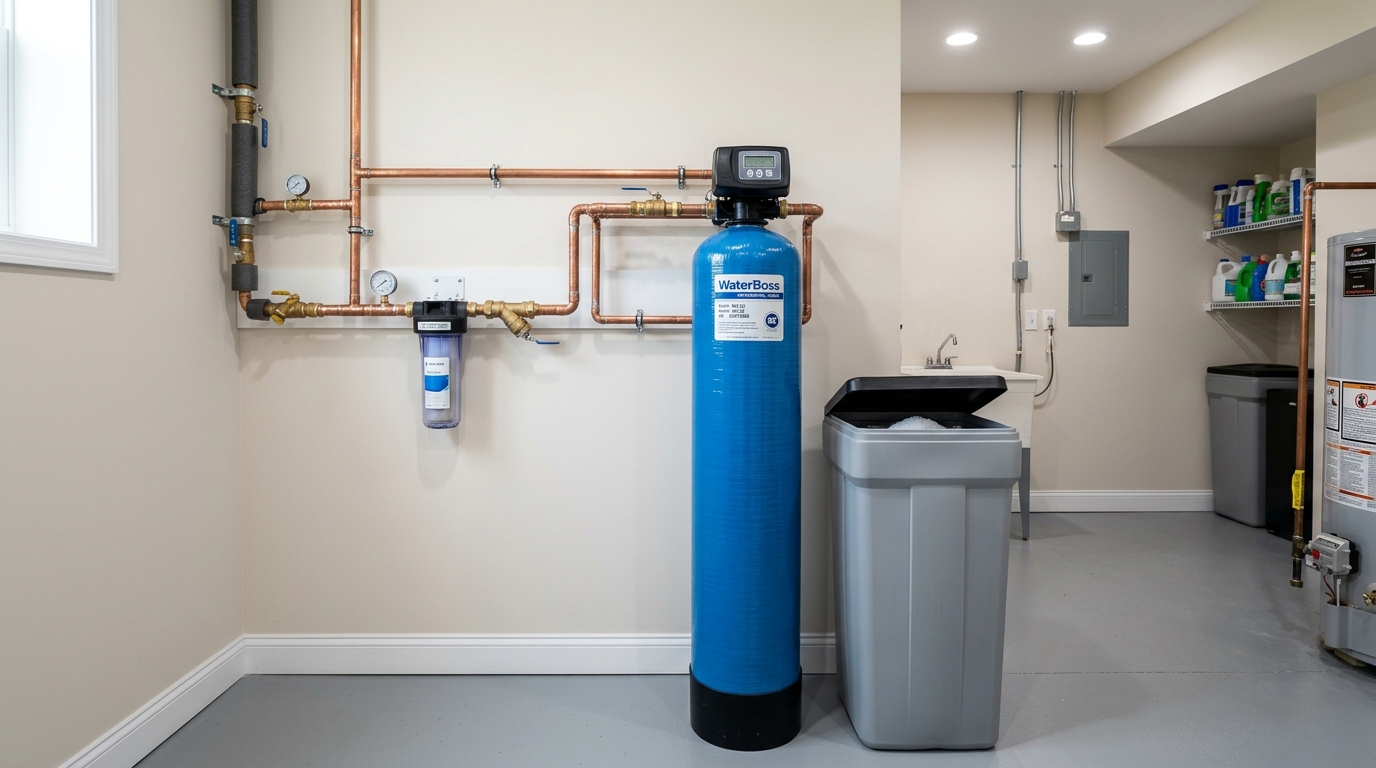
The tank looks like a softener without a salt bin. Inside is a bed of calcite, which is crushed limestone, or calcium carbonate in its mineral form.
As acidic water percolates down through the media, it dissolves a small amount of that calcite. The carbonate goes into solution, neutralizes the acid it meets, and the water leaves the acid neutralizer tank at a pH your copper and brass can live with. Some systems blend in magnesium oxide for water that is strongly acidic, because it dissolves faster and lifts pH further.
Notice the trade-off in that description. The media is sacrificial. Every gallon treated consumes a little limestone, so the bed shrinks over time and the tank needs recharging with new calcite.
Why an Acid Neutralizer Tank Stops Working
An untouched neutralizer eventually fails quietly, and homeowners rarely notice until the fixtures stain again.
The Media Runs Out
This is the usual cause. The calcite dissolves away until the remaining bed is too shallow for water to contact long enough, and pH correction fades. Topping up the media is routine service on an acid neutralizer tank.
The Bed Cements Together
Fine calcite particles and dissolved minerals can bind the media into a crust. Water then channels through cracks instead of soaking through the whole bed.
A working backwash cycle fluffs and rinses the media to prevent exactly this. A stuck control valve or a backwash set too short will let the bed solidify.
Iron and Sediment Coat the Grains
Well water carrying iron or silt coats the calcite surface. Buried limestone cannot dissolve, so the acid neutralizer tank passes water through without correcting much of anything.
Warning Signs in a Home With Acidic Water
- Blue-green stains in sinks, tubs, and shower pans, or on fixture trim.
- Pinhole leaks in copper supply lines, often several within a few years.
- A metallic or bitter taste, strongest in water that sat overnight.
- Corroded brass fittings and quickly failing water heater components.
- Rising hardness or scale after a neutralizer has been in service a while.
What This Looks Like in a Poolesville Home
Picture a Poolesville homeowner facing a second pinhole leak in a basement copper line in under two years. The first was patched and forgotten, and the second drips onto a finished ceiling.
In a case like this, a water test will often show pH well into the acidic range. Say the neutralizer in the utility room was installed by a previous owner and never serviced. A likely finding is a media bed that has dropped to a few inches, with the top crusted solid. The fix is typically a media recharge, corrected backwash settings, and a re-test of the treated line, which gives the copper a fighting chance.
Neutralizer, Softener, or Both?
These units solve opposite problems, and the order matters in a Maryland well system:
- The neutralizer raises pH so the water stops dissolving copper and brass.
- A softener removes hardness so scale stops forming in the water heater and fixtures.
- Calcite adds hardness as a side effect, which is why a softener usually belongs downstream of the neutralizer.
- A sediment filter belongs upstream so silt and iron never reach the media.
Our neutralizer service page explains how we size and stage these units, and water testing confirms which of them your well actually needs.
Service Steps We Follow
- Test pH, hardness, iron, and total dissolved solids on the raw well line.
- Open the tank and measure how much media is left in the bed.
- Check the backwash cycle, the flow control, and the drain line.
- Recharge the media and, where needed, blend in a faster-acting mineral.
- Re-test the treated line so you can see the pH shift in numbers.
If your fixtures are staining again, call and schedule a neutralizer check before the next pinhole leak finds a finished ceiling.
Safety Notes and When to Call a Plumber
A tank full of calcite is far heavier than it looks, so never wrestle one alone or on a wet floor. Depressurize and isolate the unit before opening the head, and keep media out of your eyes when you pour.
Call a plumber when you see a second pinhole leak, when stains return after service, or when treated water still tests acidic. Because EPA private well guidance puts testing responsibility on the homeowner, ask your doctor about drinking water if anyone in the house has a health condition affected by metals in water.
Frequently Asked Questions
How often does calcite media need topping up?
It depends on how acidic the water is and how much the household uses, so heavy use with very low pH consumes media quickly. Most homes have the bed checked annually and recharged when it falls below the level the unit needs.
Will an acid neutralizer tank make my water hard?
It raises calcium content, which is how it works. Homes that were already near the hardness threshold often add a softener after the neutralizer to keep scale off the water heater.
Can acidic water damage pipes other than copper?
Yes. Low pH attacks brass fittings, galvanized steel, and the components inside a water heater. Plastic piping resists it, which is why some homes end up repiping, as our piping services page describes.
How do I know if my well water is acidic?
A laboratory water test is the only reliable answer, since pH cannot be seen or tasted with confidence. University of Maryland Extension publishes guidance on what Maryland well owners should test for.
Your Next Step in Poolesville
Acidic water is a slow problem that gets worse with every gallon you run. Call Mallick Plumbing & Heating to schedule an acid neutralizer tank inspection in Poolesville, and we will test the water, measure the media bed, and set the system to protect your copper.