6 Signs You Need a New Water Heater

When playing online slots for pennies in Belgium, players look for the most exciting games with a high return to player (RTP), interesting themes and rewarding bonus features. Some of the best penny slots available at online casinos in Belgium https://onlinecasinosbe.com/penny-slots/, include Starburst, Book of Dead, and Gonzo’s Quest, known for their exciting gameplay and frequent payouts. These games provide endless entertainment with minimal wagering, making them ideal for casual players looking to stretch their bankroll. However, just as a quality slot machine ensures constant fun, a properly functioning water heater is essential for home comfort. If you notice inconsistent water temperatures, strange noises, or rusty water, it may be time to replace your water heater. Just like an outdated slot machine that no longer offers the excitement of modern graphics and features, an aging water heater can cause frustration and unexpected costs. Upgrading to a new, energy-efficient water heater can improve your daily routine, just as finding the best penny slot machine will improve your online casino experience.

One of the joys of living in the modern age is having hot water on demand. Nothing feels better after a hard day’s work than hopping into a hot shower to emerge clean and refreshed. When your water heater doesn’t operate as it should, your quality of life takes a serious hit. Here are six signs that you need a new water heater.

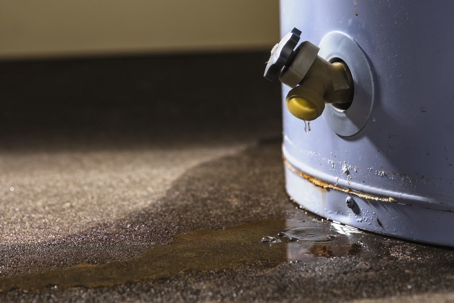
1. Water Pooling Around the Water Heater Base

Behind the exterior case of your water heater lies a steel tank that’s surrounded by insulation. Even with regular maintenance, the tank will eventually erode. Standing water around the base indicates a possible leak. When this happens, you’ll need to replace your water heater promptly to avoid water damage to your home.

Please note that not all puddles are caused by eroded and leaking water heater tanks. Condensation is one reason why small pools of water collect around your water heater one day and disappear the next day. For peace of mind, call an experienced technician to check out your appliance.

2. Rusty Water in the Sink

Everyone has seen those older homes that have rust stains on their bathroom sinks. These stains are often caused by rusty water heater tanks. Rust and corrosion go hand in hand with leaks. Replacing a rusty water heater is the best way to maintain your home’s water quality and avoid damaging leaks later.

3. Water Has a Metallic Smell and Taste

When your tap water has a metallic smell and taste, it’s likely that your metal water heater tank is starting to corrode. This normally happens to older water heaters. However, certain chemicals or sediment in your tap water can cause premature wear and tear on your home’s water heater.

4. Cold or Tepid Water That Doesn’t Get Hot

One evening you’re able to take a nice hot shower, but the next morning your shower water doesn’t get hot. This is a sign that your water heater has possibly died. It also indicates that your tank’s heating element may have burned out.

5. Older Than 15 Years

According to most water heater manufacturers, the average residential water heater lasts between 10 and 15 years. If you purchased your home new, it’s easy to determine the time to replace your water heater. When you buy an older home, it’s best that you get a licensed plumber to examine the appliance to determine its age and condition.

6. Frequent Repairs

Your home’s water heater has reached mid-life, but it requires frequent repairs. This is a clear indication that it’s time for you to consider replacing your water heater. Premature wear can be caused by several factors such as heavy household use or lack of regular preventative maintenance. In these cases, it’s often more cost-effective to replace your water heater than to keep repairing it.

Bottom line: Some water heater issues are solved by doing skilled repairs, replacing parts, or flushing sediment from your water heater’s tank. However, other problems require a replacement system. Mallick Plumbing is a trusted plumbing contracting company that has over 26 years of experience in diagnosing water heater systems in Gaithersburg and surrounding areas. Upon inspection of your system, Mallick’s technicians can tell you whether a water heater repair or a replacement is the right option for you. Contact Mallick Plumbing at (301) 804-6759 today to schedule a service appointment.
 

Upgrading Your Water Heater? A Quick Guide

Are you ready to upgrade from the current water heater in your home to a new system? This time of year is when many homeowners choose to do so. If you’ve started doing research about replacement on your own then you probably already know that you have many options. If you’re feeling overwhelmed you’re not alone, many homeowners feel this way.

The process of finding a new water heater for your home requires the assistance of a trained professional. If you need a water heater in Columbia, MD then make contact our team. Our staff is trained and licensed but most importantly educated in everything that you need to know.

Knowing Your Options

There are a few types of water heaters that you can choose from on the market. The main three we provide at our company are:

Tank Water Heaters

Tank water heaters are the most common type of water heater on the market. If you’re thinking of a “water heater” in your mind it’s more than likely that you’re envisioning this type of system. Tank water heaters are also known as “storage” water heaters because they store a large amount of water in a tank and keep it at a steady temperature so that it’s always ready for usage.

Tankless Water Heaters

Tankless water heaters are also known as “demand” or “instantaneous water heaters” because unlike storage type water heaters, these types of systems only provide hot water when it’s necessary. They create hot water directly as it moves through your home. Tankless water heaters are an efficient option because they eliminate the standby loss of tank water heaters.

Heat Pump Water Heaters

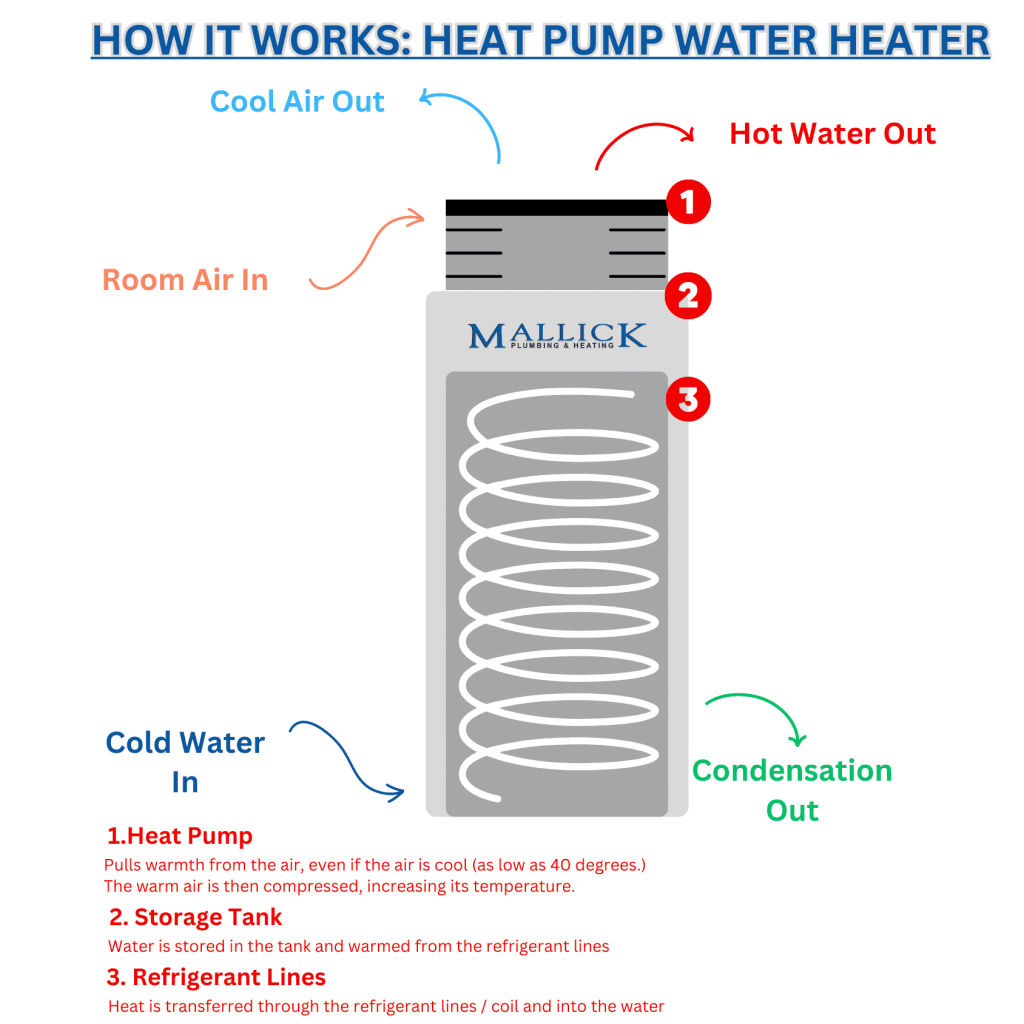
A heat pump water heater uses heat pump technology is to move heat from the outside of your water heater tank to the inside. This is another great option if you’re concerned about energy efficiency because the process of moving the heat is much less taxing than generating heat in the way that standard water heaters do.

Understanding Your Needs

The next step in upgrading your water heater is understanding your needs. What type of water heater you need is affected by the number of people in your home, your preferences, and how much water you use. It’s always best to have a professional work to calculate the needs of your home. We can let you know what will work for you, instead of letting your realization of your water heater’s limitations come by way of an icy cold shower.

Our technicians are knowledgeable so they can conduct a quick an efficient load calculation. Your water heater is important. Homeowners don’t always realize just how important it is but a water heater accounts for nearly 17% of your home’s energy usage. It consumes more energy than all your other household appliances combined. We’ll make sure that you can rely on the water heater you choose.

We know how stressful the process of purchasing new appliances for your home is. If you need a great water heater in Columbia, contact Mallick Plumbing & Heating today to schedule an appointment.

Has the Time Come to Replace Your Water Heater?

This water heater, too, shall pass!

There’s no such thing as “the only water heater you’ll ever need.” Any appliance that does as much work as a hot water heater—and the one in your house probably runs every day, four seasons a year—accumulates large amounts of wear and tear. Proper maintenance can lessen how fast a water heater runs down, but the day will come when an owner must make the decision to stop having it professionally repaired and instead have it professionally replaced.

If you’re asking the big question in the heading, we’d like to help. The best way to get our help is to call our plumbers for a consultation and inspection. Before you do that, we can provide you with some guidelines to help you think about whether you ought to replace that water heater.

Age is the first consideration

Water heaters can sometimes last more than 20 years, and tankless units tend to fall on the longer service lifespan spectrum. Once a water heater is more than 15 years old, it needs closer observation for signs of it wearing down, losing efficiency, requiring more repairs, etc. We strongly recommend replacing any water heater in service for more than two decades.

Corrosion? Bad news!

Water heaters are designed to resist corrosion for many years: they have glass lined interiors and a sacrificial anode rod that draws corrosion away from the rest of the system. Age, however, can allow the gnawing of corrosion (and the word corrosion is derived from the Latin word “to gnaw”) to start taking bites out of a water heater. When you see corrosion on your water heater, it almost always means it needs replacement. (Watch out for discoloration in your hot water, since it points toward a tank that’s corroded out from the inside.)

The water heater’s performance has been dropping

Is the water heater simply not doing the job it used to? If people in your home are actually eager to get up earlier and earlier so they can be the first people into the showers and not get stuck with a lukewarm shower, you may have a dying water heater. Repairs can only do so much, and when “so much” is “not much at all,” it’s replacement time.

Leaks, leaks, leaks

The only place on a water heater where you should see leaks are from the pressure relief valve. This valve releases a small amount of water to regulate pressure in the tank of a storage water heater. Water appearing anywhere else around the system is a repair need. If those leaks are common, the water heater may be in a final decay.

For a Columbia, MD, plumber with the experience necessary to determine the best step for your old water heater, you only have to call us. We work with tank, tankless, and heat pump water heaters, and can handle any type of repair or replacement.

Mallick Plumbing & Heating is the service contractor of choice for Maryland, Virginia, and the District of Columbia. Speak to our experts today for water heater replacement advice.

Things to Consider for a Heat Pump Water Heater Installation

Time to get a new water heater. No, this isn’t as exciting as “time to get a new flat screen UHD television and pre-order the 50th anniversary 4K Blu-ray of 2001: A Space Odyssey.” (Seriously, who isn’t excited for that? Have you ever seen the film in a crystal clear large format? A-MAZ-ING.) However, getting a new water heater is one of the most important things you can do for your home since you use hot water every day and a good portion of your monthly utility bills goes toward powering the water heater.

Now that you’re thinking of getting a water heater, you may be considering a heat pump water heater rather than a conventional model. This technology may be new to you, so let’s look closer at some of the facts of heat pump water heaters to think about.

The potential savings

A heat pump water heater works similarly to the familiar tank water heater: water is stored in a tank and energy is applied to raise the temperature of the water to keep it ready for use. The difference is that where a standard water heater creates energy to heat the water through gas jets or electrical heating elements, a heat pump water heater uses refrigeration. How does that work? It’s a refrigeration system working in reverse. Instead of pumping heat out of space, it pumps heat into space. The heat isn’t created, it’s moved from the air outside the water heater and then released into the water.

This process of moving heat consumes less power than creating heat. In theory, you should spend less to power a heat pump water heater. According to the ENERGY STAR program, a large family can save $3,500 over the unit’s lifetime. The savings depend on what type of water heater you used before. Changing from an electric water heater to a heat pump water heater is usually a huge improvement. Going from natural gas to a heat pump might not be as significant a change.

A heat pump has special requirements

Not every home is right for a heat pump water heater installation, and this is why it’s crucial to work with professionals to ensure the new system is a good match. A heat pump water heater needs to be placed in an unoccupied space with sufficient room (around a thousand cubic feet of air, or a 12’ by 12’ space) for it to access the heat it needs. It cannot be placed in an area that grows extremely cold in winter such as an unheated garage. The ambient temperature should fall between 40° and 90°F around the year for the water heater to work efficiently.

Call water heater professionals

We’d love for you to experience the benefits of a heat pump water heater, but we also want you to have the right water heater to meet your needs. When you’re planning for a water heater installation in Gaithersburg, MD, contact our team and they can help you out. Tell them you’re interested in a heat pump unit, and they’ll see what can be done. No matter what type of unit you end up with, our professionals will see that it fits your budget, helps lower costs, and delivers the volume of hot water you need.

Install the best new water heater for your home with the Service Contractor of Choice: Mallick Plumbing & Heating.

How a Tankless Water Heater May Malfunction

We often recommend the installation of a tankless water heater to our customers who are looking to have a new water heater system put in, either as the first water heater for a house or as a replacement for an aging tank water heater. There are numerous advantages to using a tankless water heater, such as lower energy bills, longer equipment life, and unlimited hot water supply.

Another advantage of tankless water heaters is that they encounter fewer repairs on average than storage tank water heaters. This is because they don’t deal with the stress of water stored in a tank and the continual need to use energy to keep the water heater. A tankless water heater simply does less work, and that means it doesn’t wear down as fast.

But … tankless water heaters may still encounter repair needs that will require calling on a professional plumber.

What Can Go Wrong with a Tankless Water Heater?

  • Low water pressure. A tankless water heater moves water from the hot water line through a heat exchanger, where heat from the gas jets is transferred into the water. Deposits inside the heat exchanger can cause the outlets from the tankless system to become clogged. If you notice low water pressure coming from your hot water faucets, these clogs might be the reason. The most common cause of these deposits is hard water. You’ll need technicians to clear out the obstructions, and you should probably have them install a water softener for the house to prevent further problems.
  • Leaks in the heat exchanger. A tankless water heater can develop leaks inside the heat exchanger. When this happens, the escaping water will put the system in danger of corrosion. A corroded water heater almost always needs to be replaced. If the tankless water heater doesn’t properly vent out exhaust gases from the heat exchanger, it can cause the heat exchanger to corrode, and this can be potentially harmful to your house. At the first indication of corrosion on your tankless water heater, call for repair professionals.
  • Gas ignition problems. A tankless system can also fail in the ways that a standard gas-powered water heater or furnace can fail. The gas jets can become dirty and fail to ignite fully—or ignite at all. If the electronic ignition system breaks, the water heater won’t come on and you’ll end up with no hot water at all.

What to Do If Your Tankless Water Heater Has Stopped Working

No matter what issue you start to encounter with your tankless water heater, you must have licensed professionals handle any fixes. The majority of tankless systems run from natural gas, and only certified technicians should work with any appliance connected to a gas main. This ensures that the repairs are done safely and correctly. If the technicians discover that the tankless water heater is past the point where repairs will do much good, they’ll arrange to have the unit replaced.

To schedule water heater services in Rockville, MD with trained and licensed plumbers familiar with working with water heaters, look to us! We’ll do the job at a fair price and on time.

Mallick Plumbing & Heating, Inc. is the Service Contractor of Choice for Maryland, Virginia & D.C. Call us today at (301) 804-6759.

Proper Sizing for the Best Water Heater

Here’s a question consumers often ask when it comes to purchasing a new residential water heater: how large a system is necessary? People want to be sure they have a water heater that will regularly meet their daily requirements, but they don’t want to spend more than necessary on a water heater that’s too large and may end up wasting energy.

It’s a balancing act to find the ideal size water heater for your specific circumstances. The easiest way to do it is to let the professionals handle the job. You must have professionals to install the system—it’s way too large and complex a task for either amateurs or as a DIY project—so it’s best to have them with you from the start to select the type of size of water heater that’s ideal for you.

Some of the basics of determining water heater size

We’ll show you a bit of what goes into the proper sizing for a water heater. Like sizing a heater or air conditioner for a home, sizing aims for a “sweet spot” of a system that’s large enough to meet demand, but not so large that it is inefficient. This is why no licensed plumber recommends a consumer impulse buy their own water heater and then call a professional to install it.

  • The first-hour rating: For a tank or heat pump water heater, the first-hour rating is the number of gallons of hot water the heater can supply per hour if it starts with a full tank of hot water. This is the first rating professionals look at since it combines a number of other factors such as tank capacity, the energy source (either gas burners or electric heating elements), and how much heating power it has.
  • Peak hour demand: This is the hour during the day when you use the hottest water, and how much hot water demand there is during this time. The professionals will work with you to make calculations based on how many people are in your house and what time of day the hottest water is used. For the majority of homes, peak hot water use is in the morning when people are showering. This number is used to determine the best first-hour rating. So if your peak hour demand is 40 gallons, the best match for a water heater would have a first-hour rating of 38 to 42 gallons.
  • Maximum temperature rise at given flow rate: If you are going to have a tankless (“on-demand”) water heater installed, the calculations are different since these water heaters do not store water but heat it up as it’s needed. The professionals must determine the flow rate and the temperature rise necessary for the whole house. This requires determining the number of hot water appliances/taps that might be in use at one time, then adding up how many gallons per minute they use. This determines the flow rate. Subtracting the incoming water temperature (the temperature of the water from the municipal supply) from the desired output temperature determines the maximum temperature rise. Once the professionals know these numbers, they can accurately size a tankless water heater for a home.

This sounds complicated, but we’re professional with experience handling water heater installations. We offer excellent service for water heaters in Bethesda, MD, and the surrounding areas.

Mallick Plumbing & Heating Is the Service Contractor of Choice in Maryland, Virginia, and the District of Columbia.

Should I Turn up the Water Heater Temperature?

Although you rely on your water heater throughout the year, probably every day, it does more work for you during the winter. On a chilly morning, a hot shower feels better than ever—and it can also be a wonderful relief to soak in a hot bath at the end of the day.

So what do you do if the water heater isn’t as warm as it should be? The simple answer would seem to be an adjustment to the thermostat for the water heater (which is called an aquastat). The default temperature for most water heaters is 140°F, although homeowners often lower it to 125°F or 120°F to help conserve energy. If you’ve lowered the temperature during the rest of the year and wouldn’t mind having it back up to the default, then it’s fine to put it back to 140°F.

However, if the reason you’re thinking of raising the aquastat is that the water heater’s performance has dropped, you’re putting yourself at risk of scalding hot temperatures!

Don’t go above 140°F!

Whatever you do, don’t raise the aquastat’s temperature higher than the default setting of 140°F. Above this temperature, the water can rise to potentially scalding levels. An aquastat isn’t as precise with temperature control as an HVAC thermostat. Due to a situation called thermal stacking, the water at the top of the water heater’s tank can rise to extremely high levels and enter the plumbing. Putting the aquastat higher than 140°F makes scalding a serious risk.

Losing hot water is a reason to call for repairs

Even if you don’t turn the aquastat above 140°F, please don’t try to compensate for a faltering water heater by raising the temperature setting. You’re not only creating a scalding risk, but you’re also putting a possibly malfunctioning water heater under greater stress. The system needs licensed plumbers to look into it to discover if it either needs to be repaired or replaced.

To arrange for service for your water heater in Gaithersburg, PA, from repairs to a full replacement, contact our heating and plumbing professionals.

Mallick Plumbing & Heating is the Service Contractor of Choice!

A Tankless Water Heater Also Needs Occasional Repairs

The tankless water heater is a fantastic invention. Although the first tankless systems for heating water were invented more than a hundred years ago, the innovations that allowed them to become cost-effective for homes is a recent development. But those innovations have made a tremendous difference. A tankless water heater uses much less energy than a standard storage tank water heater, it won’t run out of hot water, takes up less space, has a longer service life, and runs into few repairs.

Of course, a tankless water heater isn’t magic. Even with the best regular maintenance service for one, it can still run into malfunctions and even a full system breakdown. Let’s take a look at ways a tankless system might run into troubles requiring the help of professionals to fix.

Leaking and corrosion

Anytime you have water, you have the potential for leaks. A tankless water heater is at less risk than a storage tank system because water moves rapidly through the heat exchanger of a tankless system and doesn’t create the same type of pressure. But the pipes in a tankless system can develop leaks, and when that happens, water is likely to drip down on the gas jets in the heat exchanger—and this creates corrosion danger. Corrosion is extremely damaging to the heat exchanger, and it may cause the computer system in the water heater to shut the system off. If you see any water dripping from the tankless unit, call for repairs before corrosion becomes a major issue.

Hard water problems

Hard water in household plumbing can create big trouble for a tankless system. The minerals in hard water will create limescale inside the heat exchanger, starting to close off the passage of water through it. This will cause a loss of efficiency and may even inflict permanent damage to the water heater. If you detect a drop in water pressure from the hot water taps in your home, mineral build-up might be the problem. Repairs will descale the water heater, but we recommend you look into attacking the root of the problem by installing a water softener. (This is also a service we provide.)

Poor ventilation

For gas-powered tankless water heaters—the most common kind—venting out exhaust gases is just as important as with any other natural gas appliance. The hot exhaust must escape fast from the small tankless system, and this can be difficult if the ventilation tubes are too long or twisted. What will happen in this case is the computer system of the water heater will trigger a shutdown as a safety precaution. If your water heater stops like this, you’ll need to have technicians look into the venting to discover what needs to be fixed.

When it comes to water heaters in Bethesda, MD and throughout Maryland, Virginia, and the District of Columbia, the people to contact for service are the ones on our staff. We provide full repairs and replacements for tankless and standard storage tank water heaters.

Mallick Plumbing & Heating Is the Service Contractor of Choice in Silver Spring, MD, and the Surrounding Areas.

Tankless Water Heaters Will Need Occasional Repairs

A tankless water heater is an excellent option for modern homes: they can keep up with the demand of the majority of households (provided they’re sized correctly), cut down on energy bills, and won’t run out of hot water the way standard storage tank water heaters do. We are proud to offer top quality installations of tankless water heaters in Bethesda, MD and throughout our wide service area.

A special advantage of tankless water heaters is that they require fewer repairs over their lifetime on average than storage tank water heaters. That doesn’t mean no repairs, however! Any type of water heater can encounter problems that require the assistance of professionals to fix. We’ll take a look at some potential water heater malfunctions below.

The trouble with the burners

The most popular type of tankless water heater is a natural gas-powered model. There are electric models, but they cost much more to run. A gas-powered tankless system has to use burners just like a tank system. The difference is the burners apply heat to water moving through the tankless system, rather than to a standing water supply, and the burners only come on when there’s a demand for water. The burners can become dirty and clogged, which will cause them to have trouble firing, and you’ll notice this by a drop in hot water temperature in the house.

Corrosion

Corrosion is an enemy of all systems that have metal and water in contact. A tankless water heater is less likely to corrode than a storage tank system, but if the pipes start to leak, corrosion can start up. If the corrosion develops too far, the whole system may need to be replaced. This is why it’s crucial to act on any leaks you might notice with the water heater.

Hard water problems

The water from a tankless water heater moves through small holes, and this can cause problems if there’s a build-up. It will lead to a drop in water pressure, followed by no hot water at all. The prime concern is hard water minerals building up in the system. You’ll need to have the water heater cleaned out, but we also strongly recommend installing a water softener to eliminate the problem at the source.

Poor venting

Gas-powered water heaters must vent out combustion fumes safely from the system. If a water heater has poor ventilation, acid condensation will start to develop inside the heat exchanger and quickly ruin it. Poor venting is also a potential safety risk. However, this problem is unlikely to occur… as long as the water heater was professionally installed to have the right sized venting.

Failed heating element

This applies to electric tankless water heaters. If the heating element burns out, there’s no heat to apply to the water. You can find online guides about how to fix this on your own, but we strongly advise against it! Call professionals to ensure the work is done accurately.

Mallick Plumbing & Heating is the Service Contractor of Choice in Silver Spring, MD and throughout Montgomery County.