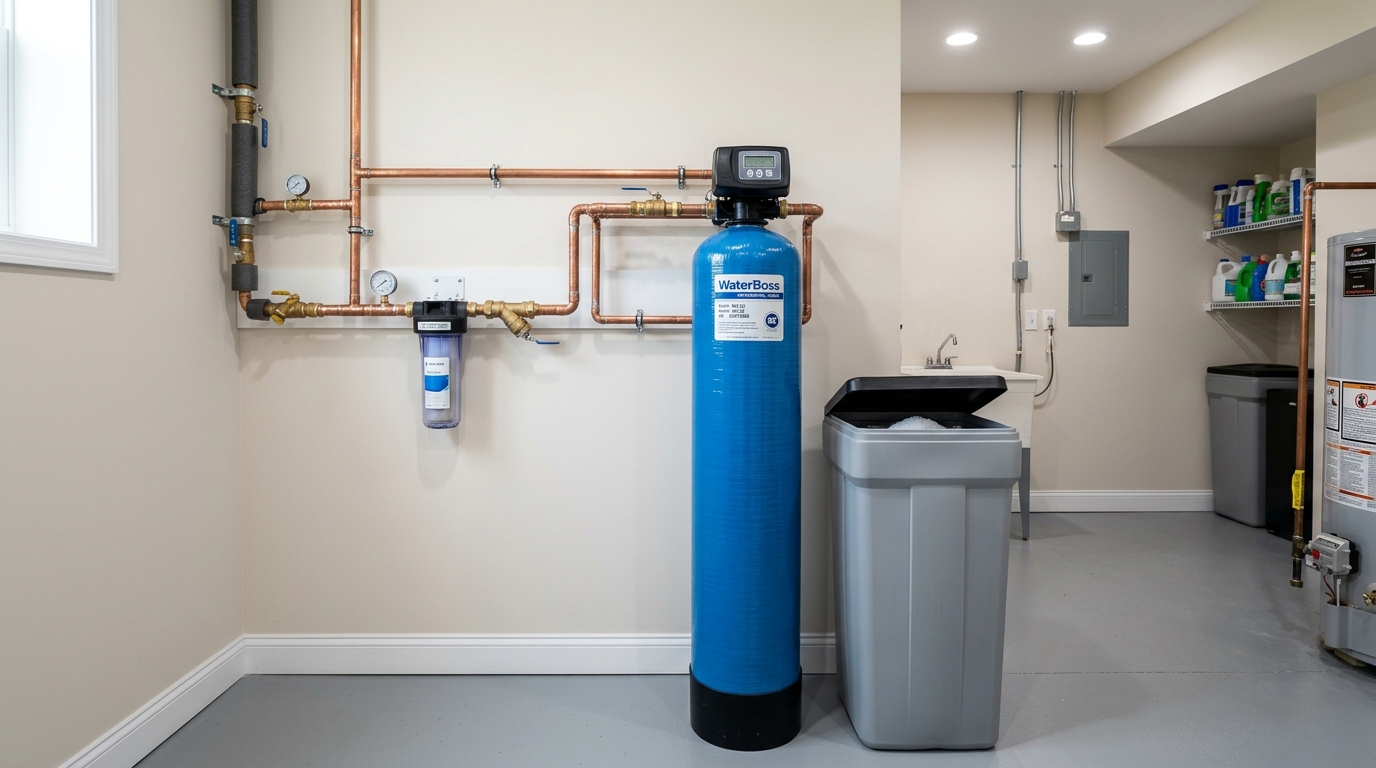
Whole-House Water Softener Buying Guide for Frederick County, MD

If you’ve ever fought white scale on the inside of a kettle, dingy laundry that won’t come clean, or a water heater that died years before it should have, you’ve already met Maryland’s hard water. The fix is a water softener in Frederick, MD, and choosing the right one matters more than most homeowners realize. This buying guide walks through how Frederick County’s water actually compares to other parts of Maryland, how a softener works, the main system types, and how Mallick Plumbing & Heating handles installation across Frederick, Woodbine, and the surrounding well-water communities.

How Hard Is Frederick County’s Water?

Water hardness is measured in grains per gallon (gpg) or parts per million (ppm). The USGS classifies water above 7 gpg (around 120 ppm) as hard, and Frederick County’s water — especially in homes on private wells — frequently tests at or above that mark.

Homes on municipal water in the city of Frederick typically see moderately hard water, similar to what Gaithersburg sees on WSSC. Homes outside the city limits on private wells see a much wider range. We’ve tested wells in Woodbine, Mount Airy, and rural Frederick County that came in at 15 to 25 gpg — well into the “very hard” category — with iron and manganese on top.

The practical effects of hard water in a Frederick County home are not subtle:

  • White scale buildup on faucets, glass shower doors, kettles, and inside dishwashers
  • Soap and detergent that don’t lather properly, leaving residue on skin, hair, and laundry
  • Dingy white laundry that gets dingier with each wash
  • Water heaters that run hotter, longer, and fail earlier than they should
  • Pipes and appliances that develop interior scale that restricts flow

How a Water Softener Works

A water softener uses ion exchange. The system has a tank filled with small resin beads coated in sodium ions. When hard water passes through the tank, the calcium and magnesium ions in the water swap places with the sodium ions on the beads. The water leaves the tank “soft” — meaning the minerals that cause scale and dingy laundry are gone.

Periodically, the system regenerates. It pulls a brine solution (salt and water) from a second tank, flushes the resin beads to strip off the calcium and magnesium, then resets the beads with fresh sodium ions. This is why a softener needs a fresh bag of salt at regular intervals.

Salt-Based vs. Salt-Free Systems

The “salt-free water softener” you may have seen advertised is technically a water conditioner, not a softener. It doesn’t remove calcium or magnesium — it changes the mineral structure so it doesn’t bind to surfaces as readily. For homes with very mild hardness, these systems can help with scale but don’t deliver the laundry, skin, and hair benefits of a true softener.

For most Frederick County homes — especially on well water — a traditional salt-based softener is the right call. The math is simple: if your water is truly hard, you need actual ion exchange. A salt-free conditioner won’t move the needle on a 20-gpg well.

Sizing the System for Your Home

A correctly sized softener regenerates often enough to keep up with your household’s water use without wasting salt by regenerating more than it needs to. Three factors determine size:

  • Daily water use. The average Frederick County household of four uses 250 to 400 gallons per day. Larger families and homes with luxury bathroom fixtures use more.
  • Hardness level. A 25-gpg well needs a system with much more capacity than a 10-gpg one for the same household size.
  • Regeneration cycle. Most modern softeners use demand-initiated regeneration — they regenerate when they’ve used a set volume of water, not on a fixed clock. This minimizes salt waste.

We never install a softener without an on-site water test first. Sizing the system before knowing what’s in the water is how homeowners end up with a unit that’s too small or one that regenerates wastefully.

Maintenance and Salt Refill Schedule

A residential softener needs minimal day-to-day attention but a regular maintenance rhythm:

  • Salt refill: A 40 to 50 pound bag of salt every 4 to 8 weeks for a typical Frederick household, depending on water use and hardness. We recommend topping up before the brine tank drops below half.
  • Salt bridging: Salt can occasionally form a crust that prevents new salt from dissolving. A quick break-up with a broom handle every few months prevents this.
  • Resin bed: Lasts many years before needing replacement. Hard water with high iron content shortens resin life — a sediment pre-filter extends it.
  • Annual inspection: A 20-minute checkup confirms the regeneration cycle is firing correctly, the brine line is clear, and the bypass valve still functions.

Mallick’s Installation Process

A typical Mallick Plumbing & Heating softener install in Frederick County looks like this:

  • On-site water test. We sample the incoming water and run a full hardness, iron, and pH panel. The result tells us exactly what system you need.
  • Written quote. Itemized, fixed price for equipment and labor. No surprise fees.
  • Installation. Most softeners are installed in a half day. We tie the system into the main water line near where it enters the house, ahead of the water heater so all hot and cold water in the home is softened.
  • System startup. We charge the resin, run the first regeneration cycle, and verify softness at multiple fixtures.
  • Walkthrough. We show you how to refill the salt, where the bypass valve is, and what the regeneration schedule will look like.

For homes that already had a softener installed by Mallick or another provider, see our companion piece on water softener installation in Frederick, MD.

Why Frederick County Homeowners Choose Mallick

Mallick Plumbing & Heating has been installing water softeners across Frederick, Woodbine, Mount Airy, and the surrounding communities for years. We test water before recommending equipment, install from established brands with Maryland service networks, register the manufacturer warranty in your name, and offer maintenance plans so the salt schedule is on someone’s calendar besides yours. For our broader water-treatment lineup, visit our Frederick water filtration services page.

Get a Free Water Hardness Test

The fastest way to find out what your water actually needs is to know what’s in it. Schedule a water hardness test with Mallick Plumbing & Heating and we’ll come out, run the panel, and walk you through your options. No pressure, no boilerplate quote.
Why Frederick County Homeowners Are Switching to Tankless Water Heaters

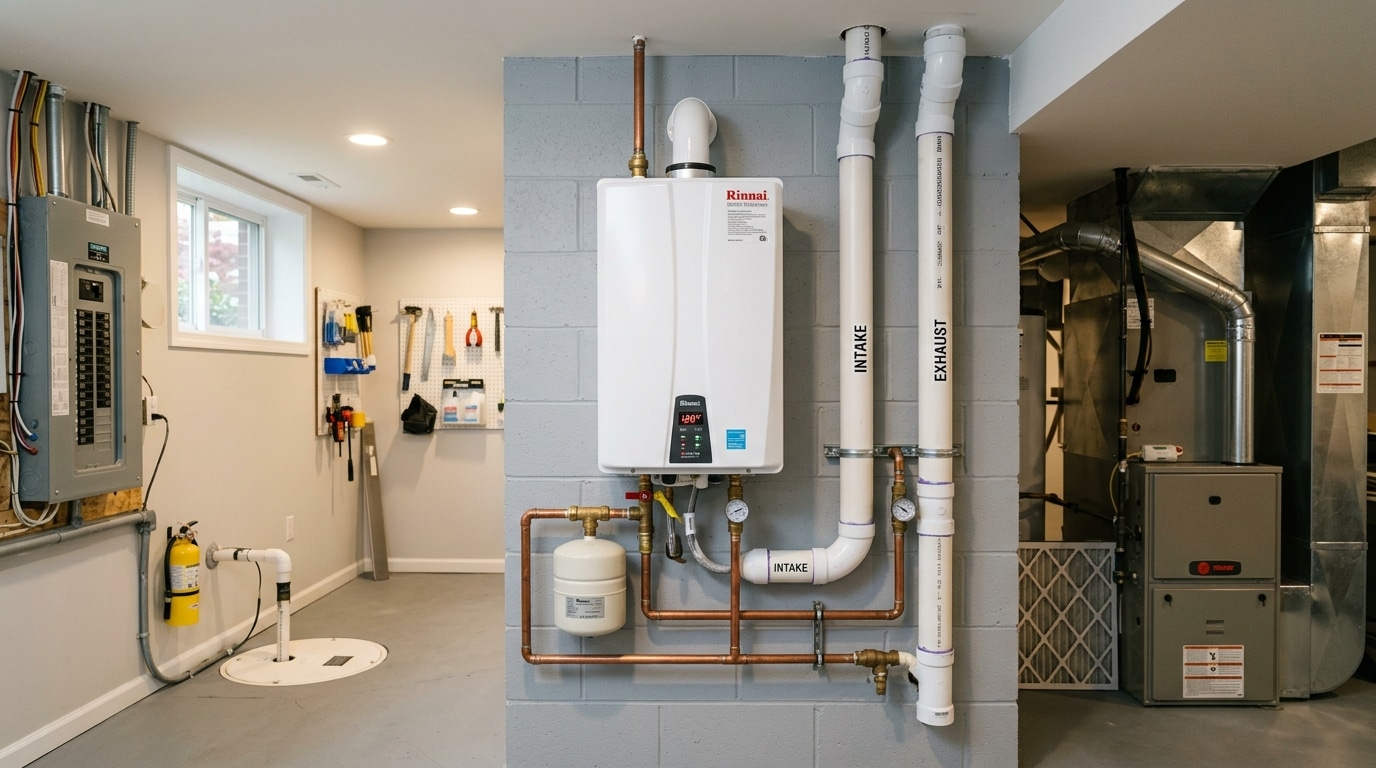
Interest in tankless water heaters in Frederick County keeps growing, and it’s not just early adopters making the switch anymore. Federal and Maryland efficiency rebates have made the math friendlier, and many homeowners who replaced a tank a decade ago are reaching the natural end-of-life decision point. If you’re weighing a tankless water heater in Frederick, MD against another tank replacement, this guide walks through how the technology works, what it really delivers, and whether it’s the right call for your home.

How Tankless Water Heaters Work

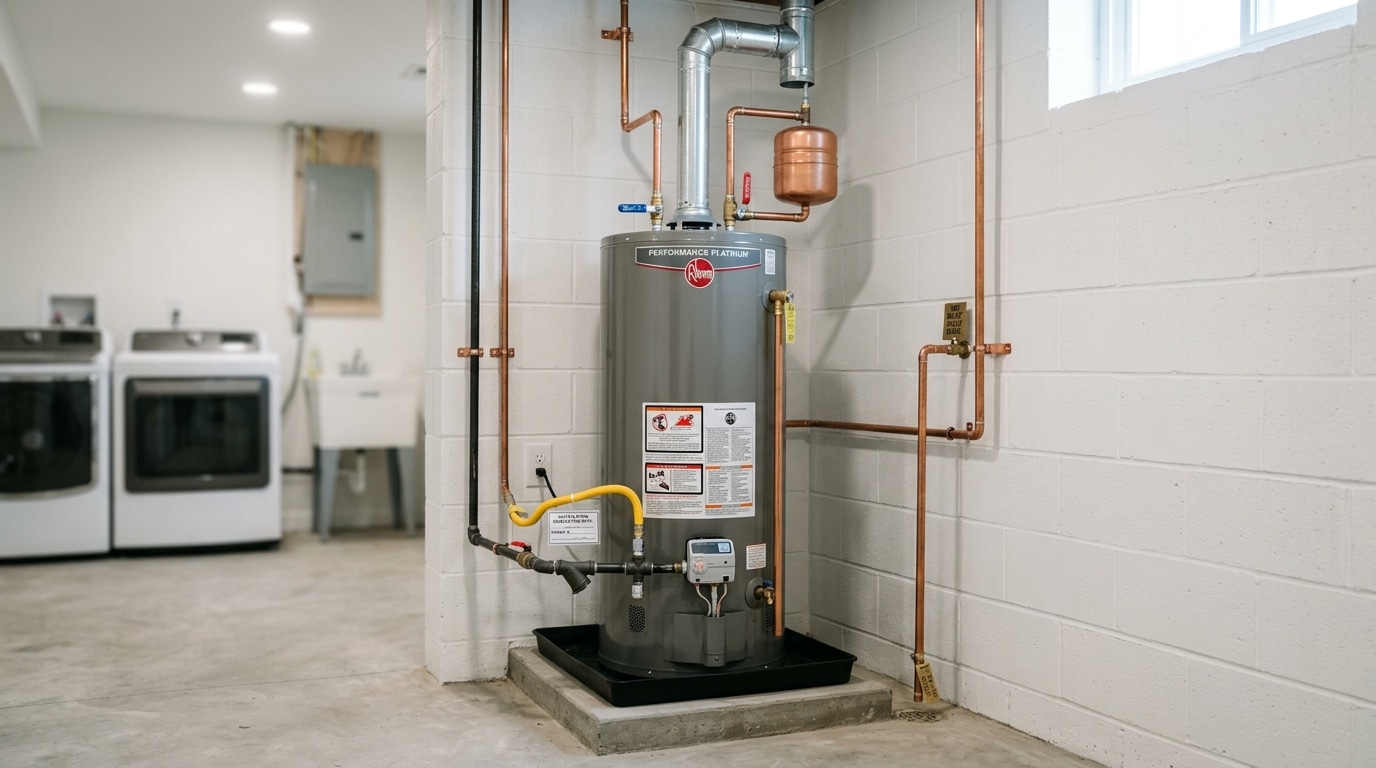
A traditional tank water heater keeps 40 to 75 gallons of water hot 24 hours a day, whether anyone’s using it or not. That standing energy loss accounts for a meaningful share of total water heating energy use in a typical Maryland home, according to the U.S. Department of Energy.

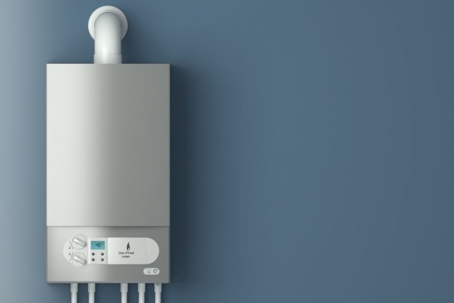
A tankless unit eliminates the tank entirely. When you open a hot tap, cold water flows through a series of copper or stainless heat exchangers. A high-output burner (gas) or electric element fires only while water is flowing. Heat output is sized to handle the highest expected demand, usually two or three simultaneous fixtures. The unit shuts off completely when no one’s using hot water.

The practical effects are simple. You get continuous hot water for as long as the unit is sized to deliver. Your basement reclaims the floor space the tank used to occupy. Your energy use drops noticeably.

The Real Advantages for Frederick County Homes

1. Continuous Hot Water

This is the number-one reason most Frederick homeowners switch. With three teenagers, a soaking tub, and a dishwasher running simultaneously, a 50-gallon tank runs out in 25 minutes. A correctly sized tankless keeps delivering. The next person in line gets the same hot water as the first.

2. Lower Operating Energy Use

Gas tankless units are notably more efficient than gas tanks for typical household demand. The savings show up on your gas bill over time, and they compound year after year over the long life of the equipment.

3. Longer Service Life

Tankless water heaters in Frederick County’s moderately hard water typically last considerably longer than tank water heaters in the same homes. Over the same span of years, you’d replace one tankless unit or two tank units, which narrows the gap on the upfront difference.

4. Space and Aesthetics

A tankless unit is roughly the size of a carry-on suitcase mounted on a wall. The floor space that a 50-gallon tank occupies becomes available for storage, a workshop, or a finished room. For Frederick homes with finished basements, this is often as valued as the energy savings.

5. Reduced Risk of Catastrophic Failure

The most damaging plumbing failure most homes ever experience is a tank water heater rupturing and dumping dozens of gallons of water onto the basement floor, or through the ceiling of a first-floor utility room. Tankless units don’t store water, so there is no tank to fail. They can develop leaks at fittings, but the volume released is small enough that it’s typically noticed and fixed before causing major damage.

Upfront vs. Long-Term Considerations

A tankless unit is a larger investment upfront than a like-for-like tank replacement, both because the equipment costs more and because the install often involves gas-line, venting, or electrical work. The math evens out over the long life of the unit through energy savings and avoiding a second tank replacement down the road. The longer you stay in the home, the more decisively the math favors tankless.

Is Tankless Right for Your Frederick Home?

Tankless isn’t always the right answer. Here’s when it makes sense and when a quality tank replacement is the smarter choice.

Tankless makes sense if:

A tank replacement is smarter if:

Installation Considerations Specific to Frederick County

A few practical notes for Frederick homes specifically:

Sizing the Right Tankless Unit

Mallick Plumbing & Heating sizes tankless units to your home’s actual demand rather than installing whatever’s on the truck. For most Frederick homes, the right choice is a high-output condensing gas unit capable of running two or three simultaneous hot-water fixtures. Built-in recirculation, available on premium units, keeps hot water immediately ready at distant fixtures without wasting water down the drain while you wait. Premium electric tankless options exist for all-electric homes but typically require an electrical panel review. For more on our tankless installation work, visit our Frederick tankless water heaters page.

Maintenance and Service Life

A tankless unit installed correctly and serviced annually in Frederick County typically delivers many more years of service than a conventional tank, an annual descaling flush completed in well under an hour, periodic pre-filter changes, and a manufacturer warranty on the heat exchanger that reflects the long expected life of the equipment. The most common failure mode is heat-exchanger scaling from hard water, which is fully preventable with regular maintenance.

Get a Tankless Water Heater Estimate in Frederick County

Mallick Plumbing & Heating has been installing tankless water heaters in Frederick, Woodbine, and the surrounding communities for years. Every quote is itemized in writing, every permit is pulled, and every installation includes the manufacturer warranty plus a workmanship warranty from our team. We handle the gas line, venting, water-softening pre-treatment if needed, and inspection coordination as a single project. To explore our full lineup of water heater options including tank and heat-pump models, visit our services page.

Schedule a tankless water heater estimate for your Frederick County home today and we’ll deliver a transparent, written quote.

Water Heater Replacement Guide for Gaithersburg, MD Homeowners

Replacing a water heater is one of the few home decisions a Gaithersburg homeowner can usually only make once or twice in the time they live in the house. By the time the unit is leaking, making popping sounds, or pushing past the 10-year mark, the choice you make about its replacement will affect your hot water, your energy bill, and your peace of mind for the next decade or two. This guide walks through how to decide when it’s time, what your options are, and how to get the right replacement done by a licensed Maryland plumber.

Signs Your Water Heater Needs Replacement

Not every aging water heater needs replacement immediately. Many Gaithersburg homeowners can extend the life of an existing tank with proper maintenance — flushing sediment, replacing the anode rod, checking the temperature and pressure relief valve. But when the signs below show up, replacement is almost always more practical than continued repairs:

For a deeper look at the warning signs, see our companion guide on when to replace your water heater.

Your Replacement Options

Once you’ve decided to replace, the next question is what to replace it with. The U.S. Department of Energy groups residential units into three main categories, and Mallick Plumbing & Heating installs all three water heater categories used in Maryland homes:

1. Tank Water Heaters

The traditional choice: a 40, 50, or 75-gallon tank in your basement or utility room that keeps hot water ready at all times. Tanks are the most familiar option, the simplest to install in a like-for-like replacement, and a reasonable choice for households with steady, predictable hot water needs.

2. Tankless Water Heaters

Tankless units heat water on demand as it flows through the unit, so there’s no storage tank and no standing energy loss. The trade-off is a higher upfront investment and, in some Gaithersburg homes, the need to upsize the gas line or update venting. For households that frequently run out of hot water — or want to free up the floor space a tank occupies — tankless is often the right call.

3. Heat-Pump (Hybrid) Water Heaters

Heat-pump units pull warmth from the surrounding air to heat water far more efficiently than a standard electric tank. They cost more upfront and need adequate basement space and ventilation, but they significantly reduce operating cost for all-electric homes and are eligible for federal and Maryland utility incentives that change from year to year.

Like-for-Like vs. Switching Types

A like-for-like swap — replacing a 50-gallon gas tank with another 50-gallon gas tank — is the simplest and fastest installation. Most Gaithersburg homes can be back in hot water by the end of the day. Switching types is a larger project: tankless conversion typically involves gas line and venting work, heat-pump conversion may require electrical adjustments and a check on the space available. None of these are problems for our team, but the scope and timing of the work are different. We’ll lay out both options when we visit and let you choose.

What Affects the Scope of Your Replacement

Several factors determine how involved your installation will be, and a written estimate from a licensed Maryland plumber should reflect each of them:

Rebates and Incentives in Maryland

Heat-pump water heater installations are currently eligible for federal Inflation Reduction Act incentives and Maryland utility rebates through programs like Maryland EmPOWER. Eligibility, amounts, and timelines change periodically, so we confirm the current state of available rebates at the time of your estimate rather than quote stale numbers. Standard tank and tankless gas replacements typically do not qualify for the federal rebate, though promotional offers from Mallick Plumbing may apply — see our current water heater offers.

Why Permitting Matters in Montgomery County

Montgomery County requires a permit and inspection for every water heater replacement. Some unlicensed installers skip the permit to lower their quote — this becomes a problem at the next home sale, when inspectors flag unpermitted work and force the owner to redo it. Mallick Plumbing & Heating pulls every required Montgomery County or Frederick County permit, coordinates the inspection, and includes haul-away of the old unit so you don’t have to dispose of it yourself.

Why Gaithersburg Homeowners Choose Mallick Plumbing for Water Heater Replacement

Mallick Plumbing & Heating has been replacing water heaters in Gaithersburg, Montgomery County, and Frederick County for years. Every quote is itemized and put in writing before work begins. Every installation includes the required permit, expansion tank if needed, haul-away of the old unit, and the manufacturer’s warranty plus our own workmanship warranty. We also offer financing and seasonal specials to make the replacement easier to plan around. For a closer look at the units we install and our process, visit our water heater services page.

Get a Water Heater Estimate in Gaithersburg

The most reliable way to know what your replacement will involve is an on-site visit from a licensed plumber. Online ranges can’t account for your home’s venting, gas line, electrical setup, or layout. Schedule a water heater estimate with Mallick Plumbing & Heating today, and we’ll give you a transparent, written quote and walk you through the options.

5 Warning Signs Your Water Heater Is About to Fail

A water heater failure in the middle of a Maryland winter is more than an inconvenience—it can mean cold showers, potential water damage, and an expensive emergency replacement. The good news is that most water heaters show warning signs before they fail completely. Here are five signals that your water heater may be on its way out.

1. Your Water Heater Is Over 10 Years Old

Most traditional tank water heaters last between 10 and 15 years with proper maintenance. If your unit is approaching or past that range, it’s living on borrowed time. You can find the age of your water heater by checking the serial number on the manufacturer’s label—the first two digits typically represent the year of manufacture.

If your unit is over 10 years old, it’s worth scheduling an inspection rather than waiting for a failure. Replacing a water heater on your timeline is always more affordable than an emergency swap.

2. Rusty or Discolored Hot Water

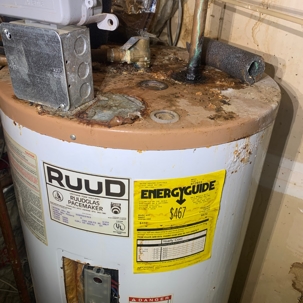
If rusty or brown water comes out only when you run the hot water tap, the problem is likely inside your water heater tank. Corrosion on the interior walls or a deteriorated anode rod allows rust to leach into your water supply. Once the tank itself starts corroding, a leak is not far behind.

An important distinction: if both hot and cold water are discolored, the issue may be with your supply pipes rather than the water heater. A licensed plumber can help you pinpoint the source.

3. Strange Noises from the Tank

Rumbling, popping, or banging sounds from your water heater are caused by sediment buildup at the bottom of the tank. As the layer of sediment thickens, the burner has to work harder to heat the water through the buildup. This reduces efficiency, increases energy costs, and accelerates wear on the tank.

Annual flushing can prevent sediment buildup, but if the noises are new and your unit hasn’t been maintained regularly, the damage may already be done. This is especially common in the Gaithersburg and Frederick areas where hard water accelerates mineral accumulation.

4. Water Pooling Around the Base

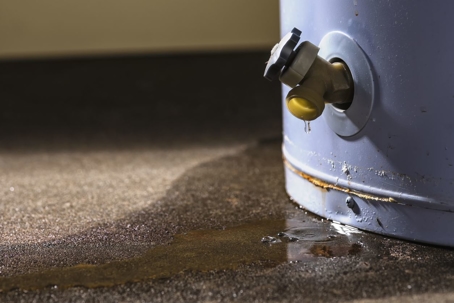
Any water around the base of your water heater is a red flag. Small leaks from the tank itself indicate internal corrosion that cannot be repaired—only replaced. Before assuming the worst, check that the leak isn’t coming from a fitting, the temperature and pressure relief valve, or a nearby pipe connection, as those are often repairable.

Even a slow tank leak can cause significant water damage to floors, walls, and belongings if left unaddressed. If you notice pooling water, call a plumber promptly.

5. Inconsistent or Insufficient Hot Water

Running out of hot water faster than usual or getting inconsistent temperatures are signs that your water heater is struggling. This can be caused by a failing heating element, a broken thermostat, or simply a tank that’s too small for your household’s demands. In some cases, sediment buildup has reduced the tank’s effective capacity.

If you’ve noticed any of these signs, it’s worth having your unit inspected before it fails entirely.

Don’t Wait for a Failure

At Mallick Plumbing & Heating, we help homeowners across Gaithersburg, Rockville, Silver Spring, and the surrounding Maryland area with water heater inspections, repairs, and replacements. If your water heater is showing any of these warning signs, schedule a service call and we’ll help you decide whether a repair or replacement makes the most sense for your situation.

Tankless vs. Tank Water Heaters: Which Is Best for Maryland Homes?

If your water heater is nearing the end of its lifespan or you’re building a new home in the Gaithersburg area, you’re likely weighing your options between a traditional tank water heater and a tankless unit. Both have their place, but the right choice depends on your household size, budget, and long-term goals. Here’s what Maryland homeowners need to know.

How Traditional Tank Water Heaters Work

Tank water heaters store and continuously heat a reservoir of water—typically 40 to 80 gallons. When you turn on a hot water faucet, heated water flows from the top of the tank while cold water enters at the bottom to be heated. This cycle runs around the clock, which means the unit uses energy even when you’re not using hot water.

Pros of tank water heaters:

How Tankless Water Heaters Work

Tankless water heaters heat water on demand as it passes through the unit. When you open a hot water tap, a flow sensor activates a gas burner or electric element that rapidly heats the water. There’s no storage tank, which means no standby energy loss.

Pros of tankless water heaters:

Which One Is Right for Your Maryland Home?

The answer depends on a few key factors:

Household size matters. A family of four or more that frequently runs multiple hot water fixtures at once will benefit from the continuous supply a tankless unit provides. Smaller households with modest hot water needs may find a tank unit perfectly adequate.

Consider your budget timeline. If upfront cost is the priority, a tank water heater wins. But if you’re thinking long-term, a tankless unit’s energy savings and longer lifespan often make it the better investment over 15 to 20 years.

Maryland’s hard water is a factor. The Gaithersburg and Frederick areas are known for hard water, which causes mineral buildup in both tank and tankless units. Annual flushing is important for either type, but scale buildup can reduce a tankless unit’s efficiency more noticeably. Pairing your water heater with a water treatment system can extend its lifespan significantly.

Let Us Help You Decide

At Mallick Plumbing & Heating, we install and service both tank and tankless water heaters throughout Gaithersburg, Frederick, Rockville, and the surrounding Maryland area. We’ll assess your home’s hot water demand, existing infrastructure, and budget to recommend the best fit. Contact us today to schedule a free estimate.

When Should Your Water Heater Be Replaced?

Water heaters are an essential component of daily life, providing hot water for bathing, cooking, and cleaning. Understanding when to replace your water heater can save you from unexpected cold showers, high energy bills, and potential water damage.

We’re here to guide you through the signs that indicate it’s time to replace your water heater — and explore the benefits of newer models — such as tankless water heaters and heat pump (hybrid) technology.

What are Signs of a Failing Water Heater?

1. Age of the Water Heater: The average lifespan of a conventional water heater with a tank is about 8 to 12 years, which can be impacted by many factors – including your water pressure or water quality. If yours is approaching or has surpassed this age range, it’s wise to consider a replacement. This can always be expanded with the assistance of regular maintenance. 

2. Rusty Water or Tank: If you notice rust-colored water coming from your hot water taps or visible corrosion on your water heater’s tank, it’s a clear sign that your water heater is deteriorating. Rust inside the tank can lead to leaks and other issues – so it’s very important to visually inspect it every once in a while. 

3. Inconsistent Water Temperature: Fluctuations in water temperature can indicate sediment buildup in the tank, affecting the water heater’s efficiency and capacity to heat water consistently.

4. Unusual Noises: As water heaters age, sediment can accumulate at the bottom of the tank. If you hear rumbling or banging sounds from the water heater, it’s likely due to the sediment being heated and reheated, which strains the heater and increases the risk of damage.

5. Leaks: Any signs of leaking around the water heater are serious. Leaks can lead to significant water damage in your home and are often an indicator that the internal tank has failed.

What Are Water Heater Replacement Options?

When it’s time to replace your old water heater, consider upgrading to a more efficient model. Mallick Plumbing & Heating offers a variety of options that not only provide hot water but do so more efficiently and with less environmental impact.

1. Tankless Water Heaters: Tankless water heaters, also known as on-demand water heaters, heat water directly without the use of a storage tank. These units typically use less energy than traditional tank water heaters because they heat water only when needed, reducing energy losses associated with tank systems since they are continually heating the water within the tank. They also save space and have the ability to last a long time with regular maintenance and care. 

2. Heat Pump (Hybrid) Water Heaters: Heat pump water heaters are one of the most energy-efficient options available. Instead of generating heat directly, they use electricity to move heat from the air or ground into the water, which uses significantly less energy than traditional heating methods. These systems are particularly effective in hot climates where they can also help cool the surrounding area as they operate.

If you find yourself in need of a new water heater, call Mallick Plumbing & Heating at (301) 804-6759 to learn more about the options available. 

The Benefits of Upgrading Your Water Heater

Energy Efficiency: New water heaters, especially tankless and heat pump models, are designed to be much more energy-efficient than older units. This can lead to significant savings on your energy bills.

Increased Home Value: Installing a modern water heater can increase the value of your home, making it more attractive to potential buyers who appreciate updated, energy-efficient appliances.

Reliability: Upgrading to a new water heater reduces the risk of sudden breakdowns and the inconvenience of unexpected repairs, providing peace of mind and consistent hot water supply.

If you’re noticing any of the signs that your water heater might be failing, or if it’s simply nearing the end of its expected lifespan, consider replacing it before it leads to more serious issues.

Mallick Plumbing & Heating offers expert advice and installation services for a range of water heaters, including cutting-edge tankless and heat pump models. Contact us today at (301) 804-6759 to find out more about your options and schedule an installation.

How to Safely Remove an Old Water Heater: A Step-by-Step Guide

How to Safely Remove an Old Water Heater: A Step-by-Step Guide

Replacing an old water heater is a task many homeowners face at some point. Whether you’re upgrading to a more energy-efficient model, dealing with frequent breakdowns, or simply replacing an aging unit, safely removing the old water heater is an essential first step in the process.

At Mallick Plumbing & Heating, we understand the importance of proper procedures to ensure a smooth water heater replacement.

Here’s our step-by-step guide to safely removing an old water heater:

*Before you begin, it’s crucial to prioritize safety.Please contact a professional or Mallick Plumbing & Heating at (301) 804-6759 if you’re unsure of how to properly and safely dispose of your unit.*

Step 1: Turn Off Utilities

Before starting any work, it’s crucial to turn off the utilities connected to the water heater. For a gas water heater, turn off the gas supply valve located near the unit. For an electric water heater, switch off the circuit breaker in your electrical panel. Additionally, shut off the cold water supply valve leading to the water heater.

Step 2: Drain the Tank

To prevent water from spilling during removal, drain the water heater tank. Connect a garden hose to the drain valve located near the bottom of the tank and run the other end to a suitable drainage location, such as a floor drain or outdoors. Open the drain valve and allow the tank to empty completely.

Step 3: Disconnect Water Lines

Once the tank is drained, disconnect the water lines connected to the water heater. Use a pipe wrench to loosen the fittings connecting the hot and cold water supply lines to the water heater. Be prepared for some residual water to spill out as you disconnect the lines.

Step 4: Disconnect Gas Line (If Applicable)

If you have a gas water heater, disconnect the gas line using an adjustable wrench. Turn off the gas supply valve near the unit before loosening the fittings. Exercise caution when working with gas lines, and if you’re unsure, consult a professional plumber for assistance.

Step 5: Remove Vent Pipe (If Applicable)

For gas water heaters, you’ll also need to remove the vent pipe connected to the unit. Loosen the fittings securing the vent pipe to the water heater and carefully remove it. Be mindful of any sharp edges or hot surfaces.

Step 6: Detach Electrical Connections (If Applicable)

If you have an electric water heater, disconnect the electrical wiring. Turn off the circuit breaker supplying power to the water heater before removing the wiring connections. Follow all safety precautions and, if in doubt, consult a qualified electrician.

Step 7: Secure the Tank

With all connections disconnected, use a dolly or hand truck to carefully maneuver the water heater out of its location. Ensure the tank is stable and securely strapped to the dolly to prevent tipping or falling during transport.

Step 8: Dispose of the Old Water Heater

Once the old water heater is safely removed from your home, you’ll need to dispose of it properly. Check with your local waste management facility or recycling center for guidelines on disposing of old water heaters. Some facilities may offer recycling options for metal components, while others may require special disposal procedures.

Step 9: Prepare for Installation

With the old water heater removed, you’re ready to prepare for the installation of your new unit. Ensure the installation location is clear and accessible, and gather any necessary tools and materials for the installation process.

Trust Mallick Plumbing & Heating for Water Heater Repair and Replacement

At Mallick Plumbing & Heating, we’re here to help with all your water heater needs, from repairs to replacements. Whether you’re upgrading to a tankless water heater or replacing an old gas water heater, our team of skilled technicians can ensure a safe and efficient installation. 

When you need help replacing your water heater, call the Mallick Plumbing & Heating experts at (301) 804-6759!

Why Does My Tankless Hot Water Heater Go Cold?

Tankless water heaters are known for their energy efficiency and endless supply of hot water. Unfortunately, cold water interruptions can happen. While extremely frustrating, understanding why your tankless water heater can go cold is the first step to fixing the issue.

Mallick Plumbing & Heating understands the importance of a consistent hot water supply and is here to help troubleshoot and resolve issues with your tankless water heater.

Understanding the Causes of Cold Water

Several factors can contribute to a tankless water heater unexpectedly going cold:

1. Insufficient Gas Supply: If your tankless water heater runs on gas, an inadequate gas supply can cause it to stop producing hot water.

2. Overloaded Demand: Tankless water heaters provide hot water on demand, but they have limitations on the amount of hot water they can produce simultaneously. If multiple fixtures or appliances are drawing hot water simultaneously, the heater may struggle to keep up with demand, resulting in cold water.

3. Mineral Buildup: Hard water can lead to mineral buildup inside the tankless water heater, restricting water flow and affecting its performance. Regular descaling or flushing of the unit is essential to prevent mineral buildup and maintain optimal operation.

4. Improper Ventilation: Inadequate ventilation can cause the tankless water heater to overheat and shut down as a safety precaution. Ensure proper airflow around the unit and check for any obstructions in the venting system.

5. Faulty Components: Malfunctioning components such as the heating elements, sensors, or control board can also cause the tankless water heater to malfunction and produce cold water. Professional diagnosis and repair may be necessary to address these issues. 

If you have any questions about your tankless water heater, please contact us at (301) 804-6759 for immediate assistance!

Troubleshooting Tips

If your tankless water heater is going cold, here are some troubleshooting tips to try before seeking professional help: (Please proceed with caution when attempting any of the following on your own)

  • Check the Display: Look for error codes or indicators on the unit’s display panel, which can provide valuable clues about the problem when contacting a professional. 
  • Reset the Unit: Try resetting the tankless water heater by turning off the power and then turning it back on after a few minutes.
  • Adjust the Temperature Setting: Ensure the temperature setting on the unit is appropriate for your needs and hasn’t been inadvertently changed.

Professional Tankless Water Heater Services

If troubleshooting efforts fail to resolve the issue, it’s best to contact Mallick Plumbing & Heating, where we offer comprehensive tankless water heater services in Gaithersburg and surrounding Maryland areas, including diagnostics, repairs, maintenance, and new installations.

Preventive Maintenance

To avoid future issues with your tankless water heater, consider scheduling regular maintenance checks with Mallick Plumbing & Heating. Our expert technicians can inspect the unit, flush out any accumulated sediment, and ensure all components are functioning correctly.

Need assistance with your tankless water heater? Please call us at (301) 804-6759 for immediate assistance!

Maintain Optimal Water Temperature: The Importance of Flushing Your Water Heater

When it comes to ensuring a reliable supply of hot water in your Maryland home, your water heater plays a crucial role. Over time, sediment buildup in your heater can cause issues like reduced water temperature and even lead to appliance damage.

Regular flushing of your water heater is a simple yet effective way to prevent these problems and keep your water heater running efficiently. Here, we’ll explain the importance of this maintenance task and how Mallick Plumbing & Heating can help you maintain optimal water temperature in your home.

Why Flushing Your Water Heater Matters

Over time, sediment, minerals, and debris can accumulate at the bottom of your water heater tank. This buildup can insulate the heating element and reduce its efficiency, which can lead to several problems:

  1. Reduced Water Temperature: As the sediment insulates the heating element, it has to work harder to heat the water. Over time, this often results in a noticeable drop in water temperature, making your showers less comfortable and your appliances less effective.
  2. Higher Energy Bills: An inefficient water heater consumes more energy, leading to increased utility bills. Regular flushing can help you save on energy costs.
  3. Shortened Lifespan: Sediment buildup can also shorten the lifespan of your water heater. By maintaining a clear tank, you extend the life of the appliance and reduce the need for costly replacements.

How Mallick Plumbing & Heating Can Help

Flushing your water heater may seem like a straightforward task, but it’s best left to professionals like Mallick Plumbing & Heating. Here’s how we can assist:

  1. Expertise: Our technicians have the knowledge and experience to flush your water heater properly, ensuring that all sediment and debris are removed.
  2. Safety: Handling a water heater can be dangerous, especially when flushing it. We take the necessary safety precautions to protect your property and ensure a safe procedure.
  3. Efficiency: We perform the task efficiently, minimizing disruption to your daily routine.
  4. Comprehensive Service: When you choose Mallick Plumbing & Heating, you can count on a thorough inspection of your water heater. If any issues or damage are detected, we can address them promptly and offer the best solutions tailored to you and your home.

Maintaining the optimal water temperature in your home is essential, especially during the colder months. Regular flushing of your water heater is a preventive measure that ensures you have a reliable supply of hot water.

Contact Mallick Plumbing & Heating to schedule your water heater flushing and enjoy the benefits of efficient and cost-effective water heating. Don’t wait for sediment buildup to affect your water heater’s performance; let the experts take care of it for you.

Contact Mallick Plumbing & Heating Today at (301) 804-6759 to learn more!