Pre-Vacation Plumbing Checklist for Gaithersburg Homeowners

You’ve packed the car, set the timer on the lights, and locked the back door. And then a supply line bursts behind the washing machine while you’re at the beach. By the time the neighbor notices water seeping under the garage door, your hardwood floors are toast. A simple vacation plumbing checklist for Gaithersburg, MD homeowners takes 15 minutes before you leave and is the cheapest insurance policy in home ownership. This guide walks through the seven steps Mallick Plumbing & Heating recommends before any trip longer than a weekend.

Why Vacation Is Prime Time for Plumbing Failures

Empty homes don’t experience fewer plumbing failures — they experience worse ones, because nobody’s there to notice. According to the Insurance Information Institute, water damage is one of the most common and costly homeowner insurance claims, and the worst claims are almost always from undetected leaks that ran for days or weeks.

The common Gaithersburg failure modes — a corroded supply line behind a fixture, a slow toilet leak, a sump pump that quits during a storm — are all things you’d notice and stop within minutes if you were home. Gone for a week, the same failures can mean tens of thousands of dollars in damage and a months-long restoration project.

This checklist is what we recommend for any trip of more than 48 hours.

The 7-Point Pre-Vacation Plumbing Checklist

1. Shut Off the Main Water Valve

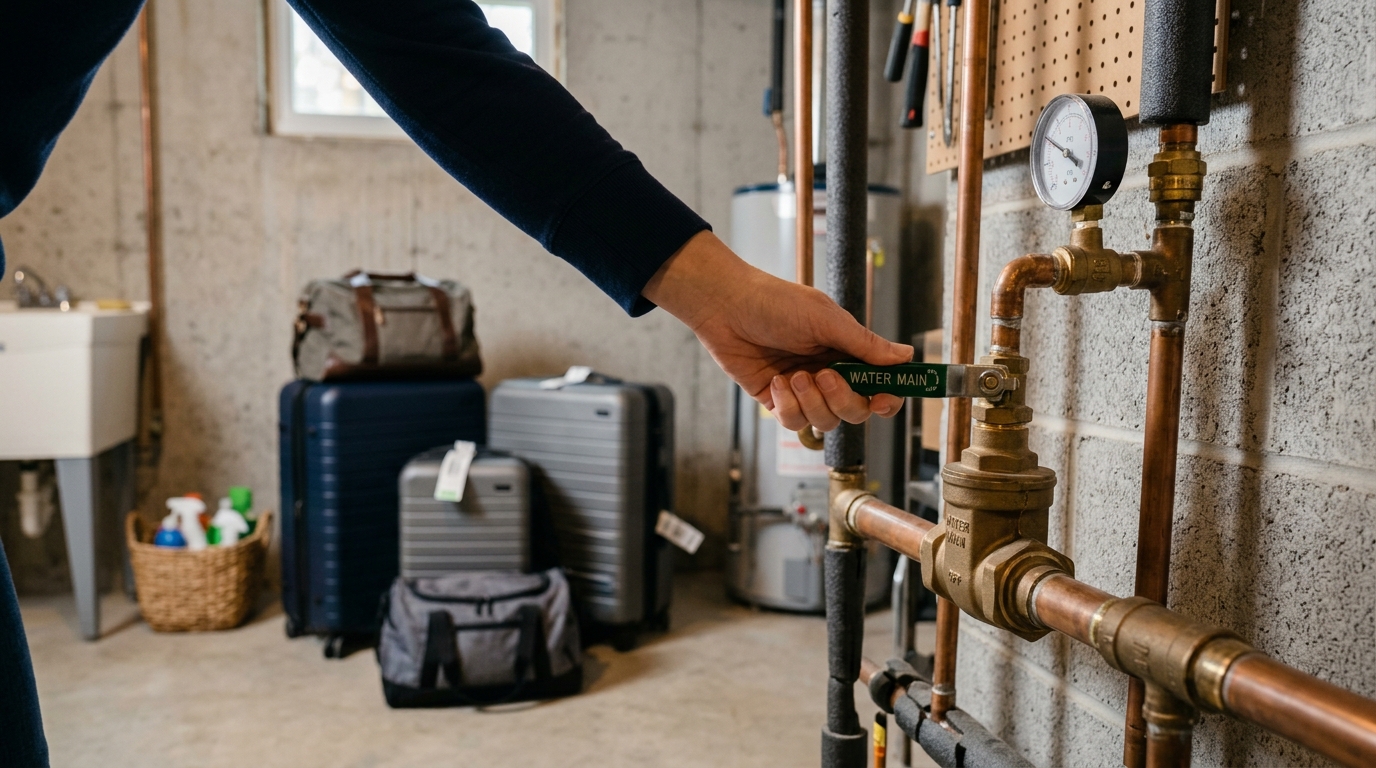
The single biggest protection is also the simplest. Locate your home’s main water shut-off valve — in most Gaithersburg homes it’s on the front wall of the basement near where the water line enters the foundation — and turn it clockwise until tight. Open the lowest faucet in the house briefly to confirm the flow stops.

If your home has an irrigation system or pool that needs to keep running, you may need to leave the main on. In that case, shut off the individual valves at every fixture you can — washing machine, dishwasher, ice maker, toilets, all sinks. The braided supply lines on these fixtures are the most common burst points.

2. Drain the Lines (Optional for Longer Trips)

For trips longer than two weeks, drain residual water from the lines by opening the lowest faucet in the house with the main off. This prevents stagnant water from sitting and reduces the risk if the main fails.

3. Set the Water Heater to Vacation Mode

Most modern water heaters have a “Vacation” or “Pilot” setting that maintains a minimum temperature without fully heating water. This saves significant energy on longer trips and reduces wear on the unit. On older units without a vacation mode, turn the thermostat down to its lowest setting. Do not turn an electric water heater completely off if you’ll be returning to the home in the cold months — restart issues are common.

4. Test and Set Up the Sump Pump

If your basement has a sump pump, test it before you leave. Pour several gallons of water into the pit and confirm the pump cycles on and removes the water. If you have a battery backup, verify the battery indicator shows full charge. If you don’t have a backup and you’re traveling during Maryland storm season (May through October), seriously consider installing one. A pump that fails during a power outage while you’re away is a flooded basement waiting to happen.

5. Check Toilets, Fixtures, and Visible Pipes

Walk the house and look for any active drips, slow leaks, or signs of moisture. A slow leak you’ve been ignoring for weeks can become a major leak under the slightly different pressure dynamics of an empty house. Run a dye-tablet test on every toilet — drop a few drops of food coloring into the tank, wait 15 minutes, and check the bowl. If the color bled through, replace the flapper before you leave.

6. Empty the Dishwasher and Washing Machine

An empty dishwasher with the door slightly ajar prevents stale water in the trap and lets the seals dry out. Same with the washing machine. Both appliances have rubber seals that can develop slow leaks if pressure sits on them for an extended period with the door closed.

7. Arrange a Friend or Neighbor Check-In

For trips longer than a week, arrange for someone you trust to walk through the house once midway through the trip. Even a five-minute look — basement, kitchen, bathrooms — catches problems before they snowball. Leave them a written note with the location of the main shut-off, the water heater, and an emergency phone number. The American Red Cross recommends this for any extended absence as part of basic home preparedness.

Shut Off the Main Valve — Yes or No?

Most Gaithersburg homeowners ask this. The answer for almost every trip longer than 48 hours is yes, shut the main. The only reasons not to:

  • An automatic irrigation system that must keep running
  • A pool that needs make-up water
  • An automatic ice maker connection to a refrigerator that needs continuous water

If any of those apply, you can either let those systems pause for the trip, or use fixture-level shut-offs at every appliance and bathroom while leaving the main open. The fixture-level approach is more work but protects most of the failure modes.

Water Heater Vacation Mode in Detail

For trips of less than a week, leaving the water heater on saves you nothing meaningful and avoids restart issues. For trips of a week or more, vacation mode (or its equivalent) makes sense. Gas water heaters: turn the dial to “Pilot.” Electric: switch the dedicated breaker off if you’re confident it will restart cleanly, or set the thermostat to its lowest setting. Modern hybrid (heat-pump) water heaters typically have a built-in vacation timer that’s worth using.

Set Up the Sump Pump for While You’re Gone

For Maryland trips in storm season, a sump pump with battery backup and a Wi-Fi water alarm is the difference between a dry homecoming and a destroyed basement. Both can be added to an existing setup in a single Mallick visit. For homes with finished basements, we recommend this combination as standard.

What to Do When You Get Home

Before you unpack, walk the basement, kitchen, and bathrooms. Look for any standing water, damp spots, or unfamiliar smells. Then turn the main back on slowly — a sudden return of pressure can dislodge sediment and stress weak fixtures. Check each fixture once flow returns. Reset the water heater to its normal temperature. If anything looks off, call us before using the affected fixture.

Why Gaithersburg Homeowners Choose Mallick

Mallick Plumbing & Heating handles pre-trip and post-trip plumbing checks for Gaithersburg, Rockville, Germantown, Bethesda, and the rest of Montgomery County, as well as Frederick County. A pre-vacation visit takes under an hour and gives you a documented walkthrough of every shut-off, fixture, and risk point in your home — so the next trip is even easier. For background on what a comprehensive inspection includes, see our piece on annual plumbing inspections in Gaithersburg.

For active emergencies while you’re away, our 24/7 emergency line is staffed by live dispatchers.

Schedule a Pre-Vacation Plumbing Check

If you’re traveling more than a week, a 30-minute pre-trip inspection is the cheapest peace of mind you can buy. Schedule a pre-vacation plumbing check with Mallick Plumbing & Heating and leave the house knowing every shut-off is tested and every risk point is documented.
Spring Plumbing Checklist for Gaithersburg, MD Homeowners

By the time the cherry trees bloom in Gaithersburg, your plumbing has already been through three months of freezing nights, salt-laden snowmelt, and heavy use. Spring is the highest-value time of year for plumbing maintenance because small problems caused by winter — a hairline crack in a copper line, sediment built up in a water heater, a sump pump that hasn’t run since November — are usually still simple fixes in April. Wait until summer and they tend to become emergencies. This spring plumbing checklist for Gaithersburg, MD homeowners covers everything we recommend our Montgomery County customers do (or have us do) before May arrives.

Why Spring Plumbing Maintenance Matters in Maryland

Maryland’s freeze-thaw cycle is harder on plumbing than the average U.S. climate. Gaithersburg routinely sees dozens of days each year where the temperature crosses 32°F in both directions in 24 hours. Each cycle puts microstress on outdoor faucets, water service lines, and any pipe in an unheated space. By April, those stresses have accumulated. Add to that the spring rains that test every sump pump and drain in your basement, and the case for an annual spring check writes itself.

For most Gaithersburg homes, this is a 1–2 hour exercise. Some items you can handle yourself; others are worth calling Mallick Plumbing for. The list below flags both.

1. Check and Test Every Outdoor Faucet

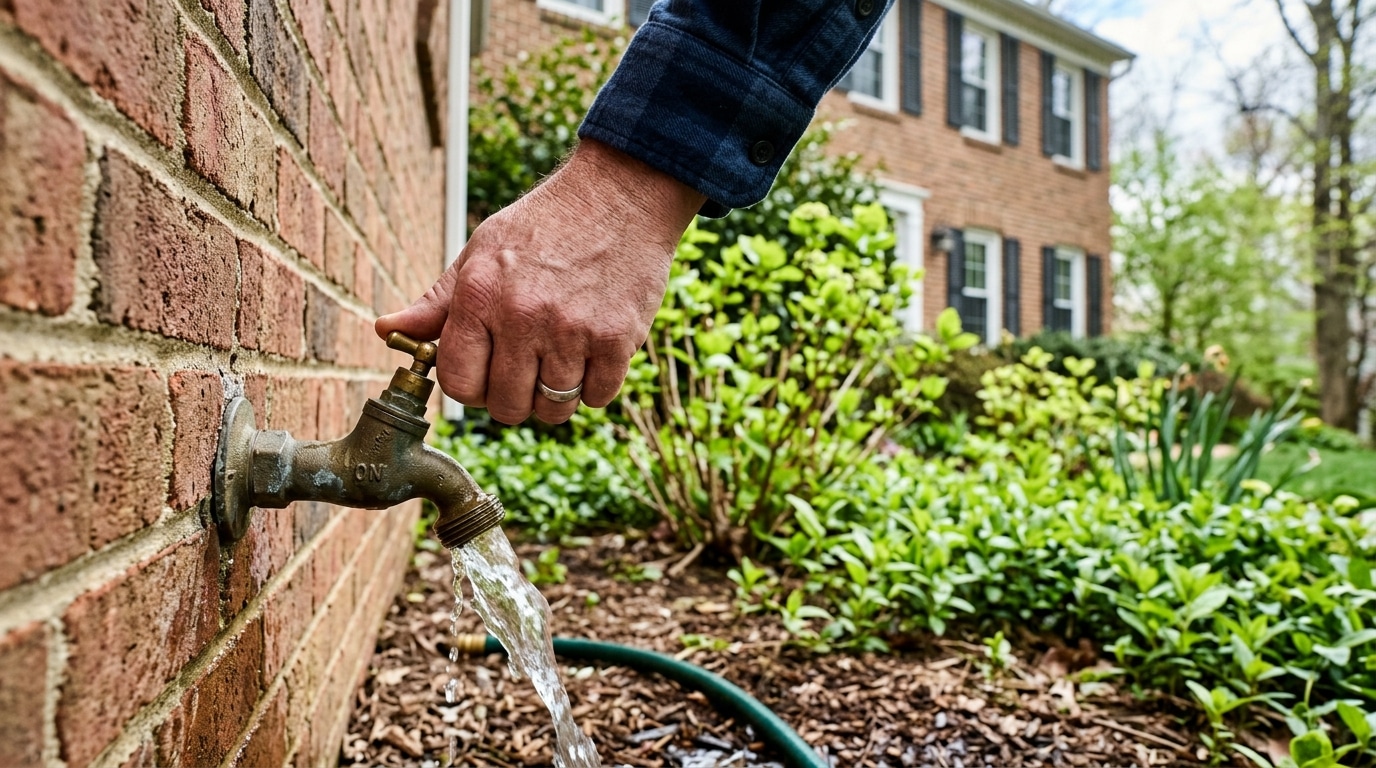
Turn each outdoor hose bib on and watch for two things: weak flow and water dripping back inside the house near the connection point. Weak flow usually means a partial blockage or a frost-burst pipe that hasn’t been noticed yet because the valve has been off all winter. A leak appearing inside the wall is a clear sign the spigot froze and split. A repair caught in spring, before the leak has damaged drywall and subfloor, is dramatically simpler than the same repair caught later.

2. Test the Sump Pump Before the Spring Rains

Pour several gallons of water into the sump pit and confirm the pump activates, removes the water, and shuts off. If it hums but doesn’t pump, the impeller is jammed. If it doesn’t activate, the float switch has likely failed. Sump pumps don’t last forever — if yours is more than several years old and you have a finished basement, replacement before storm season is far less stressful than emergency replacement during a flood. Also confirm the discharge line outside the house is clear and runs away from the foundation.

3. Flush the Water Heater

Sediment from Maryland’s moderately hard water (the USGS classifies most Maryland tap water as moderately hard) settles at the bottom of every tank water heater. By spring, that layer has been baked solid over a winter of heavy use. Flushing the tank removes the sediment, restores efficiency, and extends the life of the unit. The procedure: turn the heater to “Pilot” (gas) or off (electric), connect a hose to the drain valve, run it to a floor drain or outside, open the valve, and let the tank empty fully before refilling. If you’ve never flushed your tank and it’s been more than a few years, expect a slow drain — the sediment is heavy. Many Gaithersburg homeowners choose to have us do this as part of a spring maintenance visit.

4. Inspect Every Visible Pipe for Winter Damage

Walk through your basement, crawlspace, and any utility closets. Look for:

Mark anything suspicious with a piece of tape and have a plumber confirm. A pinhole leak caught in April is a quick repair. The same leak undetected until July, after it’s saturated your subfloor, becomes a much larger combined plumbing and remediation project.

5. Test Water Pressure and the Pressure Reducing Valve

Buy an inexpensive hose-bib pressure gauge from a hardware store and screw it onto any outdoor spigot. Your reading should be between 50 and 75 psi. Above 80 psi, pipes and fixtures start failing prematurely — and Montgomery County’s main pressure can exceed 100 psi in some neighborhoods, which is why most newer Gaithersburg homes have a pressure reducing valve (PRV) at the main. If your reading is high, your PRV is likely failing and needs replacement.

6. Clear Drains and Check for Slow Flow

Run hot water for 60 seconds in every sink, tub, and floor drain. Watch the drain rate. A slow drain in spring is the first sign of a partial blockage that will fully clog under heavy summer use. Hair, soap, and grease have been accumulating all winter. A simple enzymatic drain treatment monthly (not chemical drain cleaner — it damages pipes) keeps drains clear. For drains that are already slow, schedule a professional cleaning before the issue escalates.

7. Inspect Toilets and Look for Hidden Leaks

Add several drops of food coloring to each toilet tank, wait 15 minutes, then check the bowl. If the color has bled through, the flapper is failing — a small part that quietly wastes water month after month. (The EPA estimates household leaks waste nearly 1 trillion gallons of water nationwide each year.) Also check the floor around the base of each toilet for soft spots or discoloration, which can indicate a failing wax ring. Catch this in spring and it’s a quick repair. Catch it in late summer after the subfloor has rotted and it’s a multi-day project.

8. Schedule a Professional Inspection if You Haven’t in 24+ Months

An annual plumbing inspection by a licensed Maryland plumber typically takes 60–90 minutes. It includes everything above plus a camera look at the sewer line, a check of the main shut-off valve operation, and a written report. For older homes in Montgomery County, this is the single highest-value preventive step you can take. See our deep-dive on annual plumbing inspections in Gaithersburg for what’s included and what to look for in a provider.

Spring-Specific Items for Older Gaithersburg Homes

If your home was built before 1980, add these to the list:

What to Do If You Find a Problem

Most spring plumbing issues caught in April are small jobs. The exceptions — a failing water service line, a corroded sewer line, a water heater on the edge of failure — are still simpler to handle now than in mid-summer when emergency demand peaks and parts can be backordered. If you find something during your spring check that concerns you, document it with photos and call us. We’ll prioritize it based on urgency, not pressure you into work that can wait.

For an emergency that can’t wait — active leak, no hot water, sewage backup — see our guide on emergency plumbing in Gaithersburg. Otherwise, normal scheduling is the right move.

Book a Spring Plumbing Inspection in Gaithersburg

Mallick Plumbing & Heating offers comprehensive spring maintenance visits for Gaithersburg, Rockville, Germantown, and the rest of Montgomery County, as well as Frederick County. We’ll handle the whole checklist above, give you a written report, and flag anything that needs follow-up — no upsell pressure, just an honest look at your system. Schedule your spring plumbing check today and head into the warm months with one less thing to worry about.

Preventing Gas Leaks in Your Home

A gas leak in your home is a serious hazard that can be very dangerous. Knowing how to prevent gas leaks and what to do if you suspect one can keep your family safe and your home secure. At Mallick Plumbing & Heating, we take gas safety seriously and offer expert advice and services to help protect your household from gas-related emergencies. Here, we’ll cover essential gas leak safety tips, methods for preventing gas leaks in your home, and how to detect a gas leak before it becomes a bigger issue.

Understanding the Dangers of Gas Leaks

Natural gas is commonly used in homes for heating, cooking, and powering appliances. While it is a reliable and efficient energy source, a gas leak can be incredibly dangerous if not detected and managed promptly. Gas is odorless, but suppliers add a distinct sulfur-like smell, similar to rotten eggs, to help with home gas leak detection.

Gas Leak Safety Tips

When it comes to gas leak safety, there are several steps every homeowner should take to protect their family. Here are some essential safety tips:

1. Know the Signs of a Gas Leak:

The first step in protecting your family is recognizing a gas leak. Apart from the rotten egg smell, other signs of a gas leak include:

  • A hissing or whistling sound near gas appliances or pipelines.

  • Dead or dying plants around your home’s gas line or in areas where gas appliances are located.

  • Unexplained increases in your gas bill.

If you detect any of these signs, act immediately to prevent further exposure and risk.

2. Don’t Ignore Strange Smells: If you notice the distinct rotten egg smell associated with natural gas, evacuate your home right away. Avoid using electrical devices or appliances, as even a small spark could ignite the gas. Once you’re safely outside, contact your gas company or an emergency plumber like Mallick Plumbing & Heating for immediate assistance.

3. Install Gas Detectors: One of the best ways to ensure gas leak safety in your home is by installing gas detectors. These devices can alert you to the presence of dangerous gasses, including carbon monoxide and natural gas. Regularly check the batteries and test the detectors to ensure they are working properly.

Preventing Gas Leaks in the Home

In addition to recognizing the signs of a gas leak, you can take steps to prevent gas leaks from occurring in the first place. Preventing gas leaks in the home involves a combination of regular maintenance and being mindful of how you use gas appliances.

1. Regularly Inspect Gas Appliances: Make sure to have your gas appliances, such as your furnace, stove, water heater, and fireplace, inspected regularly by a professional. This helps ensure that they are functioning properly and that there are no leaks in the system. Schedule annual maintenance checks with a licensed plumber to ensure your appliances are in good working condition.

2. Monitor the Condition of Gas Lines: Over time, gas lines can wear down, crack, or corrode, leading to leaks. Regularly inspecting your home’s gas lines and scheduling repairs or replacements when necessary can prevent leaks before they occur. Mallick Plumbing & Heating offers expert gas line services to help keep your home safe and prevent gas leaks.

3. Ensure Proper Ventilation: Make sure that your home has adequate ventilation, especially in areas where gas appliances are located. Proper airflow helps disperse gasses and reduce the risk of carbon monoxide buildup or gas leaks.

Home Gas Leak Detection and Repair

When it comes to home gas leak detection, it’s important to leave the job to professionals. If you suspect a gas leak, evacuate your home and call a trusted plumber to inspect your gas lines and appliances. At Mallick Plumbing & Heating, we specialize in gas line repair and leak detection to keep your home and family safe. Our experienced team uses advanced techniques to detect and repair gas leaks quickly and efficiently.

If you have questions or need assistance with gas in your home, call the professionals at Mallick Plumbing & Heating at (301) 804-6759.

Why Does My Toilet Keep Clogging?

Dealing with a toilet that frequently clogs can be a significant inconvenience, pointing to underlying issues in your plumbing system that need attention.

By having experts at Mallick Plumbing & Heating – who help identify and resolve persistent toilet clogs with effective solutions like drain cleaning, hydro jetting, and regular sewer line maintenance – understanding the common causes of these clogs can help you prevent them in the future and maintain a more efficient plumbing system. 

Common Causes of Toilet Clogs

1. Non-Flushable Items: One of the top reasons for clogged toilets is the flushing of items that should not be disposed of in this manner. Products such as wipes (even those labeled as flushable), feminine hygiene products, cotton swabs, and dental floss can obstruct your plumbing, leading to severe blockages.

2. Older Low-Flow Toilets: Early models of low-flow toilets often lack the necessary pressure to effectively clear their internal trap and drain, resulting in frequent clogs. These toilets are designed to conserve water but sometimes fall short on performance.

3. Blocked Trap: The trap, an S-shaped pipe under the toilet bowl, can easily become clogged with waste or non-soluble materials, preventing proper flushing and leading to backups.

4. Clogged Plumbing Vent: Plumbing systems include vents to allow air into the pipes, facilitating smooth water flow. If these vents are obstructed by external debris like leaves or nests, it can decrease air pressure and disrupt drainage, causing the toilet to clog frequently.

5. Main Sewer Line Issues: If there are broader issues with your main sewer line, including tree root intrusion or severe blockages from accumulated debris, it can manifest as recurring clogs in your toilets. These issues can affect your entire home’s plumbing and require immediate professional attention.

Professional Solutions from Mallick Plumbing & Heating

Drain Cleaning: Regular professional drain cleaning is crucial to remove build-ups and minor blockages in your toilet’s plumbing. Mallick Plumbing & Heating provides expert cleaning services that can prevent clogs before they become serious problems.

Hydro Jetting: For tougher or recurrent clogs, hydro jetting is an effective method. This technique uses high-pressure water streams to clear out blockages and scrub the interior surfaces of your pipes, eliminating buildup that could lead to future clogs.

Sewer Line Inspections: Regular inspections of your sewer line can preempt issues that lead to toilet clogs. Mallick Plumbing & Heating uses advanced camera technology to inspect sewer lines and identify any potential problems, such as cracks, obstructions, or tree root infiltrations.

To receive expert solutions and professional service, call Mallick Plumbing & Heating today at (301) 804-6759!

DIY Tips and When to Call a Professional

  • Mind What You Flush: Educate your household about what can and cannot be flushed. Keeping a waste bin beside the toilet can help prevent inappropriate items from being flushed.

  • Use the Right Tools: A flange plunger is more effective for toilets and can be used to clear minor clogs before they worsen.

  • Regular Cleaning: Keep your toilet and its surrounding plumbing clean to avoid mineral buildup and smaller blockages.

If your efforts to resolve frequent clogs are unsuccessful, it’s time to call the professionals at Mallick Plumbing & Heating at (301) 804-6759. Persistent issues often indicate more complex problems within your plumbing system that require expert intervention.

What Not to Put Down the Drain: A GuWhat Not to Put Down the Drain: A Guide to a Clog-Free Kitchen

Your kitchen drain is not a magical portal capable of swallowing anything and everything you throw its way. In fact, treating it as such can lead to unpleasant consequences, like a clogged drain that disrupts your daily routine and drains your wallet.
At Mallick Plumbing & Heating, we understand the importance of proper drain maintenance to keep your kitchen running smoothly.
If you do find yourself in need of some assistance with your drain, please contact us at (301) 804-6759 to speak directly to a Mallick Team Member.
Here’s a comprehensive guide on what not to put down the drain for a clog-free kitchen.

Grease and Cooking Oils

One of the biggest culprits behind kitchen drain clogs is grease and cooking oils. While these substances may be liquid when hot, they solidify as they cool down, coating the inside of your drain pipes and trapping food particles. Over time, this buildup can lead to stubborn clogs that require professional drain cleaning services to clear. Instead of pouring grease and oils down the drain, let them cool in a disposable container and dispose of them in the trash.

Coffee Grounds

Coffee grounds might seem harmless, but they can wreak havoc on your kitchen drain. These fine particles can accumulate in your pipes, creating a dense blockage that impedes water flow. To prevent this, dispose of coffee grounds in the trash or use them as compost for your garden instead.

Eggshells

While eggshells may seem brittle and easily breakable, they can actually create a sandy residue that accumulates in your drain pipes and contributes to clogs. It’s best to dispose of eggshells in the trash or add them to your compost pile rather than washing them down the drain.

Pasta and Rice

Pasta and rice are notorious for expanding when exposed to water, which can lead to blockages in your drain pipes. Even small amounts of these starchy foods can swell and create clogs over time. To prevent this, scrape leftover pasta and rice into the trash before washing dishes.

Fruit Peels

While it may be convenient to toss fruit peels down the drain while preparing meals, doing so can lead to clogs and foul odors in your kitchen. Fruit peels are fibrous and can wrap around other debris in your drain, creating a tangled mess that is difficult to remove. Dispose of fruit peels in the trash or compost them instead.

Fibrous Vegetables

Fibrous vegetables like celery, asparagus, and corn husks should never be washed down the drain. These stringy vegetables can get tangled in your drain pipes and create stubborn clogs that are difficult to clear. Dispose of fibrous vegetables in the trash or add them to your compost pile.

Trust Mallick Plumbing & Heating for Professional Drain Cleaning Services

While following these guidelines can help prevent kitchen drain clogs, it’s inevitable that you may encounter a clog at some point. When that happens, trust the experts at Mallick Plumbing & Heating for professional drain cleaning services. Our skilled technicians have the tools and expertise to quickly and effectively clear clogged drains, restoring proper water flow to your kitchen sink.

Don’t let the kitchen drain clogs disrupt your daily routine, call Mallick Plumbing & Heating at (301) 804-6759 for reliable drain cleaning services!

Preventative Tips for Sewer Main Problems

A malfunctioning sewer main can quickly escalate from a minor inconvenience to a major headache, causing foul odors, backed-up drains, and potential water damage. At Mallick Plumbing & Heating, we understand the importance of proactive maintenance to prevent costly sewer main repairs or replacements.
If you have any questions or suspect any issues with your main sewer line, please contact us at (301) 804-6759 for immediate assistance!
Here are some preventative tips to keep your sewer main in top condition.

Regular Inspections

Routine inspections of your sewer lines are essential for identifying potential problems before they escalate. Schedule regular inspections with a professional plumber to assess the condition of your sewer main. Using specialized equipment like sewer cameras, plumbers can identify issues such as cracks, tree root intrusion, or blockages.

Early detection allows for timely repairs, preventing more extensive damage down the line.

Mindful Landscaping

The roots of trees and shrubs are attracted to sources of moisture, making sewer lines an appealing target. Planting trees and shrubs too close to your sewer main can lead to root intrusion, causing blockages and damage to the pipes.

It’s important to be mindful of landscaping near sewer lines, and avoid planting large trees or deep-rooted plants in close proximity. If you suspect root intrusion, consult with a professional plumber to assess the situation and take appropriate measures to prevent further damage.

Proper Waste Disposal

What goes down your drains can have a significant impact on the health of your sewer main. Avoid flushing non-biodegradable items like baby wipes, feminine hygiene products, paper towels, and cotton swabs down the toilet.

These items can accumulate in your sewer lines, leading to blockages and potential sewer main repairs. Dispose of these items in the trash instead.

Grease Disposal

Pouring grease and cooking oils down the drain may seem convenient, but it can wreak havoc on your sewer main. Grease solidifies as it cools, forming stubborn clogs that impede water flow. To prevent grease buildup in your sewer lines, let grease cool and solidify in a disposable container before disposing of it in the trash.

Monitor Water Usage

Excessive water usage can put a strain on your sewer main, increasing the risk of backups and damage. Monitor your water usage and take steps to conserve water where possible.

Fixing leaks, installing low-flow fixtures, and being mindful of water consumption can reduce the stress on your sewer lines and prolong their lifespan.

Professional Maintenance

Regular maintenance by a professional plumber is crucial for keeping your sewer main in optimal condition. Schedule preventative maintenance appointments with Mallick Plumbing & Heating to inspect your sewer lines, clean out any debris or buildup, and ensure everything is functioning properly. Professional maintenance can catch small issues before they escalate into expensive sewer main repairs or replacements.

Trust Mallick Plumbing & Heating for Sewer Main Services

If you encounter sewer main problems despite your preventative efforts, trust Mallick Plumbing & Heating for expert sewer main repair or replacement services.

Our team of skilled plumbers has the knowledge and experience to diagnose and resolve sewer main issues efficiently and effectively. Whether you need routine maintenance, emergency repairs, or a complete sewer main replacement, we’re here to help. With our proactive approach and expert services, you can enjoy peace of mind knowing your sewer lines are well-maintained and functioning smoothly.

Call Mallick Plumbing & Heating today at (301) 804-6759 to schedule preventative maintenance and keep your sewer main in top condition.

Maximizing Efficiency: Innovative Plumbing Upgrades for Your Gaithersburg Home

In today’s era of advancing technology and sustainability, homeowners in Gaithersburg and surrounding areas of Montgomery County seek innovative ways to enhance their homes’ efficiency, reduce water waste, and lower utility bills.

Investing in plumbing upgrades offers several compelling benefits for homeowners. Upgrading plumbing systems enhances the overall efficiency and functionality of a home, leading to reduced water consumption, lower utility bills, and an eco-friendlier household. Modern plumbing upgrades, such as water-efficient fixtures, filtration systems, and energy-saving appliances, not only contribute to resource conservation but also improve the quality of life by providing cleaner, safer water and preventing potential plumbing issues.

Mallick Plumbing & Heating understands the importance of these upgrades. Here are some innovative plumbing solutions and upgrades to consider for your home:

1. Water Treatment Systems

Installing water treatment systems, such as reverse osmosis or whole-house filtration systems, ensures cleaner and safer water for your household. These systems effectively remove impurities, contaminants, and minerals, providing better-tasting and healthier water for drinking and everyday use.

2. Sewage Pumps

For homes with basements or areas below the sewer line, sewage pumps offer efficient waste disposal. Upgrading to a high-quality sewage pump ensures proper waste management and prevents potential backups, especially in low-lying or older homes prone to drainage issues.

3. Fix Leaks and Upgrade Plumbing Fixtures

Addressing leaks promptly and upgrading older plumbing fixtures can significantly reduce water waste. Fixing leaks in pipes and faucets prevents unnecessary water loss. Additionally, replacing outdated fixtures with water-efficient models, such as low-flow toilets, showerheads, and kitchen faucets, conserves water without compromising functionality.

4. Energy-Efficient Appliances

Consider upgrading to energy-efficient appliances like dishwashers and washing machines. These appliances not only use less water but also consume less energy, contributing to lower utility bills and reduced environmental impact.

5. Filtration Systems for Kitchen Sinks

Installing under-sink water filtration systems provides clean and purified drinking water directly from the kitchen tap. These systems eliminate contaminants and improve the taste and quality of drinking water, promoting healthier hydration for your family.

Interested in these upgrades from Mallick Plumbing & Heating? Contact us at (301) 804-6759!

Benefits of Innovative Plumbing Upgrades

  • Reduced Water Bills: Water-efficient upgrades help conserve water, leading to significant savings on monthly water bills.
  • Environmentally Friendly: Upgrading to energy-efficient and water-saving fixtures reduces water and energy consumption, contributing to an eco-friendlier home.
  • Improved Health and Safety: Water treatment and filtration systems ensure optimal drinking water, promoting better health for your family.
  • Enhanced Home Value: Upgrading plumbing systems with modern and efficient solutions increases the value and appeal of your home, especially for potential buyers.

Before embarking on any plumbing upgrades, consulting a professional plumber from Mallick Plumbing & Heating can provide guidance on the most suitable and effective solutions for your Gaithersburg or surrounding Maryland home. Our expert plumbers can assess your plumbing needs, recommend tailored upgrades, and ensure proper installation for optimal efficiency and performance.

Upgrade your home’s plumbing system with innovative solutions to maximize efficiency, conserve resources, and enjoy the benefits of a modern and sustainable household.

If you need any plumbing services, contact Mallick Plumbing & Heating today at (301) 804-6759!

The Annual Plumbing Maintenance Checklist: Keeping Your Home Flowing Smoothly

Regular maintenance is key to maintaining a smoothly running plumbing system in your Gaithersburg or Maryland home. Plumbing maintenance is crucial for several reasons, primarily to ensure the smooth operation and longevity of your plumbing system.

By conducting routine maintenance, homeowners can detect, become aware and address minor issues before they escalate into major and costly problems. This proactive approach helps prevent plumbing emergencies such as leaks, burst pipes, or clogs that can lead to water damage, structural issues, and mold growth. Additionally, regular maintenance ensures optimal performance and efficiency of plumbing fixtures, appliances, and water-using systems, which ultimately helps conserve water and reduce utility bills.

Mallick Plumbing & Heating offers a comprehensive maintenance contract to customers, which includes an annual inspection and status update on your plumbing system. Call us today at  (301) 804-6759 to learn more! 

Mallick Plumbing & Heating offers a comprehensive maintenance contract to customers, which includes an annual inspection and status update on the condition of your plumbing system.

Mallick Plumbing & Heating understands the importance of preventive care to avoid plumbing issues. To assist homeowners, we’ve compiled an annual plumbing maintenance checklist comprising essential tasks to keep your home’s plumbing in optimal condition throughout the year.

1. Check for Leaks

Inspect your entire plumbing system for leaks. Check faucets, pipes under sinks, water heater connections, and visible pipes for any signs of leaks or water damage. Addressing leaks promptly can prevent water wastage and potential damage to your home or property.

2. Test Drains and Clear Clogs

Test all drains, including sinks, showers, and tubs, for proper drainage. Address slow drains by using natural remedies or a plumbing snake to clear minor clogs. Stubborn clogs might require professional assistance.

3. Examine Toilets for Leaks or Running Water

Check toilets for leaks or continuous running water. A leaking toilet can waste a significant amount of water and may indicate an issue with the flapper, fill valve, or flush handle that needs attention.

4. Inspect Water Heater

Examine your water heater for signs of corrosion, leaks, or unusual noises. Flush the tank to remove sediment buildup, ensuring optimal water heater performance and efficiency.

5. Test Sump Pump (if applicable)

Test your sump pump by pouring water into the sump pit to ensure it activates and pumps water away effectively. Proper functioning of the sump pump is crucial, especially during heavy rains or melting snow.

6. Check Water Pressure

Test water pressure in faucets and showerheads. Low water pressure may indicate sediment buildup or a clog in the plumbing system that needs to be addressed. High water pressure puts a lot of strain on your pipes and could lead to a leak or burst pipe.

7. Inspect Washing Machine Hoses

Examine washing machine hoses for cracks, bulges, or leaks. If they show signs of wear to prevent potential flooding and water damage, consider hiring a professional to replace them.

8. Test Shut-Off Valves

Ensure shut-off valves for sinks, toilets, and appliances are working correctly. Test them periodically to ensure they can be easily turned off in case of emergencies. This is also a good time to review the locations of your shut-off valves with your family in case they need to act during an emergency.

9. Schedule Professional Inspection

Consider scheduling an annual plumbing inspection by a professional Mallick Plumbing & Heating plumber. A thorough inspection can detect potential issues early and prevent costly repairs in the future.

Following this annual plumbing maintenance checklist for your Gaithersburg or Maryland can help you stay proactive in preventing plumbing issues. Regular maintenance ensures a well-functioning plumbing system, minimizes water wastage, and helps avoid expensive repairs due to neglected problems.

For professional assistance with maintenance, repairs or inspections, call our Mallick Plumbing & Heating team at (301) 804-6759 for immediate assistance. 

How to Locate Your Main Water Shutoff Valve in 3 Easy Steps

Water is an essential resource in our homes, but when a plumbing emergency strikes, knowing how to quickly shut off the main water supply can be crucial. Whether you’re dealing with a burst pipe, a leak, or any other plumbing issue, locating your main water shutoff valve is the first step to minimizing damage and preventing further problems.

Whether your home is in Gaithersburg or any other surrounding Maryland area, this guide will walk you through three easy steps to find your main water shutoff valve.

Step 1: Identify Possible Locations

The main water shutoff valve is typically located near where the water line enters your Gaithersburg or Maryland home. Start by considering common areas where plumbing fixtures are present. Here are some common locations to check:

  1. Basement or Crawlspace: In many homes, especially those in colder climates, the main water shutoff valve is situated in the basement or crawlspace near the front foundation wall. Look for a valve along the water line coming in from the street. A good rule of thumb:
  • If you’re on municipal water, your main water shutoff valve if located at the front of your house.
  • If you’re on well water, it is typically located at the back of the house.
  1. Garage: If your home has a garage, the main water shutoff valve might be located there, especially if the garage is close to the main entry point of the water supply.
  2. Utility Room: Check your utility or laundry room. The main shutoff valve is often placed near the water heater or utility sink. Look for a valve along the water line.
  3. Exterior Walls: Sometimes, the valve may be located on an exterior wall, typically near the front of the house. It may be inside a utility box or an insulated cover.

Step 2: Inspect Visible Pipes and Valves

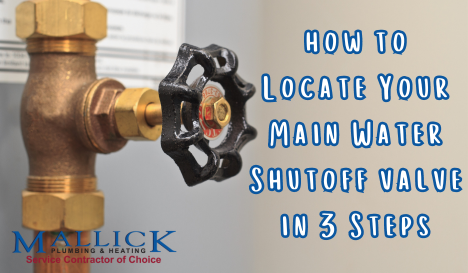
Once you have identified potential locations, visually inspect the area for pipes and valve. You will potentially have either a ball valve with a skinny handle or a wheel-like handle that controls the flow of water into your home.

If you have a ball valve, it will be in the “On” position. Turn it to the “Off” position to stop water flow into the home. Depending on your plumbing system, the valve may be brass, copper or another material and may vary in size.

If you have a wheel-like handle, turn it clockwise to shut off the water.

Step 3: Ask for Assistance or Consult Home Plans

If you’re unable to locate the main water shutoff valve on your own, consider asking for assistance. Reach out to our Mallick Plumbing & Heating team or consult with a knowledgeable friend or neighbor. Additionally, if you have access to your home’s building plans, they may indicate the location of the main water shutoff valve.

Remember that locating the main water shutoff valve is a valuable skill for homeowners. Taking the time to familiarize yourself with its location can save you from potential water damage and provide peace of mind in case of a plumbing emergency.

By following these three easy steps, you can confidently locate and operate your main water shutoff valve, empowering you to take control of unexpected plumbing situations and protect your home from water-related damage.