Hidden Water Leaks in Gaithersburg Homes: How to Find Them

Most expensive plumbing failures don’t start with a flood. They start with a leak too small to see, running for weeks or months behind drywall, under a slab, or inside a wall cavity. By the time the damage shows up, the cost is exponentially higher than catching the leak early. If you’re researching leak detection in Gaithersburg, MD because your water bill jumped, you’ve spotted a stain on the ceiling, or you suspect something’s off but can’t find it, this guide walks through the signs of a hidden leak, the DIY tests you can run yourself, and what professional electronic leak detection looks like.

Why Hidden Leaks Are So Common in Maryland Homes

The mix of housing eras and water conditions across Gaithersburg, Montgomery County, and Frederick County produces a specific set of leak risks:

  • Copper pinhole leaks. Maryland’s moderately hard water and the chemistry of WSSC’s treatment can produce pinhole corrosion in copper supply lines, especially in homes built between 1970 and 2000. The leaks are tiny — sometimes a single drop per minute — but they accumulate hundreds of gallons over weeks.
  • Failed supply line connectors. The braided steel lines connecting toilets, faucets, dishwashers, and washing machines have a finite life. Slow seepage at the connection point is the most common hidden leak we find.
  • Slab leaks. Some Gaithersburg homes have plumbing routed through or under the concrete slab. A leak in those lines is invisible from above until it shows up as a warm spot on the floor or a moisture stain along a baseboard.
  • Failing wax rings under toilets. A toilet wax ring that’s failed leaks small amounts of water (and sewage) at every flush. The slow rot of the subfloor below is gradual but devastating.
  • Outdoor faucet damage. A frost-cracked hose bib that wasn’t fully replaced after winter can drip inside the wall when used. Often missed because the leak only shows when the spigot is on.

The EPA estimates household leaks account for nearly 1 trillion gallons of wasted water nationwide every year, and many of those leaks go undetected for months because they’re hidden inside walls or under floors.

8 Warning Signs of a Hidden Leak

Watch for these in your Gaithersburg home:

  • An unexplained jump in your water bill. If your usage didn’t change but your bill did, you likely have a leak somewhere.
  • The sound of running water when nothing is in use. Stand still in a quiet house and listen near walls. A faint hiss or trickle inside a wall is diagnostic.
  • Warm spots on a tile or concrete floor. Heated water leaking from a slab line warms the floor above it.
  • Damp or discolored spots on walls or ceilings. Even small stains that come and go indicate intermittent moisture.
  • A musty smell with no visible source. Wet wood and drywall produce a distinct musty odor before any visible mold appears.
  • Mold or mildew at the base of a wall. Mold near floor level often points to a leak above it that’s wicking down.
  • Bubbling, cracking, or peeling paint or wallpaper. Moisture behind drywall breaks the bond on the wall finish before anything shows through.
  • Cracks in tile grout or popped floor tiles. A slow slab leak can lift or crack tiles directly above the leak point.

DIY Tests You Can Run Yourself

Before calling for professional leak detection, run these tests — they isolate the source for free:

  • The water meter test. Find your water meter (usually at the front of the property near the street, or in the basement). Note the reading. Don’t use any water in the house for 1 to 2 hours. Re-read the meter. If it changed, you have a leak somewhere on your side of the meter.
  • The toilet dye test. Drop a few drops of food coloring into each toilet tank. Wait 15 minutes without flushing. If the color appears in the bowl, the flapper is leaking — a common, easy fix.
  • The fixture audit. Walk the house and check under every sink, behind every toilet, and around every appliance for any damp spot or water stain. Use a flashlight inside the cabinets.
  • The cold-tap audit. Cold-only water lines should be at room temperature. Any cold water line that feels warm could indicate a hot-water leak on the other side of a wall warming the cold pipe.

If the meter test shows movement but you can’t find the source, that’s the right moment to call in professional electronic leak detection.

When to Call a Pro for Electronic Leak Detection

Modern leak detection uses several non-invasive technologies that find leaks without tearing up walls or floors:

  • Acoustic detection. Highly sensitive listening devices pick up the sound of water escaping under pressure, even through drywall or concrete.
  • Thermal imaging. Infrared cameras detect temperature differentials caused by water behind walls, on the underside of subfloors, and in ceilings.
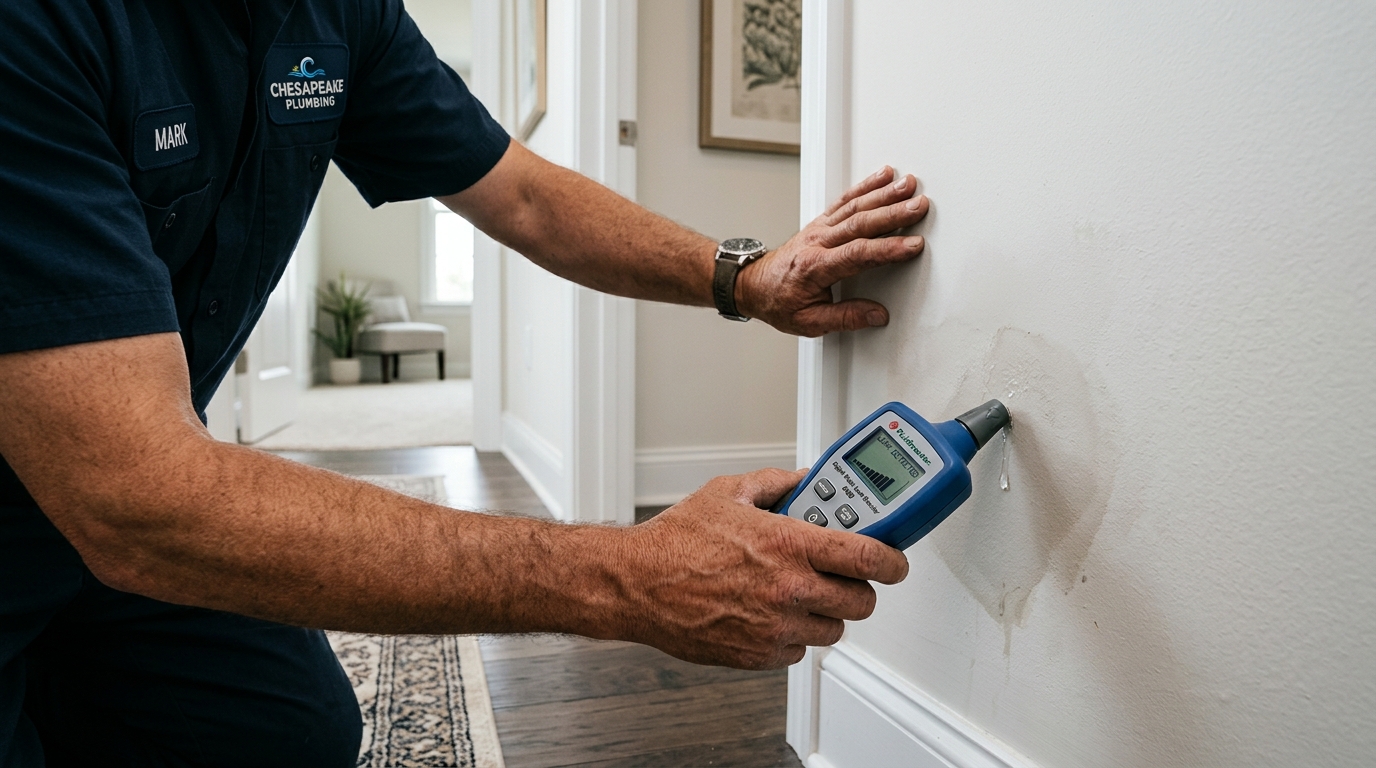
  • Moisture meters. Pin and pin-less meters confirm exactly where moisture is present in wall or floor materials.
  • Tracer gas. For slab leaks and other tough cases, a small amount of an inert tracer gas is introduced into the affected line. Surface detectors pinpoint exactly where the gas escapes.

The combination identifies the leak point precisely so a single small access cut can reach the affected pipe — instead of opening up an entire wall to investigate.

The Detection Process at Mallick

A Mallick Plumbing & Heating leak detection visit typically follows this sequence:

  • Symptom interview. The technician asks where you’ve noticed signs and when, and reviews any recent water-bill data you have.
  • Meter test. Confirms the leak exists and gives a rough rate.
  • Systematic survey. Acoustic and thermal-imaging sweep of the suspected areas.
  • Pinpoint and mark. Once located, the leak is marked with tape or paint and documented with photos.
  • Written report and quote. You receive an itemized written quote for the repair, with the option to schedule it the same day in many cases.

Common Repair Scenarios

After detection, the repairs we see most often in Gaithersburg homes:

  • Pinhole copper leak. Repaired by cutting out the affected section and replacing with new copper or PEX. Usually a small wall opening.
  • Supply line replacement. Failed braided lines at a fixture are swapped in minutes once accessed.
  • Toilet wax ring replacement. Pull and reseat the toilet on a new wax ring. Often 60 minutes total.
  • Slab leak repair or reroute. Depending on the location, either a targeted opening to repair the pipe in place, or rerouting the line through the ceiling or wall above the slab.
  • Pipe relining or replacement. For homes with widespread pinhole issues, a more comprehensive repipe may be the right long-term answer.

Why Gaithersburg Homeowners Choose Mallick for Leak Detection

Mallick Plumbing & Heating handles electronic leak detection and repair across Gaithersburg, Rockville, Germantown, Bethesda, and the rest of Montgomery County, as well as Frederick County. Our technicians use professional acoustic, thermal, and moisture detection equipment and are trained to find leaks without unnecessary demolition. Every detection visit produces a written report with photos and an itemized repair quote. For an active major leak, our 24/7 emergency line dispatches immediately.

For more on the leak detection and broader plumbing services we offer for Maryland homes, visit our leak detection services page. For homeowners on an annual maintenance rhythm, see our piece on annual plumbing inspections in Gaithersburg.

Schedule Electronic Leak Detection in Gaithersburg

The longer a hidden leak runs, the more it costs to fix. If your water bill is up, you’ve spotted a stain, or you just have the sense something is off, schedule a professional leak survey. Schedule electronic leak detection with Mallick Plumbing & Heating today.

Hidden Water Leaks in Gaithersburg Homes: How to Find Them

Most expensive plumbing failures don’t start with a flood. They start with a leak too small to see, running for weeks or months behind drywall, under a slab, or inside a wall cavity. By the time the damage shows up, the cost is exponentially higher than catching the leak early. If you’re researching leak detection in Gaithersburg, MD because your water bill jumped, you’ve spotted a stain on the ceiling, or you suspect something’s off but can’t find it, this guide walks through the signs of a hidden leak, the DIY tests you can run yourself, and what professional electronic leak detection looks like.

Why Hidden Leaks Are So Common in Maryland Homes

The mix of housing eras and water conditions across Gaithersburg, Montgomery County, and Frederick County produces a specific set of leak risks:

The EPA estimates household leaks account for nearly 1 trillion gallons of wasted water nationwide every year, and many of those leaks go undetected for months because they’re hidden inside walls or under floors.

8 Warning Signs of a Hidden Leak

Watch for these in your Gaithersburg home:

DIY Tests You Can Run Yourself

Before calling for professional leak detection, run these tests — they isolate the source for free:

If the meter test shows movement but you can’t find the source, that’s the right moment to call in professional electronic leak detection.

When to Call a Pro for Electronic Leak Detection

Modern leak detection uses several non-invasive technologies that find leaks without tearing up walls or floors:

The combination identifies the leak point precisely so a single small access cut can reach the affected pipe — instead of opening up an entire wall to investigate.

The Detection Process at Mallick

A Mallick Plumbing & Heating leak detection visit typically follows this sequence:

Common Repair Scenarios

After detection, the repairs we see most often in Gaithersburg homes:

Why Gaithersburg Homeowners Choose Mallick for Leak Detection

Mallick Plumbing & Heating handles electronic leak detection and repair across Gaithersburg, Rockville, Germantown, Bethesda, and the rest of Montgomery County, as well as Frederick County. Our technicians use professional acoustic, thermal, and moisture detection equipment and are trained to find leaks without unnecessary demolition. Every detection visit produces a written report with photos and an itemized repair quote. For an active major leak, our 24/7 emergency line dispatches immediately.

For more on the leak detection and broader plumbing services we offer for Maryland homes, visit our leak detection services page. For homeowners on an annual maintenance rhythm, see our piece on annual plumbing inspections in Gaithersburg.

Schedule Electronic Leak Detection in Gaithersburg

The longer a hidden leak runs, the more it costs to fix. If your water bill is up, you’ve spotted a stain, or you just have the sense something is off, schedule a professional leak survey. Schedule electronic leak detection with Mallick Plumbing & Heating today.

Pre-Vacation Plumbing Checklist for Gaithersburg Homeowners

You’ve packed the car, set the timer on the lights, and locked the back door. And then a supply line bursts behind the washing machine while you’re at the beach. By the time the neighbor notices water seeping under the garage door, your hardwood floors are toast. A simple vacation plumbing checklist for Gaithersburg, MD homeowners takes 15 minutes before you leave and is the cheapest insurance policy in home ownership. This guide walks through the seven steps Mallick Plumbing & Heating recommends before any trip longer than a weekend.

Why Vacation Is Prime Time for Plumbing Failures

Empty homes don’t experience fewer plumbing failures — they experience worse ones, because nobody’s there to notice. According to the Insurance Information Institute, water damage is one of the most common and costly homeowner insurance claims, and the worst claims are almost always from undetected leaks that ran for days or weeks.

The common Gaithersburg failure modes — a corroded supply line behind a fixture, a slow toilet leak, a sump pump that quits during a storm — are all things you’d notice and stop within minutes if you were home. Gone for a week, the same failures can mean tens of thousands of dollars in damage and a months-long restoration project.

This checklist is what we recommend for any trip of more than 48 hours.

The 7-Point Pre-Vacation Plumbing Checklist

1. Shut Off the Main Water Valve

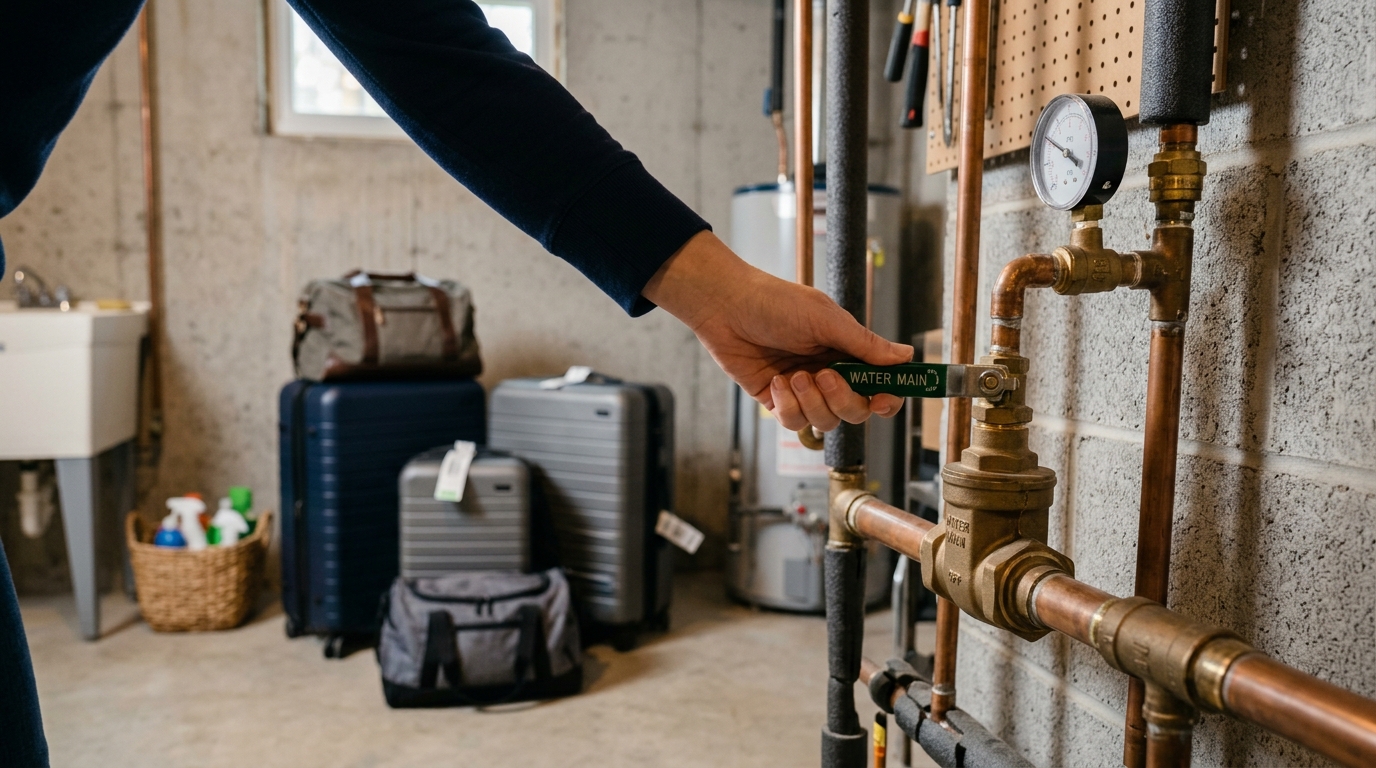
The single biggest protection is also the simplest. Locate your home’s main water shut-off valve — in most Gaithersburg homes it’s on the front wall of the basement near where the water line enters the foundation — and turn it clockwise until tight. Open the lowest faucet in the house briefly to confirm the flow stops.

If your home has an irrigation system or pool that needs to keep running, you may need to leave the main on. In that case, shut off the individual valves at every fixture you can — washing machine, dishwasher, ice maker, toilets, all sinks. The braided supply lines on these fixtures are the most common burst points.

2. Drain the Lines (Optional for Longer Trips)

For trips longer than two weeks, drain residual water from the lines by opening the lowest faucet in the house with the main off. This prevents stagnant water from sitting and reduces the risk if the main fails.

3. Set the Water Heater to Vacation Mode

Most modern water heaters have a “Vacation” or “Pilot” setting that maintains a minimum temperature without fully heating water. This saves significant energy on longer trips and reduces wear on the unit. On older units without a vacation mode, turn the thermostat down to its lowest setting. Do not turn an electric water heater completely off if you’ll be returning to the home in the cold months — restart issues are common.

4. Test and Set Up the Sump Pump

If your basement has a sump pump, test it before you leave. Pour several gallons of water into the pit and confirm the pump cycles on and removes the water. If you have a battery backup, verify the battery indicator shows full charge. If you don’t have a backup and you’re traveling during Maryland storm season (May through October), seriously consider installing one. A pump that fails during a power outage while you’re away is a flooded basement waiting to happen.

5. Check Toilets, Fixtures, and Visible Pipes

Walk the house and look for any active drips, slow leaks, or signs of moisture. A slow leak you’ve been ignoring for weeks can become a major leak under the slightly different pressure dynamics of an empty house. Run a dye-tablet test on every toilet — drop a few drops of food coloring into the tank, wait 15 minutes, and check the bowl. If the color bled through, replace the flapper before you leave.

6. Empty the Dishwasher and Washing Machine

An empty dishwasher with the door slightly ajar prevents stale water in the trap and lets the seals dry out. Same with the washing machine. Both appliances have rubber seals that can develop slow leaks if pressure sits on them for an extended period with the door closed.

7. Arrange a Friend or Neighbor Check-In

For trips longer than a week, arrange for someone you trust to walk through the house once midway through the trip. Even a five-minute look — basement, kitchen, bathrooms — catches problems before they snowball. Leave them a written note with the location of the main shut-off, the water heater, and an emergency phone number. The American Red Cross recommends this for any extended absence as part of basic home preparedness.

Shut Off the Main Valve — Yes or No?

Most Gaithersburg homeowners ask this. The answer for almost every trip longer than 48 hours is yes, shut the main. The only reasons not to:

If any of those apply, you can either let those systems pause for the trip, or use fixture-level shut-offs at every appliance and bathroom while leaving the main open. The fixture-level approach is more work but protects most of the failure modes.

Water Heater Vacation Mode in Detail

For trips of less than a week, leaving the water heater on saves you nothing meaningful and avoids restart issues. For trips of a week or more, vacation mode (or its equivalent) makes sense. Gas water heaters: turn the dial to “Pilot.” Electric: switch the dedicated breaker off if you’re confident it will restart cleanly, or set the thermostat to its lowest setting. Modern hybrid (heat-pump) water heaters typically have a built-in vacation timer that’s worth using.

Set Up the Sump Pump for While You’re Gone

For Maryland trips in storm season, a sump pump with battery backup and a Wi-Fi water alarm is the difference between a dry homecoming and a destroyed basement. Both can be added to an existing setup in a single Mallick visit. For homes with finished basements, we recommend this combination as standard.

What to Do When You Get Home

Before you unpack, walk the basement, kitchen, and bathrooms. Look for any standing water, damp spots, or unfamiliar smells. Then turn the main back on slowly — a sudden return of pressure can dislodge sediment and stress weak fixtures. Check each fixture once flow returns. Reset the water heater to its normal temperature. If anything looks off, call us before using the affected fixture.

Why Gaithersburg Homeowners Choose Mallick

Mallick Plumbing & Heating handles pre-trip and post-trip plumbing checks for Gaithersburg, Rockville, Germantown, Bethesda, and the rest of Montgomery County, as well as Frederick County. A pre-vacation visit takes under an hour and gives you a documented walkthrough of every shut-off, fixture, and risk point in your home — so the next trip is even easier. For background on what a comprehensive inspection includes, see our piece on annual plumbing inspections in Gaithersburg.

For active emergencies while you’re away, our 24/7 emergency line is staffed by live dispatchers.

Schedule a Pre-Vacation Plumbing Check

If you’re traveling more than a week, a 30-minute pre-trip inspection is the cheapest peace of mind you can buy. Schedule a pre-vacation plumbing check with Mallick Plumbing & Heating and leave the house knowing every shut-off is tested and every risk point is documented.

Sump Pump Replacement in Gaithersburg, MD: Signs Yours Is Failing

If your basement has ever taken on water during a Maryland thunderstorm, you already know how much you depend on a working sump pump. If you’re researching sump pump replacement in Gaithersburg, MD, the timing matters. Spring and early summer bring the year’s heaviest rains, and a pump that’s silently failed since November is the most common cause of a flooded basement in May. This guide walks through how sump pumps work, the warning signs of a failing unit, and how Mallick Plumbing & Heating handles replacement for Gaithersburg and Montgomery County homes.

How a Sump Pump Works

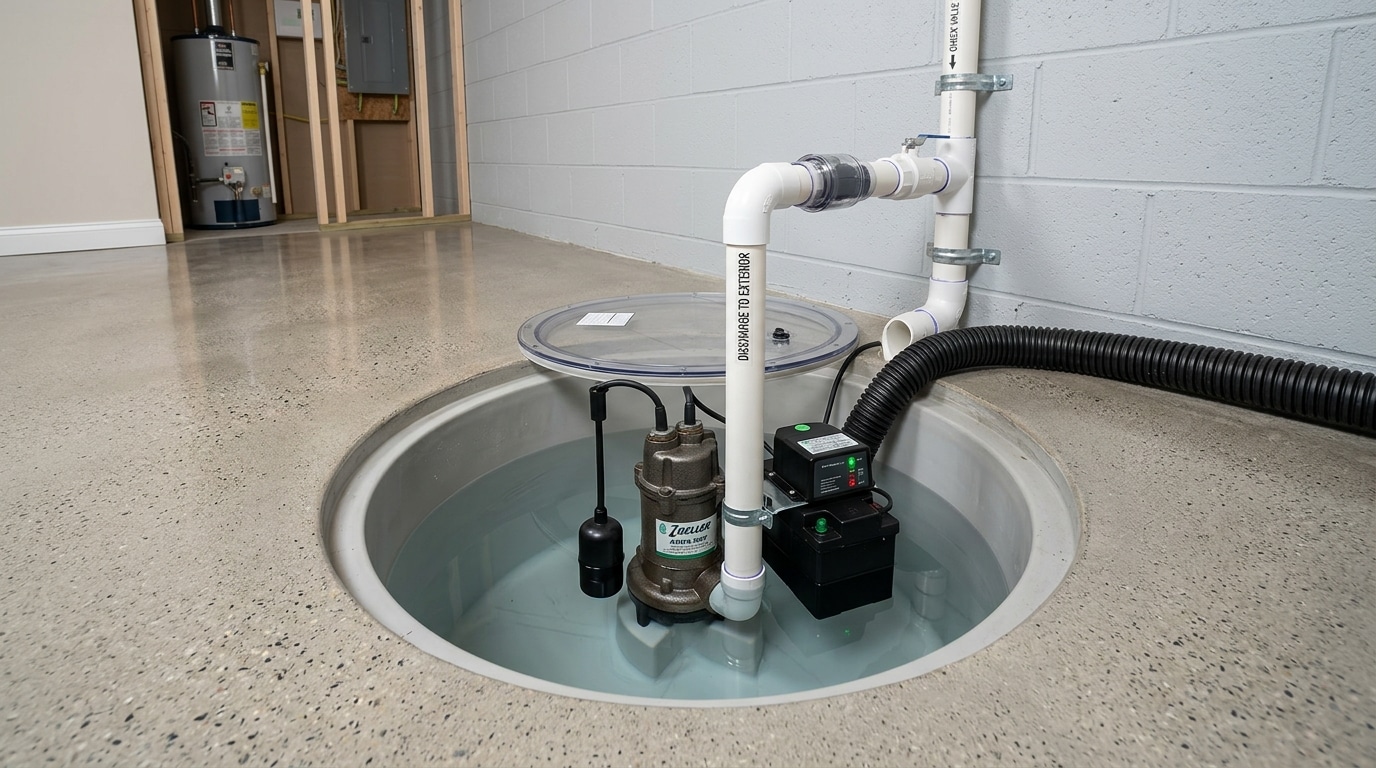
A sump pump sits in a pit dug into the lowest point of your basement floor. Groundwater that would otherwise seep through your foundation collects in the pit. When the water level rises high enough to trigger the float switch, the pump activates and discharges the water through a pipe that runs outside, well away from the foundation. Most Gaithersburg homes have a primary pump that runs on household electric power and, in some homes, a battery-backup pump that takes over during a power outage.

The pump runs on demand. If groundwater is low, you may not hear it run for weeks. After heavy rainfall, it can cycle every few minutes for hours. Both are normal. What’s not normal is the silence after a storm when the pit is filling. That’s the failure mode that costs homeowners the most.

7 Signs Your Sump Pump Is Failing

Most failing pumps give warning signs in the weeks before they quit entirely. Watch for these:

Why Maryland Storms Are Hard on Sump Pumps

Gaithersburg and the broader Montgomery County area sit in a climate zone that delivers heavy convective thunderstorms from late spring through early fall. The National Weather Service Baltimore/Washington office tracks regular events of 1 to 3 inches of rain in a single afternoon during this stretch. A storm that intense pushes a residential sump pump to its limit — cycling every minute or two for hours.

The freeze-thaw cycle of Maryland winters is also harder on pumps than most homeowners realize. Discharge lines that freeze solid in January can crack, and the pump runs without actually moving water out of the pit when the spring thaw arrives.

Repair vs. Replace

Some sump pump issues are simple repairs. A jammed impeller can sometimes be cleared. A failed check valve is a straightforward swap. A stuck float switch can occasionally be replaced as a single part. But for older pumps, repair is rarely worth doing. Once the motor itself starts failing, full replacement is the practical answer. A Mallick technician can diagnose the issue and tell you honestly which category you’re in.

Choosing the Right Replacement Pump

Three decisions shape every sump pump replacement in Gaithersburg:

For homes that have flooded once already, a battery backup combined with a Wi-Fi alarm that pings your phone when water is detected is the most cost-effective insurance policy in residential plumbing.

Battery Backup: The Single Best Upgrade

If you take only one thing from this guide, take this: a battery backup pump is the single most cost-effective upgrade most Gaithersburg basements can make. Maryland’s biggest storms tend to knock out residential power just as the sump pit is filling fastest. A primary pump that depends on household current is useless during the exact 30-minute window that determines whether your basement floods.

A modern battery backup system installs alongside the primary pump and engages automatically when household power fails or the primary pump can’t keep up. The battery is maintenance-free for several years and recharges from your electrical panel between events. Most systems include an audible alarm that activates when the backup takes over, so you know to investigate before the next outage.

For finished basements — where flooding means ruined drywall, flooring, and personal belongings — we recommend a battery backup on every install. For unfinished basements with concrete floors, the calculation is more about protecting belongings stored at floor level than the basement itself. Either way, Gaithersburg’s storm history makes the case for backup nearly every season.

Why Gaithersburg Homeowners Choose Mallick Plumbing

Mallick Plumbing & Heating has been installing and servicing sump pumps in Gaithersburg, Rockville, Germantown, Bethesda, and the rest of Montgomery County for years. Every replacement starts with a written, itemized quote. We size the pump to your home’s actual water-table conditions, install a battery backup when appropriate, and test the full system before we leave. Our 24/7 emergency line means you have someone to call if a pump fails during a storm.

For more on the sump pump services we offer across Frederick County and Montgomery County, visit our sump pump services page.

Schedule a Sump Pump Inspection Before Storm Season

The best time to discover a failing sump pump is on a dry afternoon, not at 2 a.m. during a thunderstorm. A Mallick technician can test your pump, check the discharge line, verify the battery backup if you have one, and replace it if needed before the next big storm hits. Schedule a sump pump inspection with Mallick Plumbing & Heating today.

Spring Plumbing Checklist for Gaithersburg, MD Homeowners

By the time the cherry trees bloom in Gaithersburg, your plumbing has already been through three months of freezing nights, salt-laden snowmelt, and heavy use. Spring is the highest-value time of year for plumbing maintenance because small problems caused by winter — a hairline crack in a copper line, sediment built up in a water heater, a sump pump that hasn’t run since November — are usually still simple fixes in April. Wait until summer and they tend to become emergencies. This spring plumbing checklist for Gaithersburg, MD homeowners covers everything we recommend our Montgomery County customers do (or have us do) before May arrives.

Why Spring Plumbing Maintenance Matters in Maryland

Maryland’s freeze-thaw cycle is harder on plumbing than the average U.S. climate. Gaithersburg routinely sees dozens of days each year where the temperature crosses 32°F in both directions in 24 hours. Each cycle puts microstress on outdoor faucets, water service lines, and any pipe in an unheated space. By April, those stresses have accumulated. Add to that the spring rains that test every sump pump and drain in your basement, and the case for an annual spring check writes itself.

For most Gaithersburg homes, this is a 1–2 hour exercise. Some items you can handle yourself; others are worth calling Mallick Plumbing for. The list below flags both.

1. Check and Test Every Outdoor Faucet

Turn each outdoor hose bib on and watch for two things: weak flow and water dripping back inside the house near the connection point. Weak flow usually means a partial blockage or a frost-burst pipe that hasn’t been noticed yet because the valve has been off all winter. A leak appearing inside the wall is a clear sign the spigot froze and split. A repair caught in spring, before the leak has damaged drywall and subfloor, is dramatically simpler than the same repair caught later.

2. Test the Sump Pump Before the Spring Rains

Pour several gallons of water into the sump pit and confirm the pump activates, removes the water, and shuts off. If it hums but doesn’t pump, the impeller is jammed. If it doesn’t activate, the float switch has likely failed. Sump pumps don’t last forever — if yours is more than several years old and you have a finished basement, replacement before storm season is far less stressful than emergency replacement during a flood. Also confirm the discharge line outside the house is clear and runs away from the foundation.

3. Flush the Water Heater

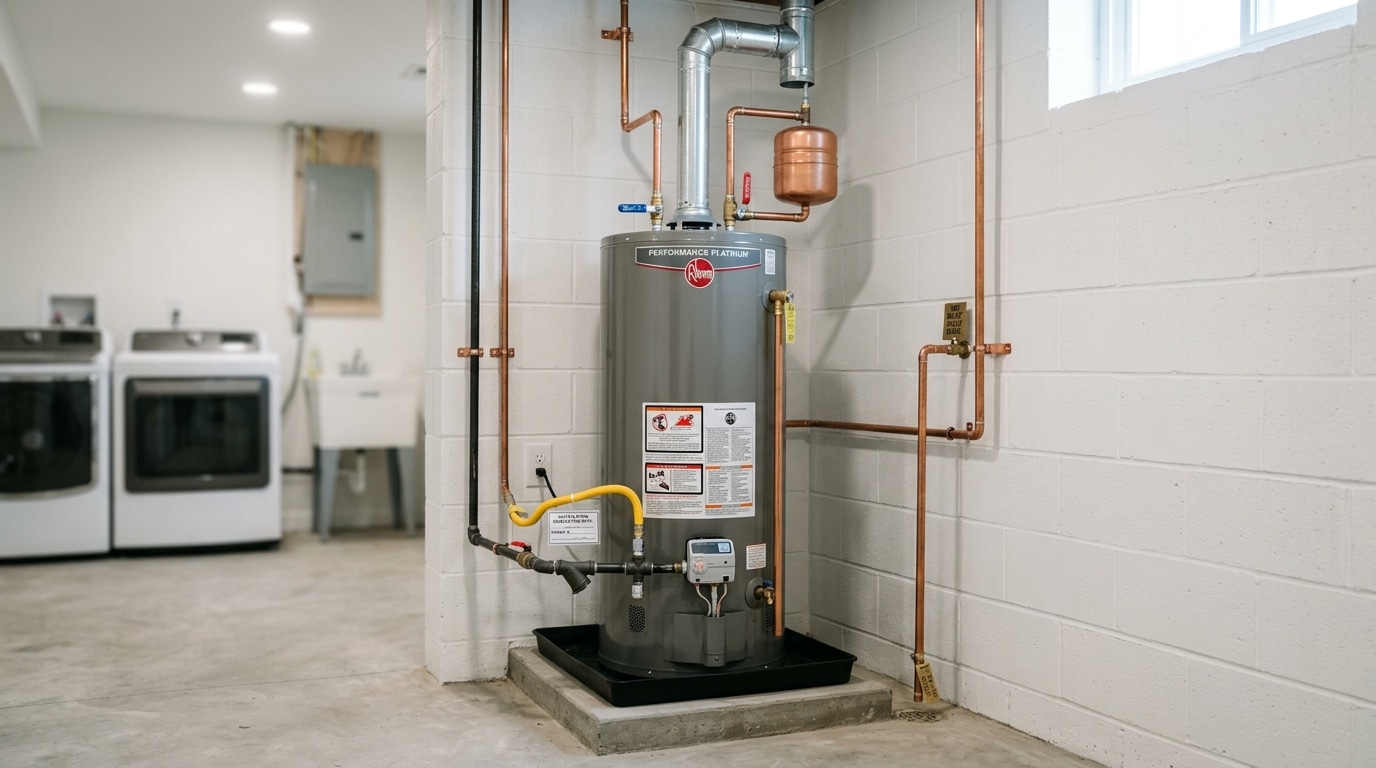
Sediment from Maryland’s moderately hard water (the USGS classifies most Maryland tap water as moderately hard) settles at the bottom of every tank water heater. By spring, that layer has been baked solid over a winter of heavy use. Flushing the tank removes the sediment, restores efficiency, and extends the life of the unit. The procedure: turn the heater to “Pilot” (gas) or off (electric), connect a hose to the drain valve, run it to a floor drain or outside, open the valve, and let the tank empty fully before refilling. If you’ve never flushed your tank and it’s been more than a few years, expect a slow drain — the sediment is heavy. Many Gaithersburg homeowners choose to have us do this as part of a spring maintenance visit.

4. Inspect Every Visible Pipe for Winter Damage

Walk through your basement, crawlspace, and any utility closets. Look for:

Mark anything suspicious with a piece of tape and have a plumber confirm. A pinhole leak caught in April is a quick repair. The same leak undetected until July, after it’s saturated your subfloor, becomes a much larger combined plumbing and remediation project.

5. Test Water Pressure and the Pressure Reducing Valve

Buy an inexpensive hose-bib pressure gauge from a hardware store and screw it onto any outdoor spigot. Your reading should be between 50 and 75 psi. Above 80 psi, pipes and fixtures start failing prematurely — and Montgomery County’s main pressure can exceed 100 psi in some neighborhoods, which is why most newer Gaithersburg homes have a pressure reducing valve (PRV) at the main. If your reading is high, your PRV is likely failing and needs replacement.

6. Clear Drains and Check for Slow Flow

Run hot water for 60 seconds in every sink, tub, and floor drain. Watch the drain rate. A slow drain in spring is the first sign of a partial blockage that will fully clog under heavy summer use. Hair, soap, and grease have been accumulating all winter. A simple enzymatic drain treatment monthly (not chemical drain cleaner — it damages pipes) keeps drains clear. For drains that are already slow, schedule a professional cleaning before the issue escalates.

7. Inspect Toilets and Look for Hidden Leaks

Add several drops of food coloring to each toilet tank, wait 15 minutes, then check the bowl. If the color has bled through, the flapper is failing — a small part that quietly wastes water month after month. (The EPA estimates household leaks waste nearly 1 trillion gallons of water nationwide each year.) Also check the floor around the base of each toilet for soft spots or discoloration, which can indicate a failing wax ring. Catch this in spring and it’s a quick repair. Catch it in late summer after the subfloor has rotted and it’s a multi-day project.

8. Schedule a Professional Inspection if You Haven’t in 24+ Months

An annual plumbing inspection by a licensed Maryland plumber typically takes 60–90 minutes. It includes everything above plus a camera look at the sewer line, a check of the main shut-off valve operation, and a written report. For older homes in Montgomery County, this is the single highest-value preventive step you can take. See our deep-dive on annual plumbing inspections in Gaithersburg for what’s included and what to look for in a provider.

Spring-Specific Items for Older Gaithersburg Homes

If your home was built before 1980, add these to the list:

What to Do If You Find a Problem

Most spring plumbing issues caught in April are small jobs. The exceptions — a failing water service line, a corroded sewer line, a water heater on the edge of failure — are still simpler to handle now than in mid-summer when emergency demand peaks and parts can be backordered. If you find something during your spring check that concerns you, document it with photos and call us. We’ll prioritize it based on urgency, not pressure you into work that can wait.

For an emergency that can’t wait — active leak, no hot water, sewage backup — see our guide on emergency plumbing in Gaithersburg. Otherwise, normal scheduling is the right move.

Book a Spring Plumbing Inspection in Gaithersburg

Mallick Plumbing & Heating offers comprehensive spring maintenance visits for Gaithersburg, Rockville, Germantown, and the rest of Montgomery County, as well as Frederick County. We’ll handle the whole checklist above, give you a written report, and flag anything that needs follow-up — no upsell pressure, just an honest look at your system. Schedule your spring plumbing check today and head into the warm months with one less thing to worry about.

Why Does My Toilet Keep Clogging?

Dealing with a toilet that frequently clogs can be a significant inconvenience, pointing to underlying issues in your plumbing system that need attention.

By having experts at Mallick Plumbing & Heating – who help identify and resolve persistent toilet clogs with effective solutions like drain cleaning, hydro jetting, and regular sewer line maintenance – understanding the common causes of these clogs can help you prevent them in the future and maintain a more efficient plumbing system. 

Common Causes of Toilet Clogs

1. Non-Flushable Items: One of the top reasons for clogged toilets is the flushing of items that should not be disposed of in this manner. Products such as wipes (even those labeled as flushable), feminine hygiene products, cotton swabs, and dental floss can obstruct your plumbing, leading to severe blockages.

2. Older Low-Flow Toilets: Early models of low-flow toilets often lack the necessary pressure to effectively clear their internal trap and drain, resulting in frequent clogs. These toilets are designed to conserve water but sometimes fall short on performance.

3. Blocked Trap: The trap, an S-shaped pipe under the toilet bowl, can easily become clogged with waste or non-soluble materials, preventing proper flushing and leading to backups.

4. Clogged Plumbing Vent: Plumbing systems include vents to allow air into the pipes, facilitating smooth water flow. If these vents are obstructed by external debris like leaves or nests, it can decrease air pressure and disrupt drainage, causing the toilet to clog frequently.

5. Main Sewer Line Issues: If there are broader issues with your main sewer line, including tree root intrusion or severe blockages from accumulated debris, it can manifest as recurring clogs in your toilets. These issues can affect your entire home’s plumbing and require immediate professional attention.

Professional Solutions from Mallick Plumbing & Heating

Drain Cleaning: Regular professional drain cleaning is crucial to remove build-ups and minor blockages in your toilet’s plumbing. Mallick Plumbing & Heating provides expert cleaning services that can prevent clogs before they become serious problems.

Hydro Jetting: For tougher or recurrent clogs, hydro jetting is an effective method. This technique uses high-pressure water streams to clear out blockages and scrub the interior surfaces of your pipes, eliminating buildup that could lead to future clogs.

Sewer Line Inspections: Regular inspections of your sewer line can preempt issues that lead to toilet clogs. Mallick Plumbing & Heating uses advanced camera technology to inspect sewer lines and identify any potential problems, such as cracks, obstructions, or tree root infiltrations.

To receive expert solutions and professional service, call Mallick Plumbing & Heating today at (301) 804-6759!

DIY Tips and When to Call a Professional

  • Mind What You Flush: Educate your household about what can and cannot be flushed. Keeping a waste bin beside the toilet can help prevent inappropriate items from being flushed.

  • Use the Right Tools: A flange plunger is more effective for toilets and can be used to clear minor clogs before they worsen.

  • Regular Cleaning: Keep your toilet and its surrounding plumbing clean to avoid mineral buildup and smaller blockages.

If your efforts to resolve frequent clogs are unsuccessful, it’s time to call the professionals at Mallick Plumbing & Heating at (301) 804-6759. Persistent issues often indicate more complex problems within your plumbing system that require expert intervention.

Preventative Tips for Sewer Main Problems

A malfunctioning sewer main can quickly escalate from a minor inconvenience to a major headache, causing foul odors, backed-up drains, and potential water damage. At Mallick Plumbing & Heating, we understand the importance of proactive maintenance to prevent costly sewer main repairs or replacements.
If you have any questions or suspect any issues with your main sewer line, please contact us at (301) 804-6759 for immediate assistance!
Here are some preventative tips to keep your sewer main in top condition.

Regular Inspections

Routine inspections of your sewer lines are essential for identifying potential problems before they escalate. Schedule regular inspections with a professional plumber to assess the condition of your sewer main. Using specialized equipment like sewer cameras, plumbers can identify issues such as cracks, tree root intrusion, or blockages.

Early detection allows for timely repairs, preventing more extensive damage down the line.

Mindful Landscaping

The roots of trees and shrubs are attracted to sources of moisture, making sewer lines an appealing target. Planting trees and shrubs too close to your sewer main can lead to root intrusion, causing blockages and damage to the pipes.

It’s important to be mindful of landscaping near sewer lines, and avoid planting large trees or deep-rooted plants in close proximity. If you suspect root intrusion, consult with a professional plumber to assess the situation and take appropriate measures to prevent further damage.

Proper Waste Disposal

What goes down your drains can have a significant impact on the health of your sewer main. Avoid flushing non-biodegradable items like baby wipes, feminine hygiene products, paper towels, and cotton swabs down the toilet.

These items can accumulate in your sewer lines, leading to blockages and potential sewer main repairs. Dispose of these items in the trash instead.

Grease Disposal

Pouring grease and cooking oils down the drain may seem convenient, but it can wreak havoc on your sewer main. Grease solidifies as it cools, forming stubborn clogs that impede water flow. To prevent grease buildup in your sewer lines, let grease cool and solidify in a disposable container before disposing of it in the trash.

Monitor Water Usage

Excessive water usage can put a strain on your sewer main, increasing the risk of backups and damage. Monitor your water usage and take steps to conserve water where possible.

Fixing leaks, installing low-flow fixtures, and being mindful of water consumption can reduce the stress on your sewer lines and prolong their lifespan.

Professional Maintenance

Regular maintenance by a professional plumber is crucial for keeping your sewer main in optimal condition. Schedule preventative maintenance appointments with Mallick Plumbing & Heating to inspect your sewer lines, clean out any debris or buildup, and ensure everything is functioning properly. Professional maintenance can catch small issues before they escalate into expensive sewer main repairs or replacements.

Trust Mallick Plumbing & Heating for Sewer Main Services

If you encounter sewer main problems despite your preventative efforts, trust Mallick Plumbing & Heating for expert sewer main repair or replacement services.

Our team of skilled plumbers has the knowledge and experience to diagnose and resolve sewer main issues efficiently and effectively. Whether you need routine maintenance, emergency repairs, or a complete sewer main replacement, we’re here to help. With our proactive approach and expert services, you can enjoy peace of mind knowing your sewer lines are well-maintained and functioning smoothly.

Call Mallick Plumbing & Heating today at (301) 804-6759 to schedule preventative maintenance and keep your sewer main in top condition.

Maximizing Efficiency: Innovative Plumbing Upgrades for Your Gaithersburg Home

In today’s era of advancing technology and sustainability, homeowners in Gaithersburg and surrounding areas of Montgomery County seek innovative ways to enhance their homes’ efficiency, reduce water waste, and lower utility bills.

Investing in plumbing upgrades offers several compelling benefits for homeowners. Upgrading plumbing systems enhances the overall efficiency and functionality of a home, leading to reduced water consumption, lower utility bills, and an eco-friendlier household. Modern plumbing upgrades, such as water-efficient fixtures, filtration systems, and energy-saving appliances, not only contribute to resource conservation but also improve the quality of life by providing cleaner, safer water and preventing potential plumbing issues.

Mallick Plumbing & Heating understands the importance of these upgrades. Here are some innovative plumbing solutions and upgrades to consider for your home:

1. Water Treatment Systems

Installing water treatment systems, such as reverse osmosis or whole-house filtration systems, ensures cleaner and safer water for your household. These systems effectively remove impurities, contaminants, and minerals, providing better-tasting and healthier water for drinking and everyday use.

2. Sewage Pumps

For homes with basements or areas below the sewer line, sewage pumps offer efficient waste disposal. Upgrading to a high-quality sewage pump ensures proper waste management and prevents potential backups, especially in low-lying or older homes prone to drainage issues.

3. Fix Leaks and Upgrade Plumbing Fixtures

Addressing leaks promptly and upgrading older plumbing fixtures can significantly reduce water waste. Fixing leaks in pipes and faucets prevents unnecessary water loss. Additionally, replacing outdated fixtures with water-efficient models, such as low-flow toilets, showerheads, and kitchen faucets, conserves water without compromising functionality.

4. Energy-Efficient Appliances

Consider upgrading to energy-efficient appliances like dishwashers and washing machines. These appliances not only use less water but also consume less energy, contributing to lower utility bills and reduced environmental impact.

5. Filtration Systems for Kitchen Sinks

Installing under-sink water filtration systems provides clean and purified drinking water directly from the kitchen tap. These systems eliminate contaminants and improve the taste and quality of drinking water, promoting healthier hydration for your family.

Interested in these upgrades from Mallick Plumbing & Heating? Contact us at (301) 804-6759!

Benefits of Innovative Plumbing Upgrades

  • Reduced Water Bills: Water-efficient upgrades help conserve water, leading to significant savings on monthly water bills.
  • Environmentally Friendly: Upgrading to energy-efficient and water-saving fixtures reduces water and energy consumption, contributing to an eco-friendlier home.
  • Improved Health and Safety: Water treatment and filtration systems ensure optimal drinking water, promoting better health for your family.
  • Enhanced Home Value: Upgrading plumbing systems with modern and efficient solutions increases the value and appeal of your home, especially for potential buyers.

Before embarking on any plumbing upgrades, consulting a professional plumber from Mallick Plumbing & Heating can provide guidance on the most suitable and effective solutions for your Gaithersburg or surrounding Maryland home. Our expert plumbers can assess your plumbing needs, recommend tailored upgrades, and ensure proper installation for optimal efficiency and performance.

Upgrade your home’s plumbing system with innovative solutions to maximize efficiency, conserve resources, and enjoy the benefits of a modern and sustainable household.

If you need any plumbing services, contact Mallick Plumbing & Heating today at (301) 804-6759!

Understanding the Plumbing Needs of Older Homes

As charm-filled and character-laden as older homes in Gaithersburg and surrounding areas of Maryland can be, they often come with unique plumbing challenges that require careful attention.

Understanding that maintaining the plumbing systems of older homes involves a nuanced approach and the assistance of Mallick Plumbing & Heating. Our licensed and insured plumbers handle everything that’s associated with older homes, focusing on leak detection, piping, bathroom plumbing, and kitchen plumbing.

If you have any questions about your home’s plumbing, contact us at (301) 804-6759!

Leak Detection in Older Homes

One of the primary concerns in older homes is the increased likelihood of leaks due to aging pipes. Regular leak detection is crucial to identify and address issues promptly. Professional plumbers can utilize advanced techniques, such as infrared technology or acoustic sensors, to pinpoint hidden leaks in walls, ceilings, or foundations without causing unnecessary damage to the home’s structure.

Piping Systems in Older Homes

Older homes often feature outdated piping materials – such as galvanized steel or lead. These materials are more prone to corrosion and can impact water quality. Upgrading to modern materials like copper or PEX can improve water flow, prevent corrosion, and enhance the overall integrity of the plumbing system. A comprehensive inspection by plumbing experts can assess the condition of existing pipes and recommend necessary upgrades.

Bathroom Plumbing Considerations

Bathroom plumbing in older homes may have outdated fixtures and plumbing configurations. Upgrading to water-efficient toilets, faucets, and showerheads not only conserves water but also improves the overall functionality of the bathroom. Additionally, inspecting and replacing worn-out seals, gaskets, and pipes can prevent leaks and water damage.

Kitchen Plumbing Upgrades

Kitchens in older homes might have outdated plumbing systems that don’t align with modern demands. Upgrading kitchen plumbing involves assessing the condition of pipes, fixtures, and appliances. Installing energy-efficient dishwashers, garbage disposals, and updating sink fixtures can enhance both the functionality and sustainability of the kitchen.

Benefits of Addressing Plumbing Needs in Older Homes

  1. Preventing Water Damage: Timely leak detection and plumbing upgrades prevent water damage to the structure and foundation of older homes.
  2. Improving Water Quality: Upgrading piping materials enhances water quality, addressing concerns related to corrosion or outdated plumbing materials.
  3. Enhancing Energy Efficiency: Kitchen and bathroom plumbing upgrades contribute to energy efficiency, reducing water and energy consumption.
  4. Preserving Home Value: Proactive plumbing maintenance and upgrades contribute to the overall value and marketability of older homes.

Understanding and addressing the unique plumbing needs of your older home in Gaithersburg or the surrounding Maryland areas requires a combination of expertise and tailored solutions.

Contact us at (301) 804-6759 to ensure that your charming older home enjoys a plumbing system that seamlessly integrates modern efficiency with timeless appeal!