
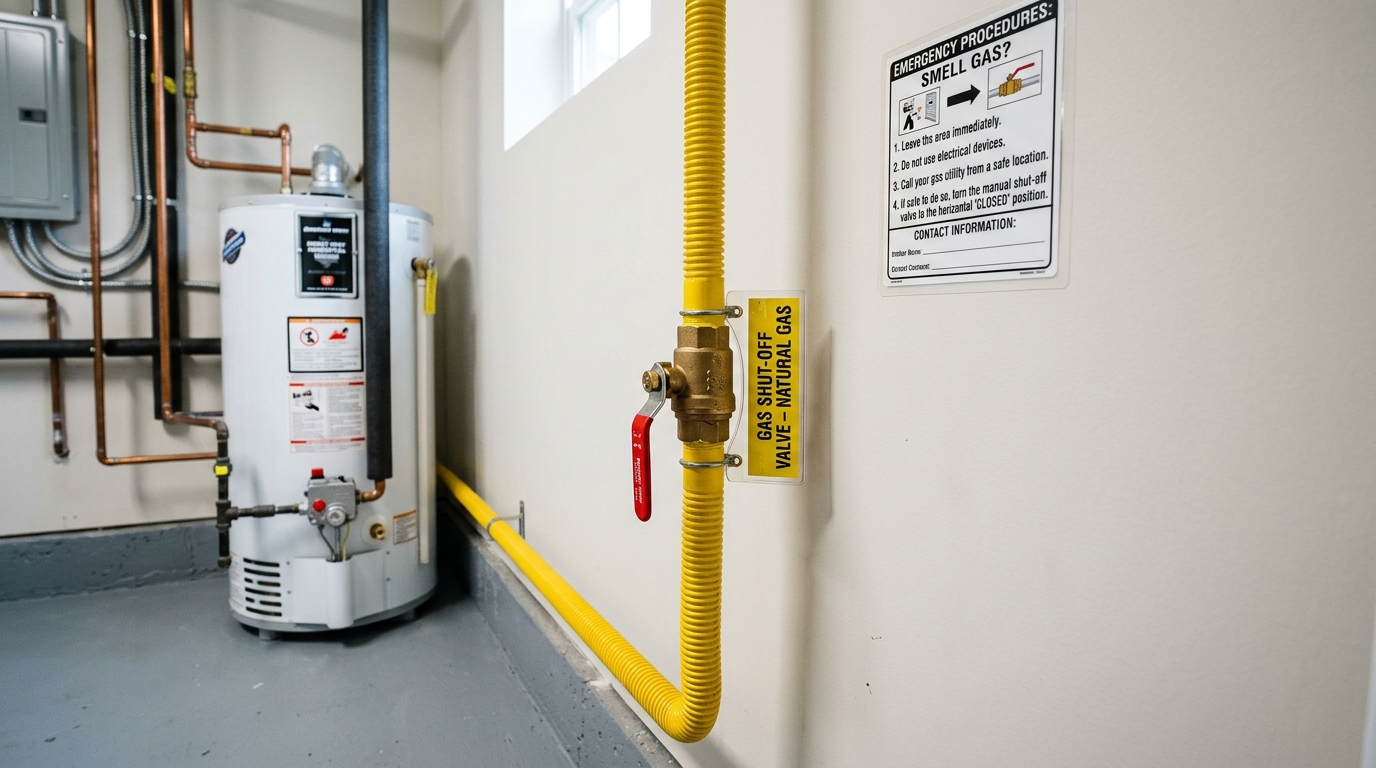
Gas plumbing is the one part of your home where the impact of an amateur fix is measured in lives, not dollars. Natural gas is safe when contained and dangerous the moment it isn’t. If you’re researching gas line repair in Maryland because you smell gas, hear a hissing near a pipe, or are planning an appliance install that requires new gas-line work, this guide covers what to do first, when to call the utility versus a licensed plumber, and how Mallick Plumbing & Heating handles residential gas-line work across Gaithersburg, Frederick, and the rest of our service area.
Signs of a Gas Leak
Most gas leaks are caught by one or more of these signs:
- The smell. Natural gas is odorless on its own, so utilities add mercaptan, a sulfur compound that smells like rotten eggs. If you smell it, treat it as a real leak until proven otherwise.
- A hissing or whistling sound near a gas appliance, line, or meter. Even a small audible leak is significant.
- Dead or dying vegetation along the path of an underground line. Gas escaping into soil kills plants directly above it.
- A higher-than-normal gas bill with no change in usage. A persistent small leak shows up on the meter.
- Physical symptoms: dizziness, headaches, nausea, or fatigue that improve when you leave the home. Gas displaces oxygen in the air, and a leak large enough to cause symptoms is large enough to cause real risk.
- Visible damage to a gas line or fitting. Rust, corrosion, or a broken connection on an exposed line is a leak risk even if no smell or sound is present yet.
What to Do First — Safety Steps
If you smell gas or suspect a leak, the response sequence matters:
- Do not turn anything electrical on or off. No light switches, no thermostat, no garage door opener. An electrical spark can ignite an accumulated gas pocket.
- Do not use any open flame. No candles, no lighters, no stove burners.
- Get everyone — and pets — out of the house immediately. Don’t pause to gather belongings.
- Once outside and away from the home, call 911 and the gas utility’s emergency line. For Washington Gas customers across most of Maryland, the emergency number is on the utility’s website and the back of your bill.
- Do not return until the utility or fire department says it’s safe.
The U.S. Consumer Product Safety Commission publishes guidance on residential gas safety and recommends that every home with gas appliances also have working carbon monoxide detectors on every level — gas leaks and combustion problems often go together.
Common Maryland Gas Line Issues
The gas-line work we see most often in Gaithersburg, Montgomery County, and Frederick County falls into a small set of categories:
- Aging black iron pipe. Older Maryland homes have black iron gas pipe that develops external corrosion over decades. The fittings are usually the first failure point.
- Improper modifications. A previous owner or a non-licensed installer added a fitting, capped a line, or extended a run incorrectly. We find these constantly during pre-purchase inspections.
- Damaged flex connectors. The yellow flexible connectors between a gas line and an appliance have a finite life. Kinks, cracks, and improper installation are common.
- Undersized lines for newer appliances. A homeowner upgrades to a high-output tankless water heater or a larger range and discovers the existing gas line can’t deliver enough BTU. Underperforming appliances and odd pilot-light behavior follow.
- Underground line damage. Tree root growth, ground settling, and old steel pipe corrosion can damage buried gas service lines. The U.S. Pipeline and Hazardous Materials Safety Administration emphasizes calling 811 before any digging to mark these lines.
When You Need a Licensed Plumber vs. the Gas Utility
This is one of the most common points of confusion for Maryland homeowners. Here’s the split:
- The gas utility is responsible for the line from the street to your meter. Anything wrong on that side — including the meter itself — is the utility’s responsibility. They handle it at no impact to you in most cases.
- You (and a licensed plumber) are responsible for everything past the meter. The gas line that runs from the meter into your home, through the walls, and to every appliance is residential plumbing. A licensed Maryland plumber is the right person to repair, modify, or extend it.
- Active leak emergencies → call 911 and the utility first. Once the immediate safety risk is handled, a licensed plumber repairs the line.
Gas-line work is one of the most heavily regulated areas of residential plumbing in Maryland. Permits and inspections are required for nearly any modification. Skipping a permit on gas work doesn’t just risk a home-service option flag later — it risks lives.
The Repair / Replacement Process
A typical Mallick Plumbing & Heating gas-line job follows this sequence:
- Diagnostic visit. A licensed plumber arrives, talks through the symptoms, tests for leaks with electronic gas detectors, and identifies the affected sections.
- Written quote and permit pull. We provide an itemized written estimate and handle the Montgomery County or Frederick County gas-work permit application.
- Shut-off and repair. Gas is shut off at the meter for the affected section. Repair or replacement work is performed using black iron pipe, CSST (corrugated stainless steel tubing) where appropriate, or copper depending on the application and code.
- Pressure test. Every gas-line repair we perform is pressure-tested before reopening the line. The test confirms the entire repaired section holds pressure with no leaks.
- Inspection. The county inspector signs off on the work. Until that sign-off, the line is not put back in service.
- Re-light and verify. We re-light any pilot lights, verify each appliance is operating correctly, and walk you through what was done.
How Mallick Handles Gas Line Work in Maryland
Mallick Plumbing & Heating handles residential gas-line repair, replacement, and new-appliance gas connections across Gaithersburg, Rockville, Germantown, Bethesda, Frederick, Woodbine, and the surrounding communities. Every job is done by a licensed Maryland plumber. Every job pulls a permit and gets a county inspection. Every job is pressure-tested before being put back in service. For active gas emergencies, our 24/7 emergency line is staffed at all hours — though for any suspected leak, your first call should be 911 and the gas utility.
For more on the gas-line services we offer, visit our gas line services page.
Schedule a Gas Line Inspection in Maryland
If you’ve noticed any warning sign — even a faint smell that comes and goes — schedule an inspection. A 45-minute electronic gas-leak survey of your home identifies leaks at any level, including small ones you’d never smell. Schedule a gas line inspection with Mallick Plumbing & Heating today.