
What to Look for When Hiring a Plumber

There was a time when finding a plumber was a difficult job because you had to make a serious effort first to collect together a list of enough plumbing contractors in your local area and then start to work on narrowing down the list to the plumber who was best for the job. Today it’s still difficult to find the right plumber to hire, but for different reasons: it no longer takes much effort to find plumbers because you only have to type in a few words into a search engine—but you have so many more choices that it can be overwhelming to find the right plumber.

You’ve made a good start, however, since you’ve found a way to our site—probably through an Internet search. (If friends referred you, that’s even better!) We can offer you more information on what criteria to use when it’s time to hire a plumber.

Licensed and insured

This should be the first thing you look for when you arrive at a plumber’s website: a license from the state. This is how you can tell a professional plumbing contractor from an amateur. No matter what amateur plumbing may promise, you always want to go with a professional. Professionals are better trained, but they’re also insured, which is an important protection for you in case a plumber suffers an injury while on your property. (By the way, we are licensed in multiple states: #WSSC 70019, SC 1191, MD 19572, and VA 045283A.)

Warranties

A good plumber will offer warranties for installations and repairs that go beyond the standard manufacturer’s warranties. We offer a 1-year warranty on new installations and 30-day warranties on repairs.

24-hour emergency service

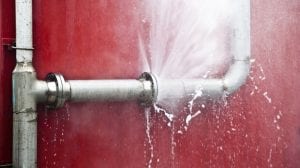
Plumbing problems don’t like to follow schedules! It’s almost a rule that if something goes wrong with your plumbing, it will go wrong at the least convenient time. A plumbing contractor worth hiring understands that and offers 24-hour emergency service. The last thing you want when you’ve got an overflowing toilet, burst pipe, or loss of water is to have to wait for a plumber’s office hours to start!

A wide range of services

A plumbing system consists of an immense number of appliances and fixtures. Make sure that the plumber you’re looking to hire can do the job you need! It’s a good idea, in general, to stick with a plumber who can tackle many types of plumbing jobs—even ones you may never require, like commercial plumbing—because it indicates a plumbing contractor with the proper tools and experience to do every job right.

Recommended by the community

Always take a look at customer reviews for any plumber you’re thinking of hiring. You want to hear what other customers in the area are saying.

It’s easy to find a quality plumber in Rockville, MD, and the surrounding areas: simply call on us! We’re a licensed professional plumbing contractor with 24-hour service. We are also committed to using the best in current technology, such as sonic detectors, trenchless pipe replacement, and video inspection equipment.

Mallick Plumbing & Heating is Your Service Contractor of Choice for the Greater Washington Metro Area.
Can I Do Water Leak Detection Myself?

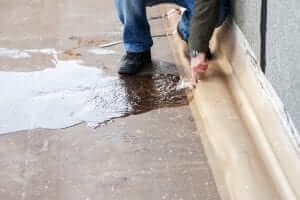
One of the important services we offer to homes is detecting where leaks are occurring. A large number of residential plumbing systems suffer from leaks, and most remain hidden until they start to create visible damage—and by that point, the leak has already caused extensive damage and wasted enormous amounts of water.

We recommend homeowners arrange occasionally for leak detection services, even when they don’t have reasons to be suspicious of water leaks. This is especially useful for homes built before 1970, which have aging plumbing.

But is it possible to do leak detection on your own? Well, “yes” and “no.”

You Can Make a Simple Water Leak Test

It’s not truly “leak detection”—at least the way professional plumbers define it—but you can do a simple test to see if your house is secretly wasting water. All you have to do is check on your water meter and write down the current reading, then shut off all water using appliances for an hour. (We recommend doing this at a time right before your house is empty. That way you won’t have to worry that someone may have accidentally flipped on a tap somewhere.) After an hour, check the water meter to see if the reading has gone up. If it has … you’ve probably got a leak somewhere.

You Can’t Actual Detect the Location of Leaks Yourself

The job of professional leak detection isn’t only to find out if leaks exist. It’s to find exactly where they’re occurring. After all, if your home does have hidden leaks, you’ll want them repaired! To pinpoint where leaks are, licensed plumbers use high-end equipment that requires special training: ground microphones, listening discs, thermal scanners, and video pipe inspection equipment. It’s crucial to find the exact location of pipe leaks so plumbers can repair it while doing the least amount of disruption to a home.

For leak detection in Silver Spring, MD, and the surrounding areas, talk to our plumbers today.

Mallick Plumbing & Heating Is the Service Contractor of Choice!

How Does Trenchless Technology Work?

If you’ve looked around our website, you may have noticed we offer a service called trenchless technology. This isn’t actually a “service,” it’s a way of providing different types of services, such as sewer line repair, sewer line replacement, and water main replacement.

People are often curious about trenchless technology and wish to know how it works and why we use it for plumbing service in Rockville, MD.

Trenchless Technology: A “No Dig” Plumbing Solution

The standard—and for many years only—method of working on buried sewer and water lines is to use excavation equipment to dig down to the pipeline. This is time-consuming and really does a number of the property around the house, making it look like a construction site. Trenchless technology allows skilled plumbers to perform work on sewer and water lines without ripping up trenches.

This is often called “no dig” technology, but there is some digging involved. If the plumbers are replacing an entire sewer line or water main, they dig a single hole near where the pipeline crosses under the property line. They detach the pipe from the municipal system and then place a hydraulic device onto it. From inside the house, a pipeliner is inserted into the older line, and the hydraulic device draws the pipeliner into place. Afterward, a “pipe burster” is sent through the liner, expanding it to shatter the old pipeline and replace it with the new one. Voila! A new pipe is in place, no major trench digging required.

The process is similar for repairs, except the plumbers will target a smaller area of the pipe, digging holes on both sides of the affected section to insert the liner and pipe burster. The process only requires a few hours (as opposed to days with regular digging methods) and when it’s done only one or two small spots need to be filled in and landscaped.

Mallick Plumbing & Heating: Your service contractor of choice! We use the best trenchless technology to serve your sewer and water main needs.

Ways Your Home Might Be Wasting Water

You can find plenty of tips online for how to cut down on the amount of water you consume in your home. You’re probably already familiar with many of them: take shorter showers, only run dishwasher and laundry machines on full loads, don’t let the water run while you’re brushing your teeth, defrost food in the refrigerator rather than running hot water over it, etc. All of these are good ways to see that you aren’t using more water than necessary.

But your house might be the one doing the water wasting, and you can’t get your house to read online tips and follow them! We’re going to look at some of the places where your house is the source of water waste. With the assistance of our professional plumbers, you can have these problems fixed and your water bills reduced. The environment will thank you as well!

You have a leaking toilet

The leaking toilet is one of the most insidious water wasting sources in a house. It’s often difficult to notice when water is slowly leaking from the tank of the toilet in the bowl, but it’s common and can mean wasting up to 200 gallons of water per day. If you’re unsure if your toilet is leaking, place a few drops of food coloring into the tank, then wait 20 to 30 minutes. If the color has seeped into the bowl, you have a leaking toilet. Arrange to have plumbers repair the toilet right away.

There are hidden pipe leaks

The pipes behind the walls and in the floor can have sprung leaks, which is hard to notice at first. Unfortunately, by the time it becomes apparent, not only will the pipe leaks have wasted large amounts of water, they’ll probably have caused extensive damage as well. According to the EPA WaterSense Program, if water use for a family of four exceeds 12,000 gallons a month, it almost certainly means hidden leaking. To find the hidden leaks, arrange for professional leak detection with our plumbers. We’ll locate the leaks and have them fixed.

You have leaky faucets

A leaky faucet might seem like its minor when it comes to water use. How bad can it be? Well, pretty bad! A faucet that leaks one drip per minute can add up to 3,000 gallons wasted per year. If you have any faucets, showerheads, or other plumbing fixtures that are drip, drip, dripping away, don’t delay at having them repaired. It’s a simple fix that makes a big difference.

You have an aging toilet

Older toilets use 5 to 6 gallons per flush. “Is that a lot?” you ask. Yes! Modern toilets use around 3 gallons per flush, and special low-flow toilet models only use 1.3 gallons per flush. That’s a tremendous difference. Old toilets are more likely to clog and develop even greater water-wasting behavior, so have plumbers remove aging fixtures (more than 20 years old) and put in new ones.

For professional plumbing in Chevy Chase, MD, we’re the service contractor to call on! We pride ourselves on our honesty and integrity, and we look forward to helping you and your family save on water and enjoy better plumbing.

Mallick Plumbing & Heating is the service contractor of choice throughout the Greater Washington Metro area.

The Benefits of a Sewage Pump

A sewage pump is an installation that can benefit both homes and commercial businesses that rely on septic systems rather than a connection to a municipal sewer system. But they can also be useful to buildings with a municipal connection. Below we’ll look at the major benefits of sewage pumps in the situations where they are most often used.

Sewage Pumps and Septic Systems

Sewage pumps often work in connection with a septic system. There are a number of difficulties involved in using a septic system, and one of them is creating an even flow along the sewer line to the tank. Waste buildup is often a major trouble with a septic tank, and a sewage pump can solve this. If you rely on a septic tank of any size, we recommend you look into having a sewage pump installed. Arrange with our plumbers to look over your septic system and make recommendations on which sewage pump can best handle the job.

When Gravity Isn’t Enough

Sewer lines usually work through a simple force: gravity. The standard set-up for homes and businesses is to have the municipal sewer line placed at a lower level so gravity takes care of the job of moving sewage to its destination. But sometimes it’s unavoidable that the sewer line is up higher than the home or commercial building. The sewage needs to be pushed uphill against gravity in these cases, and this is what the sewage pump is for.

Our plumbers can handle installing commercial and residential sewage pumps, as well as repairing them. These are essential jobs to make sure you don’t have sewage starting to back up into your business. If you have a sewage pump in need of repairs or maintenance, or you think you need to have a sewage pump installed in Silver Spring, MD, contact us and we can help you out.

Mallick Plumbing & Heating is the Service Contractor of Choice for Maryland, Virginia, and the District of Columbia.

Sewage pumps play a crucial role in keeping wastewater systems operational, ensuring that sewage is adequately removed from residential and commercial areas. In contrast to these essential utilities, no deposit bonuses have gained popularity in the online gambling sphere, providing players with an enticing opportunity to try their luck without risking their own money upfront. These bonuses described at https://movigame.jp/no-deposit-bonus/ allow new players to register at a casino and receive free credits or spins, encouraging exploration of various games without a financial commitment. As appealing as these offers may seem, it’s essential for players to read the terms and conditions carefully, as they often come with wagering requirements that dictate how and when winnings from the bonus can be withdrawn. While no deposit bonuses can be a fun way to experience a casino, they should be approached with caution to maximize enjoyment and minimize potential pitfalls. Ultimately, they can be a strategic way to test out gaming platforms and discover new favorites without the stress of a monetary investment.

Copper and Plastic Piping: Why We Use Them

Indoor plumbing may be used as the yardstick for all other convenient inventions (along with sliced bread, apparently, although we don’t understand how indoor plumbing and sliced bread are remotely the same when it comes to convenience), but that doesn’t mean it hasn’t undergone extensive changes over the hundred-plus years since it became commonplace.

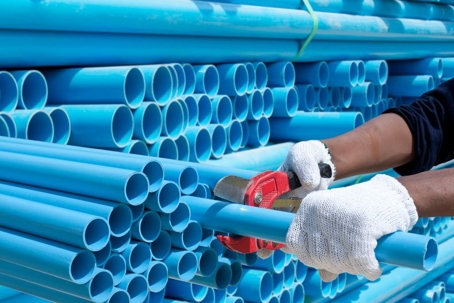
One of the major improvements in plumbing is piping material. Once, the standard for pipes were iron, lead, steel, and clay. After the Second World War, these materials started to be replaced, and the process sped up after 1970. Today, plumbers use copper and a range of plastics such as CPVC (chlorinated polyvinyl chloride) and PEX (crosslinked polyethylene) for repiping and pipe replacement jobs, as well as new construction.

One of the reasons to call on only licensed professional plumbers—and believe us, there are many—is that only an experienced plumber knows the right type of piping material to use. Making the correct choice affects how well a plumbing system works, prevents future repair issues, and also reduces the cost of the job. Below are the reasons we rely on copper and plastic pipes to meet all these criteria:

Corrosion Resistance

Older types of pipes corroded simply from contact with the soil. But copper and plastic pipes are corrosion-resistant and won’t corrode under most circumstances. There are still some types of corrosion that will affect copper pipes, but you can depend on them and PEX and CPVC to enjoy long lives that outdistance iron and steel.

Easy to Work With

Copper and plastic make plumbing easier—which means it’s faster and less expensive, and there’s less chance of something going wrong. They weigh less and are ductile enough to allow for installation without elbows and joints. Flexible plastic piping is especially helpful for fitting into small spaces.

Conducts Heat Well

Hot water is a major force for wearing down pipes, but the conductive power of copper and plastic handles heat with minimal trouble. Plastic pipes are the favored material for most hot water lines.

Low Cost

Copper and plastic are readily available materials that cost less to purchase than other types of metals. It costs much less to have a job done this way.

Non-Toxic

Both copper and plastics are relatively non-toxic substances, and since they rarely corrode they won’t leak toxic materials into the fresh water supply. This is why cities replace their old lead pipes with these materials.

Beneficial for the Environment

Copper and plastic can be recycled. When you have these pipes put in your home, you’re not only receiving a better plumbing system, you’re helping out the environment.

When you call on our licensed plumbers for your piping or plumbing repairs in Gaithersburg, MD or the surrounding areas, you can be sure we’ll use only the best materials for the job at hand. It might be copper, it might be PEX, it might be a combination of both (often it is), but you can rest easy knowing we’ll do the work right. Talk to one of our professional plumbers today to schedule service.

Mallick Plumbing & Heating is the Contractor of Choice in Silver Spring, MD & Montgomery County.

Is It Time to Test Your Residential Backflow Preventer?

Backflow is a term used to describe the cross-contamination of a freshwater supply with bacteria and contaminant-filled sewage water. Backflow is a major concern for commercial buildings, where cross-connections between the freshwater supply and the wastewater system can lead to water flowing the wrong direction and sewage entering the potable water. This can occur because of a sudden drop in pressure on the freshwater side—an event known as backsiphonage—as a result of an abrupt large demand on water, such as from firefighting or sprinklers. However, backflow can result from an increase in pressure from the wastewater side as well.

To prevent cross-contamination, a device known as a backflow preventer closes a valve to stop water flowing the wrong direction. This is a basic device for businesses, but it sometimes is used for residential buildings as well. Although there are fewer cross-connections for homes, it’s possible for the freshwater system to draw up contaminated water from exterior connections, such as a hose sitting in a stagnant pool of water, through backsiphonage.

If your house has a backflow preventer, you may not even realize it… until you receive a notification from the city that the device requires testing. If you receive such a notification, you can’t do the check yourself! This job must be done by a certified plumber who can look over the backflow preventer and give it an official clean bill of health. Should your backflow preventer fail the test, the plumber can offer repairs or a replacement for the unit.

If you find that you require a backflow prevention check, repair, or replacement in Rockville, MD or the surrounding areas, you can contact our plumbers to handle it. They are certified for commercial and residential backflow prevention testing as well as any other services you may require.

Mallick Plumbing & Heating is the Service Contractor of Choice in Silver Spring, MD and Montgomery County.

Ways to Save Water in the Bathroom

There is plumbing throughout a house, but the two rooms that contain the most piping and fixtures are the kitchen and the bathroom. When you are looking at ways to reduce your residential water usage—and this is always a good idea, both for utility costs and to benefit the environment—these are the two places where you’ll expend the most effort.

Below we’ve put a list of ways to save with your bathroom plumbing in Bethesda, MD. For assistance when it comes to repairs as well as new installations, talk to our staff of professional plumbers today.

Have Leaky Faucets and Showerheads Fixed

Please don’t ignore any leaking fixtures in your bathroom! You may think these are minor water wasters, but the cumulative loss of water is significant. According to WaterSense, an EPA Partnership Program investigating water conservation, the average leaks in a household can account for more than 10,000 gallons of water wasted annually—the equivalent of about 270 loads of wash. Arrange to have water leaks fixed not only in the bathroom but elsewhere in your home.

Install Low-Flow Fixtures

If you have an older bathroom or kitchen (more than 10 years old), you probably have fixtures in it that use more water than they should. For example, older toilets use around 6 gallons per flush, while newer ones use half that much. But updating to new fixtures is only part of how you can save on water use. Special low-flow fixtures with the WaterSense label will help cut down further on water consumption. A low-flow toilet uses approximately 1.5 gallons per flush. Think of how much this adds up to over even a new 3-gallon flush toilet. Our plumbers are glad to go over options with you for the various fixtures in your bathroom.

Check for Toilet Bowl Leaks

Toilet leaks are one of the more insidious ways that a bathroom wastes water, with water moving from the tank to the bowl when it shouldn’t. To check for this, place a tablet of food coloring in the tank and let it dissolve. If the dye starts to appear in the bowl later, it’s time to call professional plumbers to repair it.

Keep Showers Shorter

You’ve probably heard this before, but have you really heeded the advice? We recommend using a kitchen timer to help you lower your shower time so you don’t lose track. Keep showering under 5 minutes and then see if you can’t drop it even further.

Collect Water in a Bucket

There’s no reason to let the water go to waste while you’re waiting for it to warm up for showering. Put a bucket under the shower to collect as much as you can. You can then use this water for cleaning or to water plants. (Watering in gardens is a major source of residential water usage.) You can also pour the water down the toilet to flush it.

No matter what service you need for your bathroom plumbing, you only need to get in touch with our licensed plumbers to arrange for high-quality work.

Mallick Plumbing & Heating is the service contractor of choice in Silver Spring, MD and Montgomery County.

Steps to Check over Your Plumbing This Spring

It’s almost spring—and that means it’s time to think about spring cleaning. But what does spring cleaning mean to you? It can cover many jobs, such as going through old paperwork to organizing a spice rack. But it also means arranging for important maintenance services for parts of your house, places that suffer the most during a harsh winter season.

Your household plumbing is one system that undergoes a great deal of stress during the winter. Without some simple checks on the pipes, faucets, and appliances of your plumbing system, you might head into spring with some major issues. Below we’ve put together some steps we recommend you take before spring weather arrives that will help locate places where you’ll need the assistance of professional plumbers.

A Short Plumbing Checklist for Fall

  • Test the sump pump: Not all homes have sump pumps in Montgomery County—but most should. During spring we’re at a high risk of flooding from snowmelt and rain, and the water damage in basements and crawlspaces of homes can be tremendous. Sump pumps are an excellent defense against this. If your home has a sump pump, test it by pouring water into the water collection pit (i.e. the sump) to see if the pump activates automatically and drains the water. If the pump won’t work or works slowly, call for plumbers to repair it or replace it. And if you don’t have a sump pump, call the plumbers to arrange for one before the spring waters arrive.
  • Check on the drains: Never allow a slow drain to remain that way. The build-up of debris over the winter can lead to problems if the drains aren’t cleaned out. Pay particular attention to floor drains, which are important in case of heavy rainfall or minor flooding. Pour water down each of the floor drains to restore their p-traps and prevent sewer smells from entering your house. Call for drain cleaning if any drains aren’t having trouble actually, you know, draining.
  • Look over the water heater: This is the part of your plumbing that suffers the most stress over the winter. Since you need the water heater 365 days a year, you don’t want problems left over from winter to threaten the system in spring. Keep a sharp eye out for water pooling around the base of the water heater, indicating leaking that will require professional repairs. If you hear strange rumbling sounds from the tank or notice a drop in the volume of hot water, it’s also wise to arrange for an inspection check right away with water heater professionals.
  • Check the outdoor plumbing: Winter weather can cause serious issues with the outdoor plumbing. Look over gutters and storm drains to remove leaves and other debris. See if there’s corrosion setting in and check that downspouts haven’t become pushed out of their normal position.

No matter what plumbing service in Gaithersburg, MD or the surrounding areas you need this spring, you only have to contact our plumbers to schedule the work.

Mallick Plumbing & Heating: The Service Contractor of Choice.