
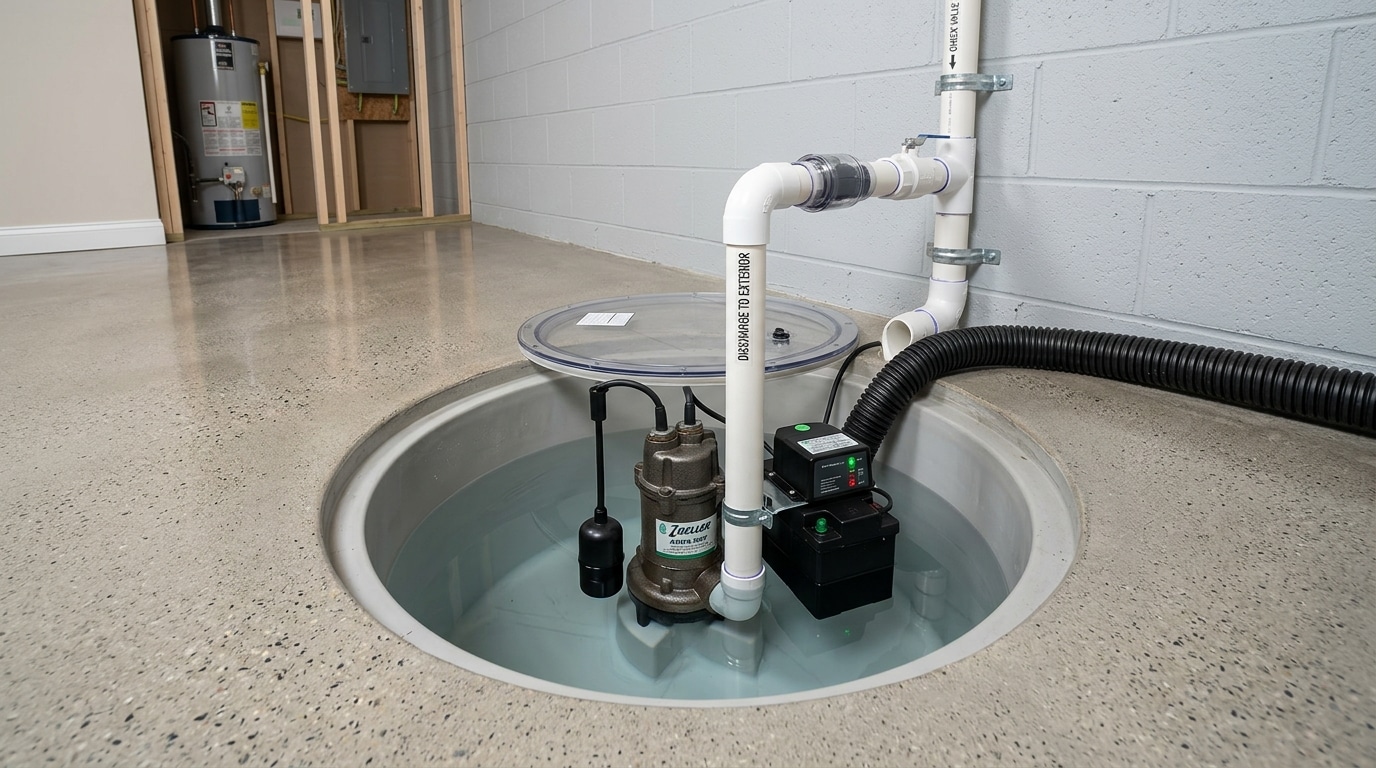
If the pump in your basement runs for a few seconds, shuts off, then starts again a minute later, you are hearing sump pump short cycling. In Rockville, MD, these calls climb every July, when afternoon thunderstorms soak the clay soil and humid air keeps basements damp. The short answer is this: the pump is either moving the same water twice, or the switch that controls it is being tripped far too early. Neither problem resolves on its own, and both wear out a motor you need working during the next storm. Below we explain the mechanics behind sump pump short cycling, the parts our plumbers check first, and the point where you should stop and call.
What Sump Pump Short Cycling Actually Means
A healthy pump works in long, deliberate pulls. Groundwater seeps through the drain tile into the sump basin, the float rises to its on point, and the motor runs until the water level drops to the off point. Sump pump short cycling looks nothing like that. The motor starts, runs for only a moment, stops, and restarts almost immediately. The giveaway is rhythm. A cycling pump sounds metronomic, and it holds that rhythm even when no rain has fallen for days.
A Failed Check Valve Pumps the Same Water Twice
The check valve is a one-way flapper set into the discharge pipe just above the pump. Its job is simple. When the impeller spins, water pushes the flapper open and climbs the vertical discharge line toward the rim joist. When the motor stops, that standing column of water wants to fall back down, and the flapper should snap shut against it.
A cracked rubber disc, a worn hinge pin, or a piece of pea gravel wedged under the seat prevents that seal. The column drains straight back into the basin, the float rises again, and the pump restarts to move water it already moved. This is the most common cause of sump pump short cycling we find in Rockville basements.
Listen for the tell. A gurgle followed by a soft thunk a second or two after the motor shuts down means water is falling back past a valve that no longer holds.
The Float Switch Has Too Little Travel
The float switch is the sensor that tells the pump when to run. Tethered floats swing on a cord; vertical floats ride up and down a rod. The vertical distance between the on point and the off point is called the differential, and that distance decides how long each run lasts.
Squeeze the differential and you get sump pump short cycling by design. A tethered float snagged on the basin wall, the power cord, or the pump body cannot fall far enough before it trips again. A vertical float set too low on its rod does the same thing. We also find replacement pumps dropped into older basins with the float adjusted by guesswork rather than measured against the inlet height.
An Oversized Pump in an Undersized Basin
Bigger is not better here. A high-capacity pump drops the water level in a narrow basin faster than the drain tile can refill it. The motor barely reaches full speed before the float falls to the off point, and the whole cycle repeats a minute later. Pump capacity and basin volume have to be matched. When a homeowner tells us the cycling started right after an upgrade, basin size is the first thing we measure.
Why July in Rockville Makes It Worse
Two summer conditions drive these calls. First, saturated ground. A heavy thunderstorm raises the water table around the footing, and the drain tile keeps feeding the basin for hours after the rain ends. The U.S. Geological Survey’s Water Science School explains how quickly shallow groundwater responds to rainfall.
Second, and less obvious, air conditioning. Many Rockville homes route the condensate drain from the air handler into the sump basin. On a humid July day that line trickles steadily, hour after hour, with no rain involved at all. If your pump cycles on clear days but stops when the air conditioning is off, the condensate line is your answer.
What Repeated Starts Do to the Motor
Every start pulls a surge of current as the rotor comes up to speed. That surge heats the windings, and the motor depends on the run time that follows to shed the heat. Take the run time away and heat accumulates instead. Eventually the thermal overload trips and the pump sits dead, usually on the day you need it most.
The shaft seal suffers too. It is designed for steady rotation, not constant starting and stopping, and once it weeps, water reaches the motor oil. Fixing the cause of sump pump short cycling early is far easier than replacing a burned-out pump during a storm.
What You Can Safely Check Yourself
Work with the power off at the outlet before touching anything in the basin.
- Unplug the pump at the GFCI outlet, then look for debris, gravel or silt in the bottom of the basin.
- Confirm the tethered float can swing its full arc without catching the wall, the cord or the pump housing.
- Watch whether water drops back into the basin right after a run, which points to the check valve.
- Trace the air conditioner condensate line and see whether it terminates in the sump basin.
- Check that the discharge line outside is clear and not buried under mulch or blocked by a nest.
Never reach into a basin with the pump energized, and never remove a check valve to see if it helps. A discharge line without a working valve will drain its entire column back every single cycle. Plumbing codes developed by organizations such as IAPMO also prohibit routing a sump discharge into the sanitary sewer, so resist any suggestion to tie it in.
When to Call a Plumber
Call us if the pump keeps cycling after the condensate line is disconnected and the float moves through its full travel. The same goes for a motor that is hot to the touch or a basin that holds standing water after a run. A pump that hums without moving water may be air locked, which is a different fault with a different fix. Our sump pump repair and replacement service covers diagnosis, valve replacement, switch adjustment and basin sizing. If water is already on the floor, our emergency plumbing team should be your first call.
A chronically damp basement is also a health question. The EPA’s indoor air quality guidance covers moisture control, and Ready.gov has practical flood preparation steps worth reading before storm season peaks.
Frequently Asked Questions
Is sump pump short cycling dangerous?
Not immediately, but it is destructive. Repeated starting overheats the motor windings and wears the shaft seal, so a pump that cycles all summer often fails during the first major storm of the fall.
Can I just replace the check valve myself?
Some homeowners can, but the valve has to be sized to the discharge pipe and installed with the arrow pointing away from the pump. An inverted valve blocks flow entirely, and a loose union at that joint sprays water across the basement.
Why does my pump run when it has not rained?
Groundwater, air conditioning condensate, or a failed check valve. In July, condensate is the usual culprit in Rockville homes with the air handler in the basement.
Should the pump ever run continuously?
Continuous running is its own warning sign. It usually means the pump can no longer keep up, the impeller is worn, or the discharge line is partly blocked.
Your Next Step
Sump pump short cycling is a diagnosis you can make from the top of the stairs, but the repair belongs in the basin. Call Mallick Plumbing & Heating to schedule a sump pump inspection at your Rockville home, and ask us to check the discharge line and basin sizing while we are there. If you suspect water is entering from somewhere other than the drain tile, ask about our leak detection service during the same visit.