
Your softener still runs a regeneration cycle every few nights, yet the shower door spots again and the soap refuses to lather. When that happens, the failure is almost always inside the tall tank. The water softener resin bed is the layer of small plastic beads that does the actual softening, and it wears out years before the control valve or the brine tank does.
Homeowners usually blame the salt first. In Frederick, what we find instead is a water softener resin bed that has been oxidized by disinfectant, coated with iron, or packed so tight that water runs around it rather than through it.
What a Water Softener Resin Bed Actually Does
Open the media tank and the contents look like wet amber sand. Each grain is a polystyrene bead, and the surface of every bead carries negatively charged sites holding loose sodium ions.
Hard water arrives loaded with dissolved calcium and magnesium. Those minerals hold a stronger positive charge than sodium, so when water filters down through the water softener resin bed, they seize the charged sites and push the sodium into the water instead. Plumbers call that trade ion exchange, and it is the entire reason a softener works.
Every bead has a fixed number of exchange sites, so the bed fills with hardness and stops trading. Regeneration reverses it. The control valve draws brine from the salt tank, floods the beads with concentrated sodium, and rinses the captured minerals to the drain. The USGS water science school explains how groundwater collects those minerals before they ever reach your house.
Why the Water Softener Resin Bed Breaks Down
Resin is tough, but nothing in a plumbing system lasts forever. Three failures account for nearly every dead bed we pull out of a tank.
Chlorine and Chloramine Oxidize the Beads
Municipal water arrives carrying a disinfectant residual, usually chlorine or chloramine. That residual is an oxidizer, and it slowly cuts the crosslinks that keep each bead rigid. The EPA drinking water program explains why utilities maintain a residual all the way to your meter.
As those crosslinks break, the beads swell, soften, and eventually smear into paste. A mushy water softener resin bed compacts under flow, restricts pressure, and sheds tan specks into faucet aerators and toilet fill valves.
Iron and Manganese Plate the Beads
Well water across this part of Maryland often carries dissolved iron and manganese. The moment that water meets air or an oxidizer, the iron converts to rust and plates itself across the bead surface.
The exchange sites are not used up in this case. They are buried. A fouled water softener resin bed turns rust-orange instead of amber, and it will keep running full regeneration cycles while softening almost nothing.
The Bed Channels Instead of Filtering
Media needs to sit loose enough to fluff during backwash. When resin compacts, or when the distributor tube screen at the bottom of the tank cracks, incoming water carves one narrow path and skips most of the media.
That shortcut is called channeling. The softener looks healthy, the salt drops on a believable schedule, and hard water sails past the water softener resin bed untreated.
Warning Signs Frederick Homeowners Notice First
Symptoms show up at the fixtures long before anyone opens the tank:
- White scale returning on shower glass, kettles, and aerator screens.
- Soap, shampoo, and detergent that stop lathering the way they used to.
- Salt in the brine tank that barely drops between refills.
- Rust-colored or tan grit collecting in aerators and toilet tanks.
- Lower pressure throughout the house on both hot and cold lines.
- Water that tastes noticeably salty right after a cycle finishes.
What This Looks Like in a Frederick Home
Picture a Frederick homeowner whose dishwasher starts leaving a chalky film on every glass a few years after a softener went in. The brine tank is full and the control valve is cycling on schedule, so the unit looks fine from the outside.
In a case like this, a technician would test hardness at an outside hose bib and again at a treated fixture. If the two numbers come back nearly identical, a likely finding inside the tank is a top few inches of media gone soft and tan, with everything below it packed like wet clay. That points to a water softener resin bed that is finished, even when nothing else on the unit is.
Clean the Media, Rebed the Tank, or Replace the Softener
This is a genuine fork in the road, and the right answer depends on what we find in the tank:
- Clean the media. A resin cleaner and an extended backwash can recover beads that are iron-coated but still structurally sound.
- Rebed the tank. Replacing the water softener resin bed makes sense when the beads have broken down but the valve, tank, and brine system all check out.
- Replace the softener. The better call when the control valve is worn out as well, or when the unit was undersized for the household from day one.
Sizing drives a lot of this. A softener too small for the number of people in the house regenerates constantly, and every extra cycle is another dose of chlorine contact and mechanical wear on the beads. University of Maryland Extension publishes helpful background on hard water for households across the state.
How We Inspect a Softener
Our process on a service call follows the same order every time:
- Test hardness on the raw line and on a treated fixture, then compare.
- Open the tank and look at the media for color, texture, and compaction.
- Check the brine draw, the safety float, and the salt for bridging.
- Confirm the regeneration settings match the hardness and the household size.
If your water has changed and you want the tank opened and tested, schedule a visit through our water softener service page or start with water testing so the results guide the repair.
Safety Notes and When to Call a Plumber
Resin cleaners are chemicals. Follow the label, keep the room ventilated, and never combine them with bleach or any other cleaner. A full brine tank is heavy and awkward, so do not try to tip or drag one alone.
Call a plumber when pressure has dropped across the whole house, when you find grit in the fixtures, or when hardness tests the same before and after treatment. Anyone on a sodium-restricted diet should ask their doctor about drinking softened water before making changes at home.
Frequently Asked Questions
How long does a water softener resin bed last?
Lifespan depends on the water it treats, not the calendar. Chlorinated city water shortens it, iron-bearing well water shortens it faster, and an oversized softener that rarely regenerates stretches it out.
Can I fix a weak softener by adding more salt?
No. Salt only recharges exchange sites that still work. If the beads are oxidized, buried under iron, or channeling, the extra salt goes down the drain without improving the water.
Will a whole-house filter protect the resin?
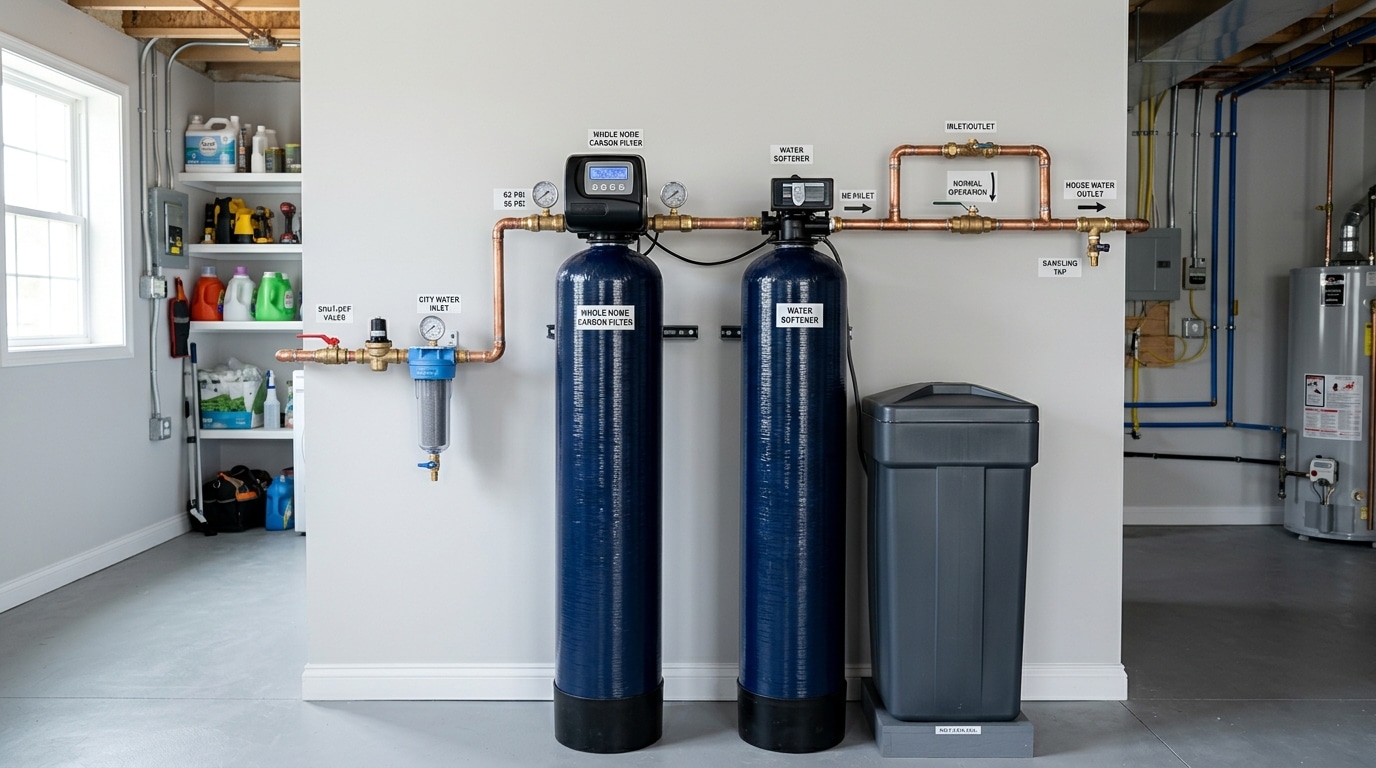
A carbon filter ahead of the softener removes chlorine and chloramine before they reach the beads, which is the most effective way to extend bed life on municipal water. Our water treatment overview covers how the pieces stack together.
Is a rust-colored bed always ruined?
Not always. If the iron sits on the surface and the beads still feel firm and round, cleaning often brings capacity back. Once the beads crumble between your fingers, the media needs replacing.
Your Next Step in Frederick
Hard water never announces itself. It shows up as scale, dull laundry, and short appliance life. If your softener has stopped keeping up, call Mallick Plumbing & Heating to book a water softener inspection in Frederick, and we will test the water, open the tank, and tell you exactly what the water softener resin bed is doing.