
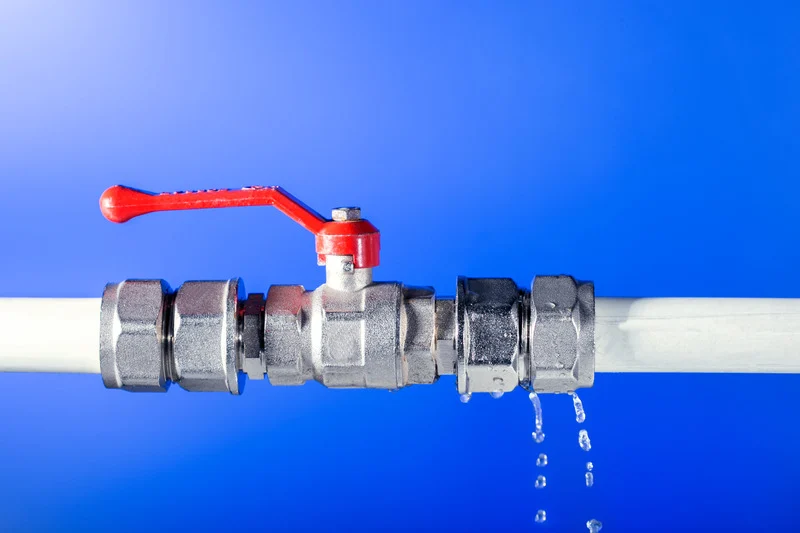
You walk past the irrigation manifold or the utility room and find water pouring out of a small port on a brass valve. Nothing is broken and nothing is leaking at a joint. That discharge is a backflow preventer assembly doing precisely what it was built to do, and it is telling you something about your water system.
A backflow preventer assembly is the barrier between the water you drink and everything that could contaminate it. Before you plug that port or call it a nuisance leak, it helps to understand which direction the water was trying to travel.
What Backflow Actually Is
Your plumbing assumes water moves one way: from the main, through the meter, out at the fixtures. Two situations reverse that flow, and both happen more often than homeowners expect.
Back-siphonage occurs when pressure in the street main drops suddenly. A water main break, a hydrant opened for a fire, or heavy demand nearby can pull a partial vacuum on the system. Any open connection in your house then becomes a straw, and the main drinks from it.
Backpressure is the opposite. A downstream system running at higher pressure than the supply, such as a boiler or a pressurized irrigation loop, pushes its water backward into the potable line.
The danger point in both cases is a cross-connection, meaning any place potable water can touch something that is not. A garden hose in a bucket of soapy water and a sprinkler head sitting in fertilizer runoff are textbook examples, which is why the EPA drinking water program treats cross-connection control as core protection for the public supply.
How a Backflow Preventer Assembly Blocks Reverse Flow
Most residential devices use spring-loaded check valves. Forward pressure pushes each check open; reverse flow slams it shut against its seat. A double check valve assembly puts two of these in series so one can back up the other.
A reduced pressure zone assembly, often called an RPZ, adds a third component. Between the two checks is a chamber held at lower pressure than the incoming supply, and a relief valve watches that difference. If the first check leaks, or supply pressure falls toward the chamber pressure, the relief valve opens and dumps water to the floor or the drain.
That is the design intent. A backflow preventer assembly is built to waste water in a visible way rather than let contaminated water travel back toward your kitchen tap.
Why the Relief Port Discharges
A dumping RPZ is not random. In our experience, four causes account for nearly all of them.
Debris on a Check Seat
Sand, pipe scale, solder beads, and rust flakes ride in with the water and lodge on a rubber seat. The check cannot close completely, the pressure zone between checks rises, and the relief valve opens.
This is the most common cause, and it is why a backflow preventer assembly is often repairable with a cleaning and a rubber kit rather than a full replacement.
Worn or Hardened Rubber
Check discs and diaphragms are elastomer parts living in chlorinated water. Over years they harden, take a set, or crack, and a stiff disc no longer seals against its seat.
Fluctuating or Falling Supply Pressure
Street pressure that swings, a partly closed valve, or a failing pressure reducing valve can drop supply pressure toward the middle chamber. The relief valve interprets that as a fault and discharges, sometimes only at certain hours.
Freeze Damage
Outdoor irrigation devices in Gaithersburg suffer every winter that arrives before the system is blown out. Water trapped inside expands as it freezes, cracking the body or distorting internal parts, and the device discharges as soon as it is pressurized in spring.
Signs That Need Attention
- Water discharging from the relief port, either steadily or in bursts.
- Puddles or staining under an irrigation manifold or basement assembly.
- A hissing or chattering sound from the valve body while water runs.
- Lower pressure in the house after the device was installed or serviced.
- A cracked body, weeping test cocks, or visible mineral crust on the brass.
- An annual test that came back failed from your water authority.
What This Looks Like in a Gaithersburg Home
Picture a Gaithersburg homeowner who finds a puddle spreading across the basement floor from the irrigation line. The water appears each morning when the sprinkler zones run and stops the rest of the day.
In a case like this, a technician would isolate the device and open it. A likely finding is grit packed against the first check seat, often stirred up by recent work on the street. The rubber may also be hard enough to deserve replacing. The fix is typically a repair kit and a thorough cleaning, followed by a test of the device.
Which Device Does Your Home Have?
Different hazards call for different protection, and these are the three we see most:
- Hose bib vacuum breaker. A small device on an outdoor spigot that stops back-siphonage through a garden hose.
- Double check valve assembly. Two checks in series, used where the hazard is a nuisance rather than a health risk.
- Reduced pressure zone assembly. Two checks plus a relief valve, used where the hazard could make someone sick, including irrigation systems with injected chemicals.
Your water authority decides which device your address needs and how often it must be tested. Our backflow prevention page explains how we inspect and service these assemblies.
How Testing Works
- The assembly is isolated with its inlet and outlet shutoffs.
- A calibrated differential gauge is connected to the test cocks.
- Each check is measured for the pressure it holds against reverse flow.
- The relief valve is checked for the point at which it opens.
- Results go on a report for the water authority that requires the test.
If your device is discharging or your test notice has arrived, call and schedule a backflow inspection before the deadline passes.
Safety Notes and When to Call a Plumber
Never plug, cap, or remove a backflow device to stop the discharge. Doing so removes the barrier protecting your drinking water and the public main, and it violates the rules almost every water authority enforces. Never leave a hose submerged in a pool, a bucket, or a livestock trough.
Call a plumber when the relief port runs, when the body is cracked, when the annual test fails, or when pressure drops after any work on the assembly. Winterizing irrigation lines before the first hard freeze prevents most of the spring failures we see, and the EPA WaterSense program has practical irrigation guidance worth reading.
Frequently Asked Questions
Is the discharging water safe to be around?
The water leaving the relief port is supply water, not sewage. The discharge is a warning that the assembly needs service, and the volume can flood a basement, so treat it as urgent.
Can a backflow preventer assembly be repaired instead of replaced?
Often yes. Debris and worn rubber are repairable with a manufacturer kit. A cracked body or a corroded seat means replacement.
Does every house in Maryland need one?
Not every fixture, but irrigation systems, boilers, and similar connections routinely require protection. Requirements come from your local water authority, and model codes published by groups such as IAPMO shape them.
Why did my device fail its test when nothing looks wrong?
Checks fail by tiny margins that only a gauge can detect. A seat holding slightly less pressure than the standard requires will fail even though nothing visible is leaking, which our water line services team sees regularly.
Your Next Step in Gaithersburg
A discharging relief valve is a warning you can see, and it rarely fixes itself. Call Mallick Plumbing & Heating to schedule a backflow preventer assembly inspection in Gaithersburg, and we will test the device, clean or rebuild what is failing, and document the result for your water authority. Our plumbing services page covers the rest of the system it protects.