
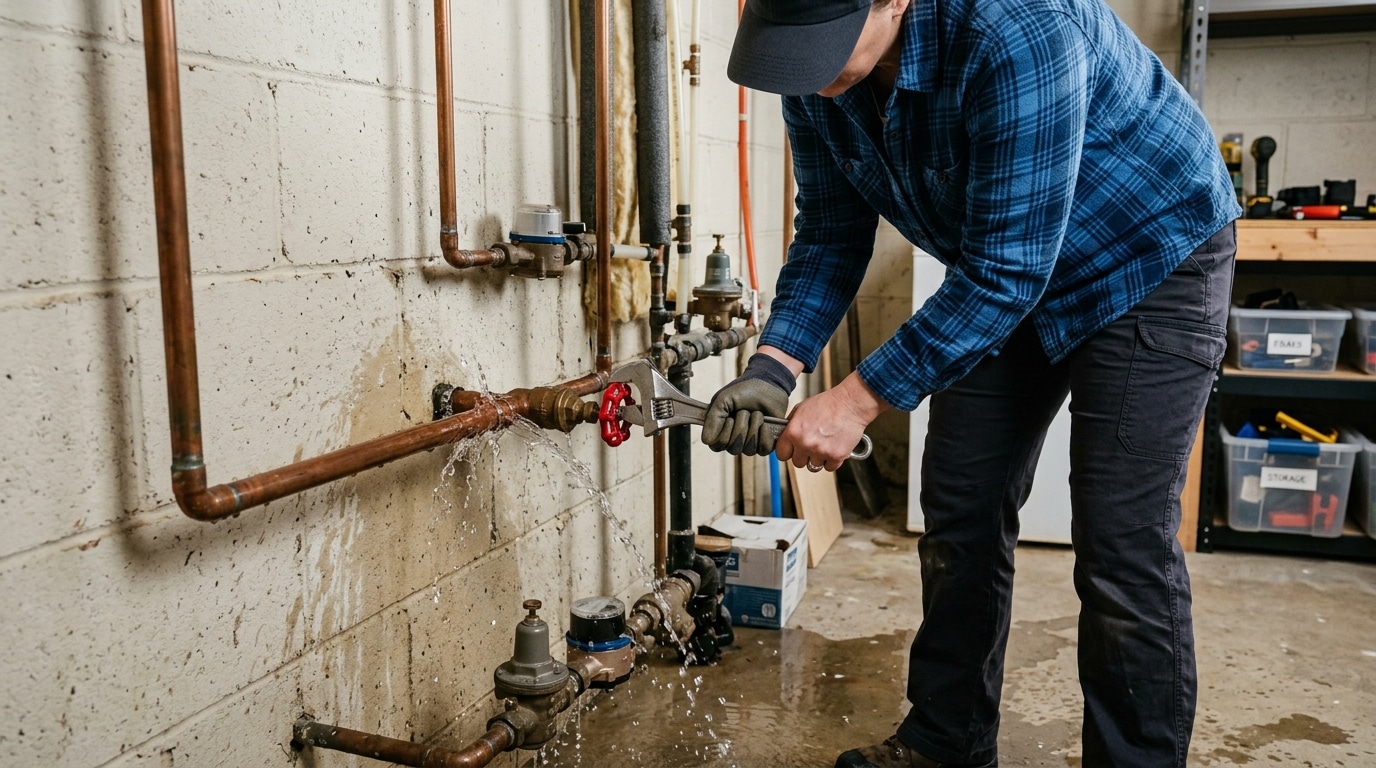
Toilets refill by themselves at two in the morning. The washing machine hoses look tight as a drum. A faucet cartridge fails, then another one across the house. Those symptoms share a single cause more often than not: the pressure reducing valve on your water service is no longer holding pressure where it belongs.
A pressure reducing valve is a bell-shaped brass fitting near where the water line enters the house, usually just past the main shutoff. It is easy to ignore for fifteen years and then never suspected, because most Bethesda homeowners have no idea it exists.
Why Your House Needs Pressure Reduced at All
Water utilities run distribution mains at pressures that serve fire hydrants, tall buildings, and homes at the top of a hill. That pressure is far higher than residential fixtures are designed to handle.
Cartridges, fill valves, supply hoses, and appliance inlet solenoids all have a working range. Push past it and those parts wear quickly, seals extrude, and joints that were fine for years begin to weep. The EPA drinking water program describes how utilities maintain pressure across a distribution system, which is why the reduction has to happen at your house.
A pressure reducing valve takes street pressure in and delivers a lower, steadier pressure to everything downstream.
How a Pressure Reducing Valve Works Inside
Cut one open and you find three parts doing the work: an adjusting screw, a spring, and a flexible diaphragm connected to a seat and stem.
The spring pushes the seat open. Downstream pressure pushes back on the diaphragm and tries to close it. The valve sits wherever those two forces balance, throttling flow to hold the setting. Turn the adjusting screw and you change spring tension, which changes the balance point and the outlet pressure.
That balance is a mechanical compromise maintained thousands of times a day. It is also why a pressure reducing valve is a wear part rather than a permanent fitting.
How a Pressure Reducing Valve Fails
Failures fall into four patterns, and each one produces a different complaint.
The Seat Wears and Pressure Creeps
Grit and mineral particles cut a groove in the rubber seat over the years. The valve can no longer close completely, so when no fixture is running, pressure slowly climbs toward street pressure.
Plumbers call this creep. It is why the banging, the overnight toilet refills, and the dripping relief valve at the water heater all happen when the house is asleep and nothing is drawing water.
The Diaphragm Tears
Once the diaphragm splits, the valve loses its feedback signal and stops regulating entirely. The house sits at full main pressure, and fixtures start failing in groups rather than one at a time.
The Spring Fatigues
A tired spring drifts the other way. Pressure sags, showers go weak on upper floors, and filling a tub takes noticeably longer than it used to.
Debris Lodges in the Body
A pebble of scale from street work can wedge against the stem. The result is a whistle, a chatter, or a shudder in the walls whenever a fixture opens partway.
Warning Signs Bethesda Homeowners Notice
- Banging or hammering in the walls when a faucet or valve closes.
- Toilets that hiss or refill briefly with no one using them.
- Water heater relief valve dripping, especially overnight.
- Washing machine and dishwasher hoses that feel rigid and look swollen.
- Faucet cartridges, fill valves, or supply lines failing repeatedly.
- Showers that surge hard, then lose pressure without explanation.
What This Looks Like in a Bethesda Home
Picture a Bethesda homeowner who has replaced two toilet fill valves and a kitchen cartridge in the same month. Each repair holds for a while, and then something else lets go.
In a case like this, a gauge on the hose bib may read a healthy number with a fixture running. With everything closed, though, the needle can climb steadily while the house sits idle. That pattern points to a pressure reducing valve that creeps at night and hammers the whole system while everyone sleeps. The fix is typically replacing the valve and setting it against a gauge.
Adjust, Rebuild, or Replace?
Not every high-pressure reading means a new valve, and here is how we decide:
- Adjust it. Reasonable when the valve still holds a stable setting and only needs to be dialed in against a gauge.
- Rebuild it. Some models accept a repair kit with a new seat, spring, and diaphragm, which suits an accessible valve in good condition.
- Replace it. The right call when the body is corroded, the valve creeps after adjustment, or the unit is old enough that parts are no longer supported.
Our pressure reducing valve page walks through the service, and our short video answer on what a PRV is is a good primer before we arrive.
How We Diagnose the Valve
- Attach a gauge at an outside hose bib and record static pressure.
- Open a fixture and record running pressure to see how much the valve drops.
- Leave the gauge on with the house closed up and watch for creep.
- Check the water heater expansion tank, since a closed system needs one.
- Inspect the valve body for corrosion, weeping, and the condition of the shutoffs.
If your pipes bang at night or fixtures keep failing, schedule a pressure test before you replace another cartridge. A gauge reading usually settles the question on the spot.
Safety Notes and When to Call a Plumber
High water pressure is not just hard on fixtures. It stresses supply hoses and can turn a small drip into a burst line while the house is empty. Know where your main shutoff is, and replace rubber washing machine hoses with braided stainless ones.
Call a plumber when pressure creeps with nothing running, when you hear hammering, or when a relief valve drips. Adjusting a pressure reducing valve without a gauge on the system is guesswork, and setting it too high quietly damages everything downstream. Model plumbing codes published by bodies such as IAPMO set the ceiling for residential supply pressure.
Frequently Asked Questions
How long does a pressure reducing valve last?
Most give many years of service, and water quality decides the rest. Sediment and aggressive water wear the seat faster, so a valve in one neighborhood may outlast the same model a mile away.
Can I adjust the valve myself?
You can turn the screw, but without a gauge you are guessing. Small turns move pressure a surprising amount, and overshooting puts the whole house above its safe range.
Does high pressure really waste water?
Yes. Every open fixture flows more than it needs to, which is why the EPA WaterSense program treats household pressure as part of efficient water use.
My pressure is fine during the day but pipes bang at night. Why?
That is the classic creep pattern. With no fixture open, a worn valve lets pressure climb until the first closing valve produces a hammer. Our water line services page covers the supply side of that system.
Your Next Step in Bethesda
Repeat fixture failures are rarely bad luck. They are usually a pressure problem with a single root cause. Call Mallick Plumbing & Heating to schedule a pressure reducing valve inspection in Bethesda, and we will gauge your system, watch for creep, and set or replace the valve so the rest of your plumbing stops taking the punishment.