
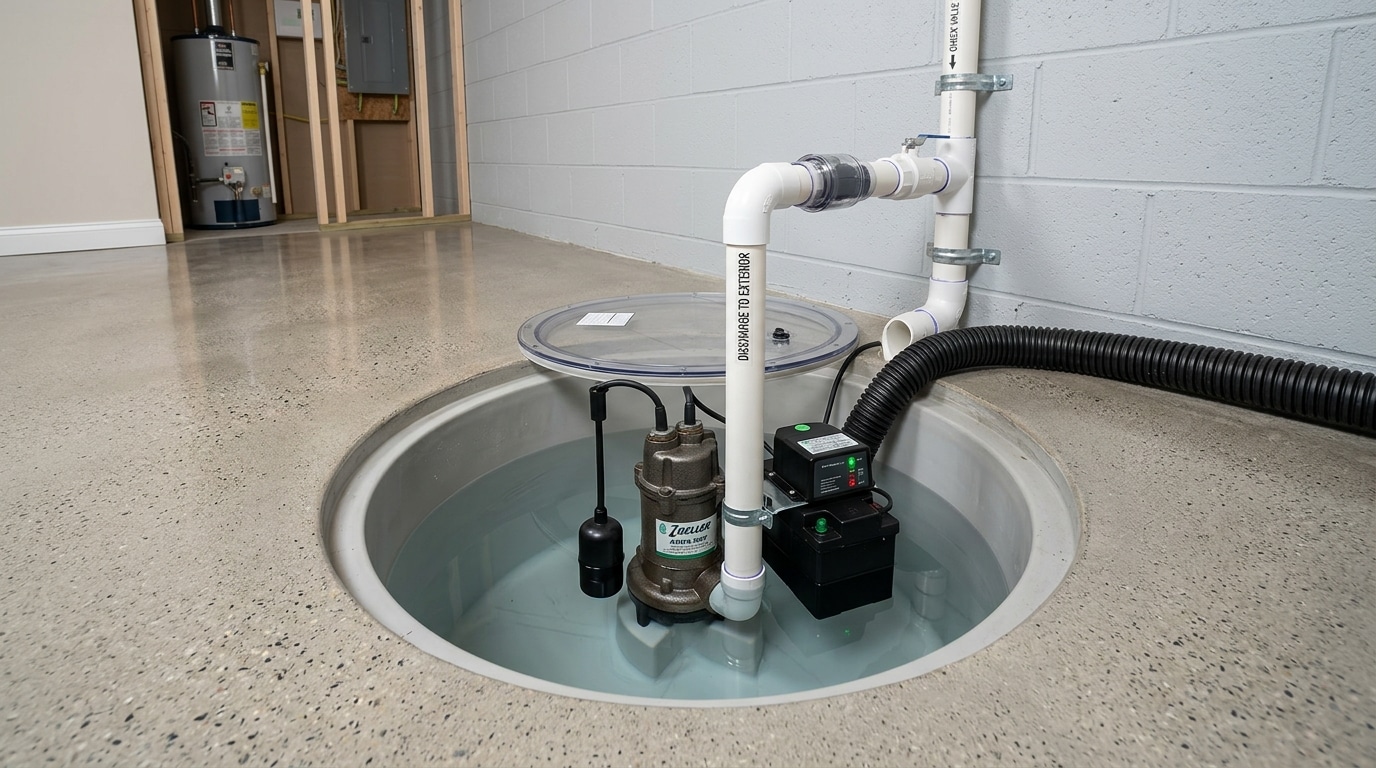
A pump that snaps on, runs for two seconds, then shuts off again is not protecting your basement. It is grinding itself down. Sump pump short cycling is one of the most common complaints we hear from Frederick homeowners after a soaking week, and the motor is almost never the real problem. In most of the pits we open, the water the pump just pushed up the discharge pipe is falling right back down into the basin. This guide explains the physics behind that, names the parts involved, and shows you how to separate a float problem from a failed check valve.
What Sump Pump Short Cycling Looks Like
The term describes a pump that restarts far more often than the incoming water justifies. A healthy pump runs long enough to clear the basin, push a solid column of water past the foundation, then sit idle. A failing one sounds different. What we hear on a service call is a rapid click, a one second hum, a stop, and a thunk in the pipe overhead.
That thunk is the tell. It is the sound of water slamming back down the discharge line, and it points straight at the cause.
The Mechanism: Why the Water Comes Back
Your pump sits in a basin, usually a plastic or fiberglass crock set below the basement slab. When groundwater rises against the foundation, it seeps through the perimeter drain tile and fills that basin. A float rises with the water, closes a switch, and the motor spins an impeller that throws water up a vertical discharge pipe.
Here is the part most homeowners never see. That discharge pipe holds a standing column of water after the motor stops. Gravity pulls that column back down. The only thing stopping it is the check valve, a one way flapper or spring disc installed in the vertical run above the pump.
When the check valve leaks, the column drains straight back into the basin. The float rises again within seconds, and the motor restarts. Sump pump short cycling is the result, and the pump ends up moving the same few gallons over and over.
Why the Check Valve Usually Fails First
Check valves take the full hydraulic shock every time the motor shuts down. Moving water stops abruptly, and the pressure spike lands on a rubber flapper the size of a coaster. Over a few wet seasons that flapper hardens, curls at the edge, or catches grit from the pit.
Here is what we look for when we suspect the valve:
- A thunk or hammer sound in the pipe a moment after shutoff.
- Water swirling back down into the basin when the impeller stops.
- A valve body installed sideways instead of on the vertical run.
- Iron sediment or fine gravel packed around the flapper seat.
- A pump that runs correctly when you pour a bucket in, then restarts immediately.
A cracked or missing check valve is the most common driver of sump pump short cycling that we find in Maryland basements.
Float Switch Problems That Look Identical
Not every case is the valve. A tethered float can snag on the discharge pipe, the power cord, or the basin wall, which holds the switch closed and forces rapid restarts. A vertical float rod can bind in its guide for the same reason.
The other common cause is a switch set too low. If the shutoff point sits barely below the turn on point, the pump clears almost no water before the float drops. The differential is too tight, so the cycle repeats endlessly. Both faults produce sump pump short cycling that sounds identical from the top of the basement stairs.
Pedestal pumps and submersible pumps both do this, though we see it more often on submersibles crowded into an undersized crock.
Basin Size, Pump Size, and Frederick Groundwater
A basin that is too small, or a pump that is far too powerful for it, produces the same symptom without any broken part. A high capacity pump empties a shallow crock almost instantly, waits for a few inches of seepage, then fires again. That pattern is sump pump short cycling caused by sizing rather than by a damaged component.
Frederick and the nearby Maryland suburbs sit on fractured bedrock and clay heavy soils that hold water against foundation walls after storms. The USGS Water Science School explains how that saturated zone rises and falls with rainfall, which is exactly what your drain tile feels. When the water table climbs, a marginal system starts revealing every weakness it has.
A Frederick Basement, Step by Step
Picture a homeowner in Frederick after three days of rain. The finished basement is dry, but the pump behind the utility room door is clicking every few seconds, loud enough to hear upstairs.
In a case like this, the first step is to pull the lid and watch one cycle. If the impeller pushes water up, the motor stops, and a good portion of the pit refills on its own before any new seepage arrives, a likely finding is a check valve flapper split across the hinge. The fix is typically a new valve with a union added above it, so the pump can return to long, widely spaced runs.
If your pump is doing something similar, our sump pump service in Frederick team can diagnose it on site. You can also schedule a broader visit through our Frederick plumbing services page.
Safety Notes Before You Open the Pit
Sump basins are not harmless. Treat the pit with the same caution you would give any electrical device sitting in standing water.
- Unplug the pump at the outlet before reaching into the basin, never by pulling the float cord.
- Confirm the receptacle is a GFCI outlet, as required for damp basement locations.
- Do not run an extension cord to a sump pump.
- Keep children and pets away from an open crock.
- If you see water near the electrical panel or smell anything burning, stop and call an electrician.
The University of Maryland Extension publishes guidance on managing stormwater around a home, which helps reduce the load reaching your pit in the first place.
When to Call a Professional
Call us when the pump cycles constantly during dry weather, when the motor is hot to the touch, or when you hear grinding rather than a smooth hum. Rapid restarts overheat the windings and wear the start components. A pump left in sump pump short cycling through a wet season often fails during the next storm.
Replacing a check valve sounds simple until you find the discharge pipe glued solid with no union, or the basin buried under a finished floor. Our emergency plumbing team handles those in Frederick, Gaithersburg, Rockville, and the surrounding communities. For storm readiness in general, Ready.gov has a clear flood preparation checklist.
Frequently Asked Questions
Can sump pump short cycling burn out the motor?
Yes. Every start draws a surge of current, and rapid restarts never let the motor shed that heat. We routinely find pumps with scorched windings on systems that cycled for weeks.
How often should a healthy pump run during heavy rain?
There is no universal answer, because it depends on your water table, lot grading, and basin size. What matters is that runs are steady and spaced out rather than a burst every few seconds.
Does a battery backup pump fix the problem?
No. A backup protects you during a power outage, but it does not correct a leaking check valve or a snagged float. The primary pump still needs repair.
Is a thunk in the discharge pipe always a bad valve?
Not always. Some water hammer is normal, especially on long vertical runs. A loud thunk combined with rapid restarts is what points to a failed valve.
Next Step for Frederick Homeowners
If your basement pump is restarting every few seconds, call Mallick Plumbing & Heating and ask for a sump pump inspection. We will check the valve, the float differential, the basin sizing, and the discharge routing, then tell you exactly which part is driving the sump pump short cycling. Frederick basements do not stay dry by luck, and a pump behaving this way is a warning you still have time to act on.