
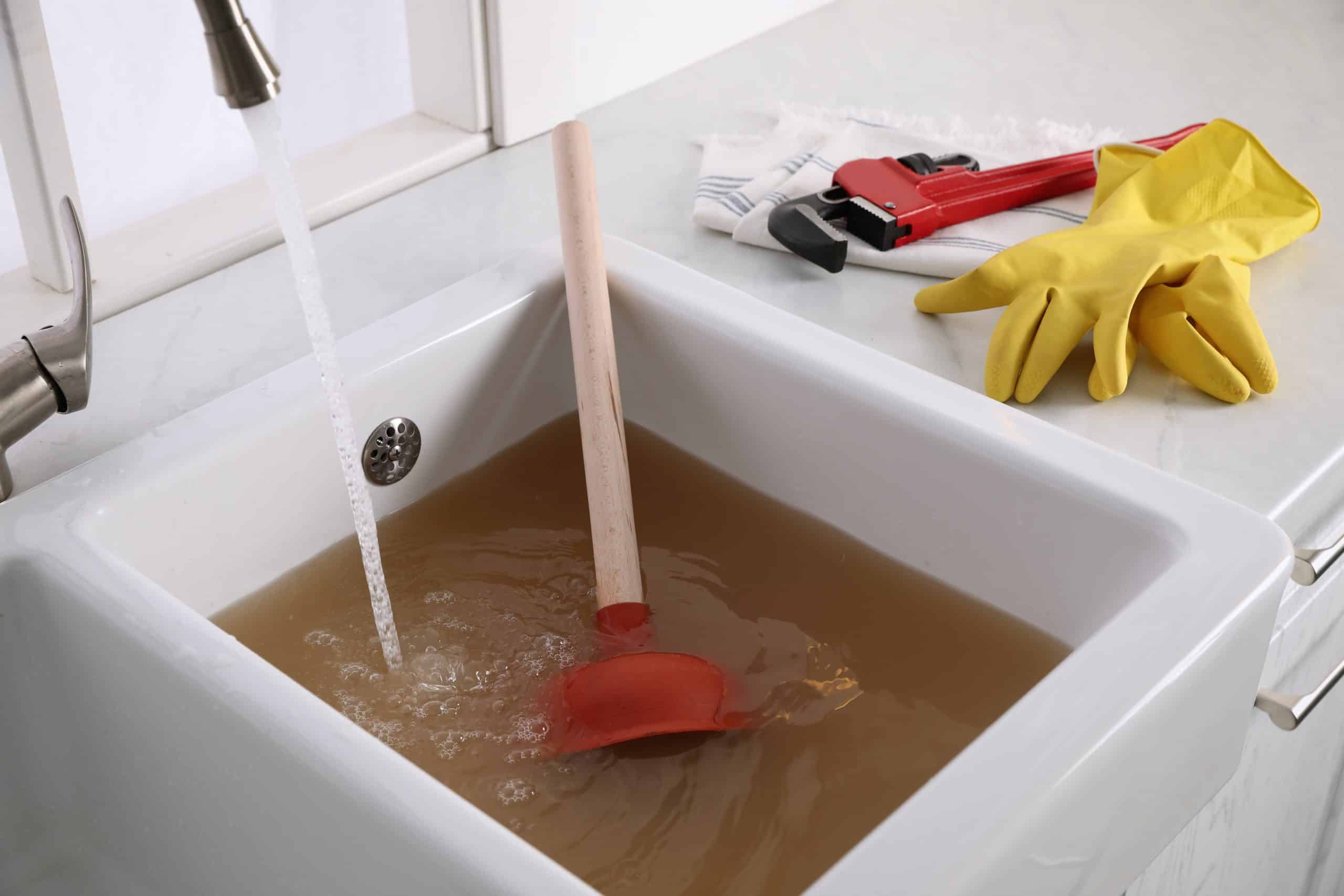
Grease does not clog a drain while it is hot. It clogs the drain further down the line, once it has cooled and turned solid against the pipe wall. A grease trap backup in Silver Spring, MD almost always starts that way, whether the kitchen belongs to a restaurant, a church hall, or the apartment above the shop. Pumping the trap on a schedule helps, but it does not explain why the line failed. This guide covers the chemistry, the components, and the warning signs that show up days before the floor drain overflows.
What a Grease Trap Is Supposed to Do
A grease trap, also called a grease interceptor, is a baffled box between your kitchen fixtures and the sanitary sewer. It works on density alone. Wastewater enters, slows down, and sits long enough for fats and oils to float to the top while heavier solids drop to the bottom. Relatively clean water then leaves through an outlet tee positioned below the floating layer.
That pause is called retention time, and it is the entire design principle. Model plumbing codes maintained by IAPMO tie interceptor sizing to fixture flow for exactly this reason.
The Mechanism: How Grease Becomes Concrete
Here is the part nobody explains. Fats, oils, and grease leave a kitchen sink hot, liquid, and emulsified by detergent, so they behave like water on the way down. Within a short run of pipe the temperature drops, the emulsion breaks, and the fat separates out again.
Two things then happen at once. The fat solidifies onto the pipe wall and narrows the channel. At the same time, alkaline soaps and cleaning chemicals react with the fatty acids in that fat. That reaction is saponification, the same process used to make bar soap, and it produces a hard waxy calcium and magnesium soap that grips cast iron and clay far more stubbornly than raw grease ever could.
A grease trap backup is the end stage of that process. The line is no longer coated in soft grease. It is lined with a soap scale that a cable will punch a hole through and nothing more.
Why the Trap Itself Stops Working
Interceptors fail in predictable ways, and nearly every grease trap backup we open traces to one of four causes.
- The floating layer gets too deep: Once grease reaches the level of the outlet tee, it flows straight out into the lateral.
- A baffle cracks or falls out: Without the baffle, water short circuits from inlet to outlet with no retention time at all.
- Flow exceeds the design rate: A busy dish pit or a dumped mop bucket pushes water through faster than grease can rise.
- Hot water is used to flush grease away: It only moves the problem downstream, where it cools and hardens in the building sewer.
That last one is the most common misunderstanding we run into. Hot water does not remove grease. It relocates it.
A Silver Spring Building, From the Kitchen Up
Picture a property owner in Silver Spring who lives on the second floor of a mixed use building and rents the ground floor to a small café. The tenant mentions a slow three compartment sink. A couple of days later, water starts rising in the basement laundry floor drain, which seems to have nothing to do with the café at all.
That is what a grease trap backup can look like from inside a shared building. In a case like this, the likely cause is grease from the café kitchen that has built up past the trap and hardened in the horizontal run serving the whole structure. The lowest opening in the building is where sewage surfaces, so the owner upstairs may see the symptom first.
The same chemistry plays out in a single family home. If you pour bacon fat down the kitchen sink and chase it with hot water and dish soap, you are building soap scale in your own branch line. It simply takes longer to show up.
Warning Signs Before a Grease Trap Backup
You usually get several days of notice. Watch for these:
- A dish sink that drains normally in the morning and slowly by evening.
- Gurgling from a floor drain when the prep sink empties.
- A sour or rancid odor near the trap lid or the mop sink.
- Water standing in the trap above its normal level soon after pumping.
- Fruit flies gathering around a floor drain, which points to an organic film.
If you see two or more of these together, schedule service before the weekend rush rather than after it. Our commercial plumbing team handles these calls throughout the Maryland suburbs and Washington, DC.
Cleaning Versus Pumping: They Are Not the Same
Property managers often assume a pumped trap means a clean line. Those are two separate jobs, and the difference decides whether the problem returns.
- Pumping removes the accumulated grease cap and bottom solids from the interceptor. It restores retention time inside the box.
- Line cleaning addresses the pipe downstream, where saponified soap has hardened onto the wall. A cable bores a hole through that scale.
- Hydro jetting uses high pressure water and a reverse thrust nozzle to scour the full inside diameter back to bare pipe.
For a hardened kitchen line, hydro jetting is what actually restores flow. Cabling alone leaves the soap layer in place, which is why the same grease trap backup returns a few weeks later.
Safety Rules for Trap Service
An in ground interceptor is a confined space. It can hold hydrogen sulfide and can be oxygen deficient, and both conditions are dangerous. Treat the lid as something only a trained crew opens.
- Never enter a grease interceptor or lean into one to retrieve something.
- Keep the lid secured and the area barricaded whenever it is open.
- Do not mix drain chemicals in a kitchen line. Caustic and acid products react violently.
- Keep hot cooking oil out of the mop sink, which is a burn hazard and a grease source at once.
- Follow OSHA guidance on confined space entry before any staff member goes near an open trap.
Protecting the sewer also protects local water. The EPA drinking water program explains how sanitary sewer overflows affect source water downstream.
When to Call a Professional
Call us when a kitchen line backs up more than once in a season, when the floor drain overflows during normal service, or when a fixture unrelated to the kitchen starts gurgling. That last symptom means the blockage has moved past the trap and into the building drain.
The first thing we check on a grease trap backup is where the water is standing. A full trap with a clear outlet points one direction. A trap at normal level with a flooded lateral points somewhere else entirely.
Frequently Asked Questions
How often should a grease interceptor be pumped?
It depends on your volume, menu, and trap size rather than a universal calendar. We set the interval by measuring how fast the grease cap rebuilds between visits.
Do enzyme or bacteria additives prevent a grease trap backup?
They can reduce odor and help with soft organic film, but they do not dissolve hardened soap scale. Treat them as a supplement to cleaning, not a replacement.
Can a residential kitchen have the same problem?
Yes. Homes do not have interceptors, so the saponified layer forms directly in the branch line or building drain. The mechanism is identical.
Is a slow kitchen drain always grease?
No. Roots, a sag in the line, or a foreign object can look the same from the sink. A camera inspection tells the difference quickly.
Next Step for Silver Spring Property Owners
If your kitchen line is slowing down, do not wait for the floor drain to make the decision for you. Call Mallick Plumbing & Heating to schedule grease trap service in Silver Spring before a grease trap backup shuts the kitchen down. We will assess the interceptor, jet the downstream line if the scale warrants it, and set a maintenance interval based on your actual grease load. Our grease trap services page explains what the visit covers.