
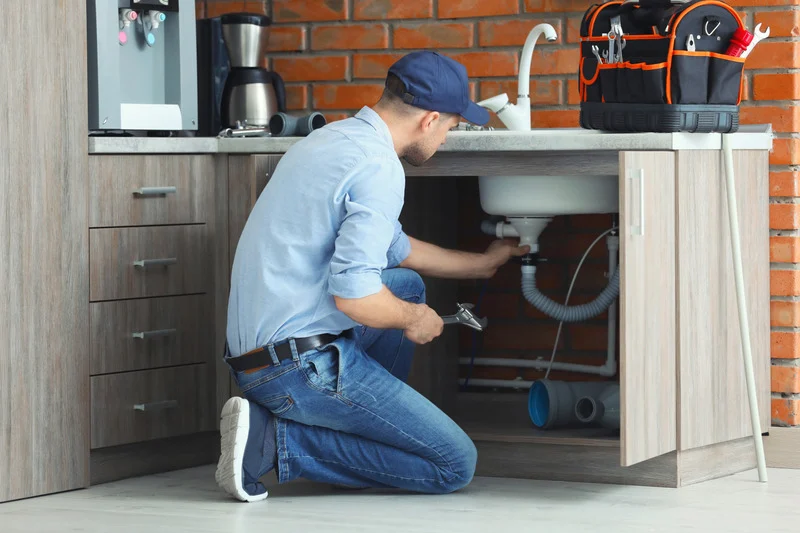
A house is sealed off from its own drain system by nothing more than a few cups of water. When that barrier fails, you notice within a day. Sewer gas odor in Bethesda, MD is a plumbing failure with a simple physical explanation, and in most homes we visit the fix is straightforward once we know which barrier gave out. This guide explains what sewer gas is, the three ways it gets into living space, and why the smell fading is not proof that the problem did.
What Sewer Gas Actually Is
Sewer gas is not one substance. It is a mixture generated by bacteria digesting organic waste in an oxygen poor environment inside your drain lines and the municipal main.
The rotten egg component is hydrogen sulfide, produced when sulfate reducing bacteria strip oxygen from sulfate compounds. The mixture also contains methane, ammonia, and carbon dioxide in varying amounts. Methane is flammable. Hydrogen sulfide is toxic, and at higher concentrations it deadens your sense of smell, which is why OSHA treats it as a serious hazard rather than a nuisance.
The Mechanism: How the Water Seal Fails
Every fixture in your home connects to the drain through a P-trap, a U shaped bend that holds standing water. That water is the seal. Gas cannot pass through liquid, so the trap blocks the drain system from the room. Model plumbing codes maintained by IAPMO set a minimum trap seal depth for exactly this purpose.
Three things break that seal, and each produces slightly different symptoms.
Evaporation
Water evaporates from an unused trap. A guest bath, a basement floor drain, or a laundry standpipe that sits idle for weeks will lose its seal, and heated indoor air in winter speeds the process considerably. This is the most common source of sewer gas odor we find in finished basements.
Siphonage from a Blocked Vent
Your drain system is vented to the roof so air can enter behind falling water. When a vent is blocked by leaves, a bird nest, ice, or a collapsed section, a large discharge such as a toilet flush creates negative pressure in the branch. That vacuum pulls water straight out of a nearby trap. You hear a gurgle, and minutes later the room smells.
Broken Piping and Failed Seals
A cracked closet flange, a compressed wax ring, or a corroded cast iron stack inside a wall lets gas bypass the traps entirely. These cases usually produce a smell that does not respond at all to running water.
Why Old Cast Iron Makes It Worse
There is a second, slower mechanism behind sewer gas odor worth understanding in older Bethesda homes. Hydrogen sulfide rises above the waterline inside a sewer pipe and settles on the damp crown, the upper inside surface.
Bacteria there oxidize that hydrogen sulfide into sulfuric acid. The acid attacks cast iron and concrete from the inside out, thinning the pipe at the top while the bottom still looks serviceable. Plumbers call the result crown corrosion, and it explains why an old stack often fails at the top of the pipe rather than the bottom. Once the crown perforates, gas enters the wall cavity directly.
A Bethesda Basement Morning Odor Scenario
Picture a homeowner in Bethesda who notices a smell in a finished lower level that is strongest first thing in the morning and fades by afternoon. The powder room down there gets used only a few times a year.
In a case like this, two things are often happening at once. The powder room trap has partly evaporated, and the HVAC return in that room pulls the space slightly negative whenever the system runs, which draws gas through the weakened seal. Mornings would be worst because the system runs hardest after the overnight setback.
The fix is typically refilling the trap and adding a small amount of mineral oil to slow future evaporation. A camera inspection of the branch then confirms whether anything else is open.
What You Can Try Before Calling
Some of this is genuinely do it yourself territory.
- Run water in every fixture, including floor drains, tubs, and the basement sink.
- Pour a few cups of water down any drain you rarely use.
- Add a small amount of mineral oil on top of a floor drain trap to slow evaporation.
- Check that the toilet sits solid on the floor and does not rock.
- Note the time of day and the weather when the smell is strongest.
If the sewer gas odor persists after every trap is refilled, the seal is not your problem. Schedule a visit and let us look at the vent system and the piping instead.
Safety Guidance That Actually Matters
Treat a sewer gas odor as a hazard, not an inconvenience. Two rules in particular are non negotiable.
- Do not enter a crawlspace, sump pit, manhole, or closed basement void chasing an odor. These are confined spaces and can be oxygen deficient.
- Never assume a fading smell means safety. Hydrogen sulfide dulls the nose at higher concentrations, so the odor can weaken while conditions get worse.
- Ventilate the area with outside air and keep people out of the affected room.
- If anyone feels dizzy, nauseated, or short of breath, get them outside and seek care from a physician.
- Because methane is flammable, avoid open flames in any space with a strong smell.
The EPA indoor air quality program provides broader background on indoor pollutants and ventilation.
When to Call a Professional
Call us when the sewer gas odor survives a full round of trap refilling, when several fixtures gurgle together, or when the smell is strongest inside a wall rather than at a fixture. Those patterns point to the vent system or to failing pipe, not to a dry trap.
The first thing we check is which fixtures are affected and whether using one changes another. From there, a drain cleaning visit can clear a blocked vent, and a video pipe inspection shows us the condition of the stack and building drain without opening walls.
Frequently Asked Questions
Can a sewer gas odor make you sick?
Hydrogen sulfide is toxic at sufficient concentrations, which is why OSHA regulates exposure to it. If anyone in the home feels unwell, leave the area, get fresh air, and consult a physician.
Why does the smell come back every winter?
Dry heated air accelerates evaporation from idle traps, so seasonal complaints are very common. Refilling those traps each fall usually prevents the whole problem.
Could it be the water heater instead?
A rotten egg smell in hot water only is a different issue, tied to the anode rod and bacteria inside the tank. If the odor is in the room rather than the water, it is a drain issue.
Does a sewer gas odor mean my sewer line is broken?
Not necessarily. A dry trap is far more common than a broken pipe. A camera inspection is how we rule a damaged line in or out.
Next Step for Bethesda Homeowners
If your home smells like a drain and refilling the traps did not solve it, call Mallick Plumbing & Heating to schedule a diagnostic visit in Bethesda. We will check the traps, inspect the vents, and camera the stack to find exactly where the sewer gas odor is entering your living space. Our drain and sewer services page explains what that visit includes.