A sump pump can run without recent rain because the water entering its basin does not always track the weather you see that day. Groundwater can remain elevated after an earlier wet period, and drainage or plumbing conditions may introduce water from another source. A Frederick homeowner should distinguish water actually reaching the pit from a pump cycling because of its controls. Those are different problems with different next steps.
The basin responds to water below the surface
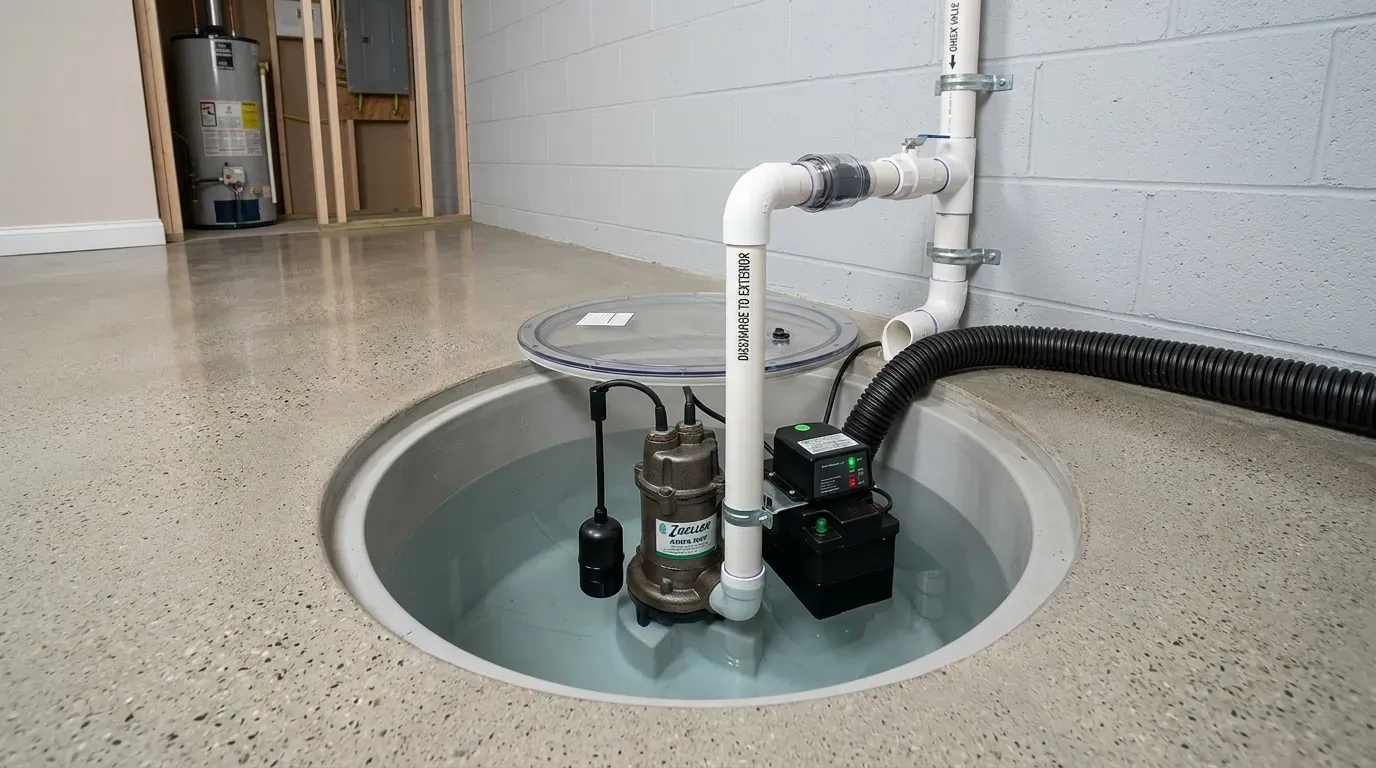
A sump basin collects water reaching the lowest drainage point connected to it. The float switch, a control that rises with the water level, starts the pump. The pump sends that water through a discharge pipe to the intended outlet.
Water moving through soil can reach a basement after the surface looks dry. Soil, grading and drainage routes affect that movement. An irrigation system, exterior drainage problem or plumbing leak may also contribute water, but the sound of a pump alone does not identify the source.
The cycle can repeat for another reason: discharged water may return toward the foundation. A discharge arrangement that sends water back into the same drainage area can create a loop. The check valve, which limits backward flow in the discharge line, also matters when water returns to the pit after the pump stops.
Separate incoming water from control trouble
If you hear your Frederick basement pump starting repeatedly after several dry days, a dry floor does not explain why it keeps running. You might notice the motor stop, water return to the basin and the motor start again soon afterward. That household pattern makes the check valve and discharge route worth investigating because water may be returning after the pump sends it out.
Compare that with a motor that keeps running while the visible water level stays low, which raises a different question about the float switch and controls. If water visibly enters and the level falls during operation, the pump is responding to an incoming source that needs to be traced. Describe observations from a safe, dry position; do not reach into the basin or disturb powered equipment.
This distinction matters because a replacement pump will not fix every incoming-water or discharge problem. The assessment must include the water source and the route away from the building, as well as the equipment. Mallick Plumbing & Heating’s plumbing information provides an entry point for scheduling that review.
What the assessment should include
A plumber should evaluate the basin, pump operation, float movement and discharge route where safely accessible. The check valve and visible connections deserve attention, especially if water appears to return after each cycle. The inspection should establish whether the pump is functioning as intended under the actual conditions.
Possible plumbing leaks require a separate look at the water supply and affected fixtures. Continuous water arrival without an obvious weather relationship does not prove a leak, but it makes that question useful. Other signs, such as unexpected dampness elsewhere, help determine which systems need investigation.
For a home supplied by a well, the pump supplying drinking water and the sump pump handling basement drainage are distinct systems. Do not assume one is evidence about the other. Mallick Plumbing & Heating’s well pump information explains the service category for supply-related concerns.
Why discharge and capacity are different questions
A sump pump’s ability to move water must match the installation and incoming conditions. Its discharge pipe also has to provide a workable route. A blocked or poorly functioning discharge can prevent an otherwise operating pump from removing water effectively.
That is why the recommendation should explain whether the limitation is mechanical, hydraulic or related to the incoming source. A running motor does not establish that water is leaving the property as intended. Conversely, regular operation does not automatically mean the pump itself is defective.
Avoid entering standing water near electrical equipment or reaching into a basin containing powered equipment. Do not unplug a pump to see what happens, open electrical controls or attempt to move a float while it is connected. If water is spreading or the system appears unable to keep up, seek professional help promptly.
Contact Mallick Plumbing & Heating to discuss sump pump service and these conditions and schedule the relevant plumbing assessment.
Decide when sump pump operation needs service
If your basement pump continues running after the visible water level has fallen, or water rises while the motor runs, arrange prompt professional assessment. A pump making noise is not proof that the discharge is moving water away.
- A rising basin level while the pump operates can indicate a discharge or pumping problem.
- Water falling back after the motor stops can make the discharge check valve relevant.
- Continuous running with little water can make the float switch and controls relevant.
These are comparisons for a plumber to investigate, not instructions to reach into the basin. Keep away from standing water near powered equipment, leave wiring alone and do not unplug the pump for an experiment. Call Mallick Plumbing & Heating if cycling becomes unusual, the motor will not stop or water threatens to spread into the basement.
Common sump-pump questions
Can groundwater stay high after rain stops?
Yes. Water below the surface can move and drain differently from visible surface water. The current weather alone does not describe the basin’s incoming conditions.
Is frequent cycling always a failed pump?
No. Incoming water, return flow and switch behavior can all matter. The cycle pattern needs to be compared with actual water movement.
Does a dry basement mean the discharge is fine?
It does not establish every part of the system’s condition. The discharge route should still be evaluated when unusual operation persists.
If your sump pump runs unusually without recent rain in Frederick, contact Mallick Plumbing & Heating to schedule a plumbing assessment. Ask for a review of incoming water, pump controls and discharge behavior so the next step addresses the system rather than its sound alone.