
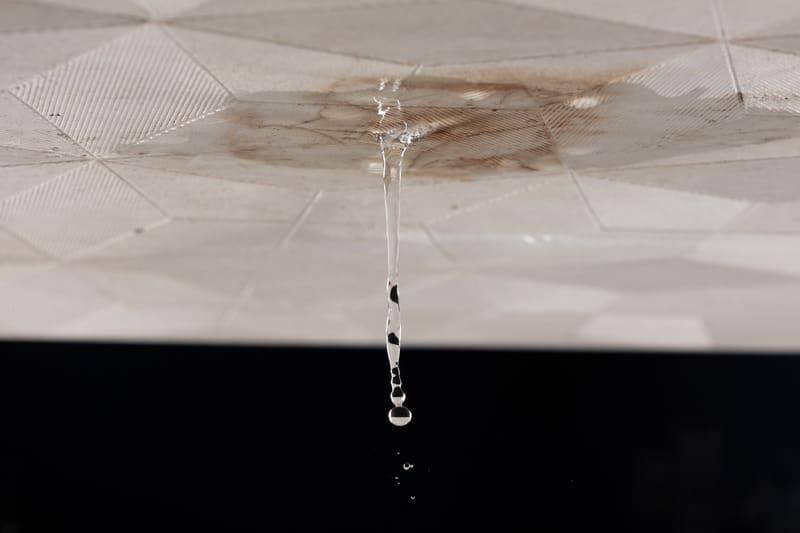
Every July we take calls from homeowners who found water dripping off a basement pipe and assumed the worst. Most of the time it is not a leak at all. It is pipe condensation, and in Bethesda, MD it starts the week our dew points climb into the muggy range and stays until September. The water on that pipe came out of the air in your basement, not out of your plumbing. That distinction matters, because the repair is completely different. This guide explains the physics behind pipe condensation, how our plumbers separate it from a genuine leak, and what actually stops the dripping.
What Causes Pipe Condensation
Air holds water vapor, and the amount it can hold drops as the air cools. The temperature where air can hold no more is the dew point. Cool any surface below that temperature and vapor touching it turns back into liquid water.
Your cold water line is that surface. Water arriving from the municipal main sits far below summer room temperature, and copper moves heat quickly, so the outside of the pipe stays almost as cold as the water inside it. Humid basement air drifts across that cold metal, gives up its moisture, and leaves beads behind. The beads merge, run to the low point of the pipe, and drip. That is pipe condensation in one paragraph.
Why It Is Worse in a Bethesda Summer
Maryland summers combine warm air with heavy humidity, which is exactly the recipe for sweating pipes. Basements make it worse. A basement is cooler than the rest of the house, but it is also where damp outdoor air sneaks in through window wells, rim joists and unsealed penetrations.
Older Bethesda homes add one more factor. Finished basements installed decades ago rarely included a vapor barrier or foam sleeves on the supply lines, so bare copper runs through a humid cavity all season. The EPA’s indoor air quality guidance covers why that combination of moisture and enclosed space invites mold.
Pipe Condensation or an Actual Leak?
This is the question worth answering before anyone opens a ceiling. The two look similar from the floor and behave nothing alike.
- Condensation coats a long stretch of pipe evenly. A leak is wet at one point, usually a joint, a valve stem or a pinhole.
- Condensation appears in humid weather and dries up during a cool, dry spell. A leak ignores the forecast.
- Wipe the pipe dry. Condensation returns as a uniform film across the whole surface. A leak reappears as a bead at the same spot.
- Condensation drips only from cold lines. Water on a hot line is a leak, full stop.
- Condensation does not move your water meter. A leak does, even a slow one.
That last test is the strongest one. Shut every fixture, then watch the low-flow indicator on the meter. If it creeps, you have a leak somewhere and pipe condensation is not your problem.
A Bethesda Ceiling Stain Scenario
Picture a homeowner in Bethesda who finishes a movie in the basement and notices a dark ring on the drywall ceiling below the upstairs bathroom. No fixture is running, and no toilet is leaking. In a case like this, a likely finding behind an inspection hole is a bare copper cold line crossing the joist bay and dripping steadily onto the back of the drywall. The bathroom above may be perfectly fine. A stain like that often reflects months of pipe condensation collecting at one low spot in the pipe run, and the typical fix is foam insulation plus a dehumidifier, not a repipe.
What the Dripping Damages
Condensate is clean water, which makes it feel harmless. It is not. Steady drips keep framing lumber damp enough for rot organisms to work, soak fiberglass batts until they lose their insulating value, and stain finished ceilings. Subfloor under a sweating toilet tank can slowly go soft and spongy. Damp wood also draws insects.
How to Stop Pipe Condensation
You cannot make the pipe warmer without wasting water, so the work goes into separating humid air from the cold surface and drying the air itself.
- Sleeve every cold line with closed-cell foam insulation, and seal the seam and every butt joint with the adhesive strip or tape. Fiberglass does not work here because it absorbs the moisture instead of blocking it.
- Insulate fittings, valves and the short stubs behind them. Bare elbows sweat just as hard as straight runs and are usually what people miss.
- Run a dehumidifier in the basement and drain it to a sump basin or a condensate pump rather than emptying a bucket.
- Seal rim joists, window wells and duct penetrations so humid outdoor air stops pouring into the cool space.
- On a chronically sweating toilet tank, ask about an anti-sweat valve, which blends a small amount of hot water into the tank supply to raise the surface temperature.
Pipe condensation also gets worse when cold water moves constantly. A toilet fill valve that never fully shuts keeps fresh cold water flowing through the branch line all day. Fixing the flapper often cuts the sweating dramatically, and the EPA’s WaterSense program explains how much water a silent running toilet moves.
Safety and When to Call a Plumber
Do not cut into a finished ceiling to chase a drip before you have checked the meter. Do not run an extension cord to a dehumidifier standing in water. If a ceiling is already sagging or the drywall is soft, stop and get eyes on it, because saturated gypsum falls without warning.
Call Mallick Plumbing & Heating when the water stays after you have insulated the lines, when the wet spot sits on a hot line, or when the meter keeps turning with everything off. Our leak detection service helps pinpoint the source before anyone starts opening walls, and our piping team can insulate, reroute or replace runs that were never protected. For a sweating tank or a running fill valve, start with bathroom plumbing repair.
For broader guidance on household moisture, University of Maryland Extension publishes resources written for this climate, and ENERGY STAR’s Save at Home covers sealing and insulating the spaces where humid air gets in.
Frequently Asked Questions
Can pipe condensation cause mold?
Yes. Condensate keeps wood, paper facing and drywall damp for weeks at a time, which is all mold needs. Drying the air and insulating the pipe removes the moisture it feeds on.
Do I need to insulate hot water lines too?
Insulating hot lines saves energy and shortens the wait for hot water, but it does nothing for sweating. Hot pipes sit above the dew point, so they never condense.
Why did my pipes never sweat before this year?
Something changed the balance. A dehumidifier that quietly stopped working, a finished basement that trapped air, a failed sump pump raising humidity, or simply a wetter than usual July.
Will a dehumidifier alone fix it?
Sometimes, if the basement is sealed and the unit is sized for the space. In most Bethesda basements we recommend insulation first, because it works whether or not the machine is running.
Your Next Step
If you have a mystery wet spot, check the meter, note whether the pipe is hot or cold, and watch whether the dripping tracks the weather. Then call Mallick Plumbing & Heating to schedule a visit at your Bethesda home. We will confirm whether you are dealing with pipe condensation or a leak, and handle the insulation or the repair while we are on site.